
Marseille, France: Biking to the Calanques
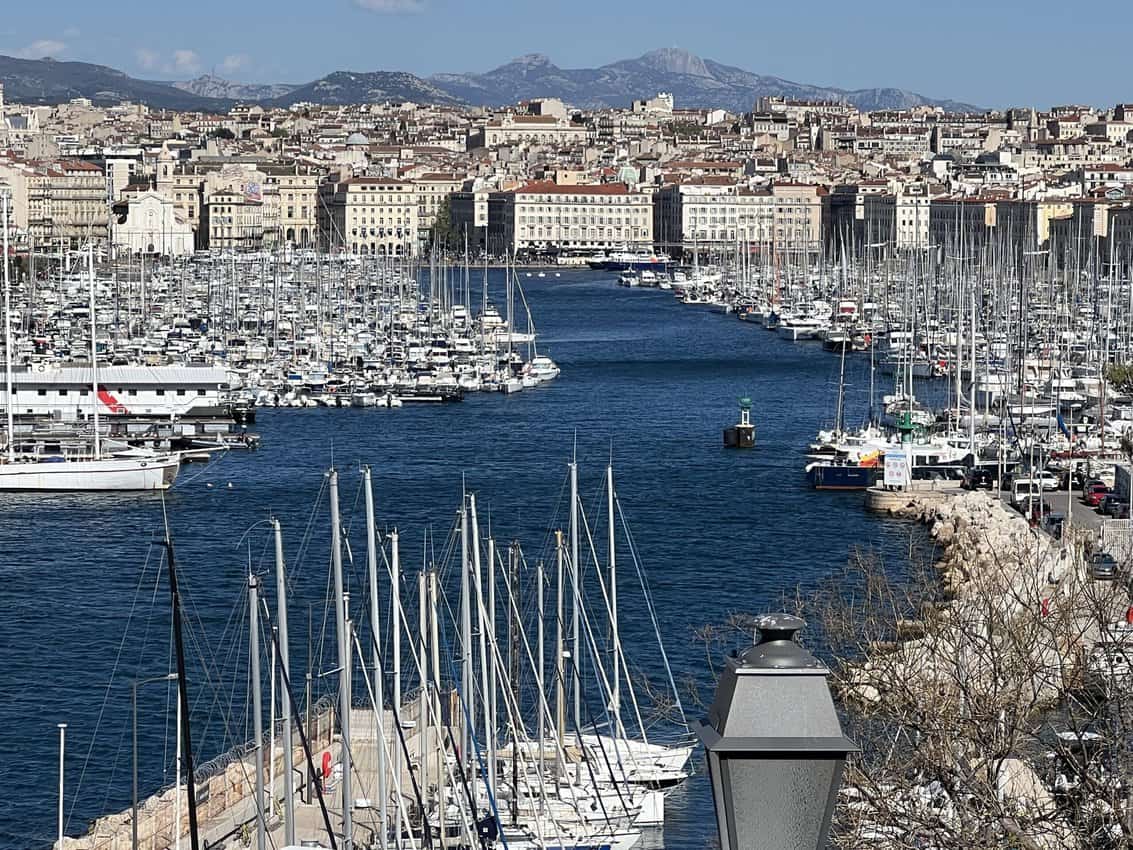
Marseille Moves Forward and Here is Some of What We Loved
By Sonja Stark
Senior Writer
At 150 mph, the TGV train from Paris to Marseille afforded us fleeting glimpses of sunflowers, wheat fields, and ancient bridges.
It was this tapestry of impressionist imagery, blurry at best, that fueled our sense of curiosity the closer the train got to the coastline.
No surprise. Given the beguiling history of the sun-drenched port city of Marseille, we knew this trip was going to be special. The capital of Provence, despite its once-checkered reputation, was waiting to be rediscovered.
Marseille: Crossroads of Hip
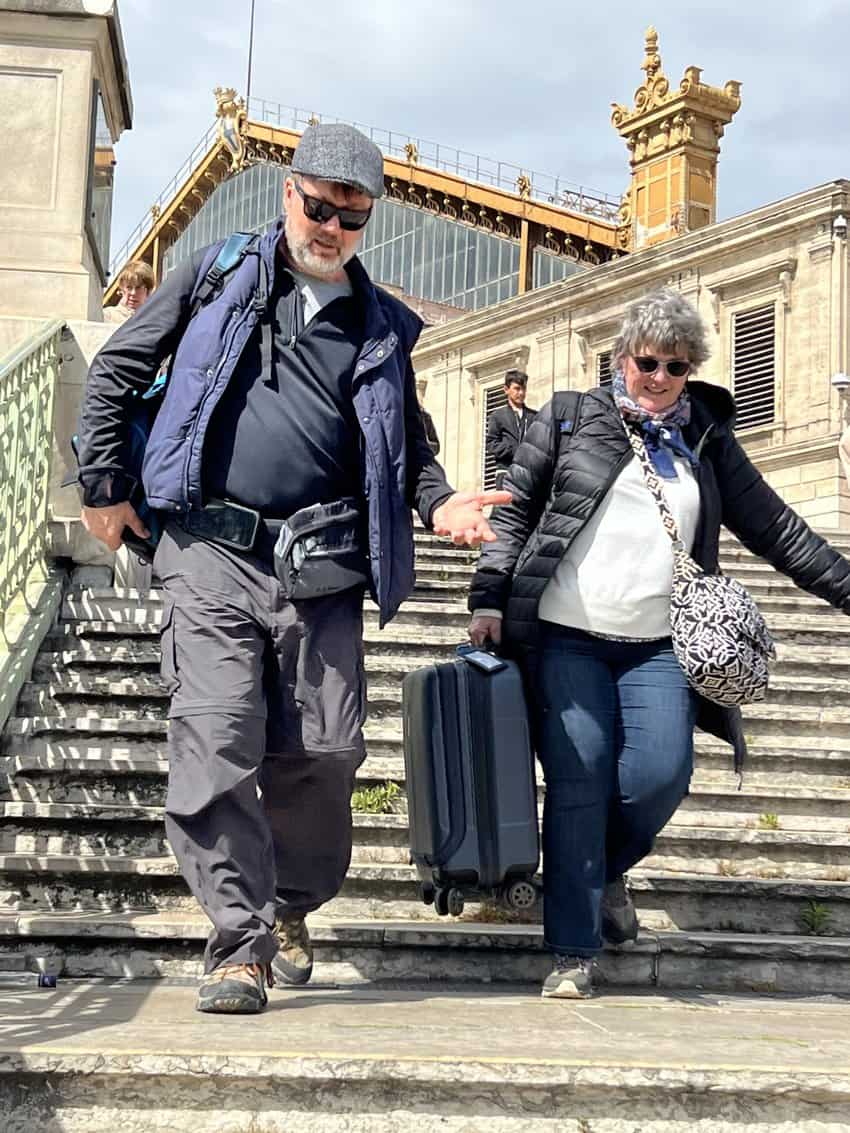
Our joyride squeezed to a stop at the Gare de Marseille-Saint-Charles train station and bus depot, where, minutes later, my mate and I were liberated with our dear friends Mark and Marie. They had traveled from Lyon via the slower-moving but equally affordable SNCF train.
Winds of Change
We exchanged hugs and kisses (traditionally, the left cheek first) and exited the platform. Suddenly, our amour was cut short by a fierce vortex of wind, one that nearly swept us off our feet. It was that time of the year for an annual gusty phenom known as Le Mistral. We took note of how many trees were forever bent in the direction of the prevailing winds.
The winds are both revered and rebuffed: wave-riding surfers love to ‘hang ten’ when the chop is rough while ferry shuttles often see their profits sink.
Such was my luck the next day when our boat ride to the Chateau d’If fortress attraction, part of an archipelago, was postponed.
The mysterious prison monument on the island inspired the setting for French writer Alex Dumas’s classic, The Count of Monte Cristo. Nevertheless, there was plenty more to accommodate our lust for cliffhangers.
Pilgrimage to the “Good Mother”
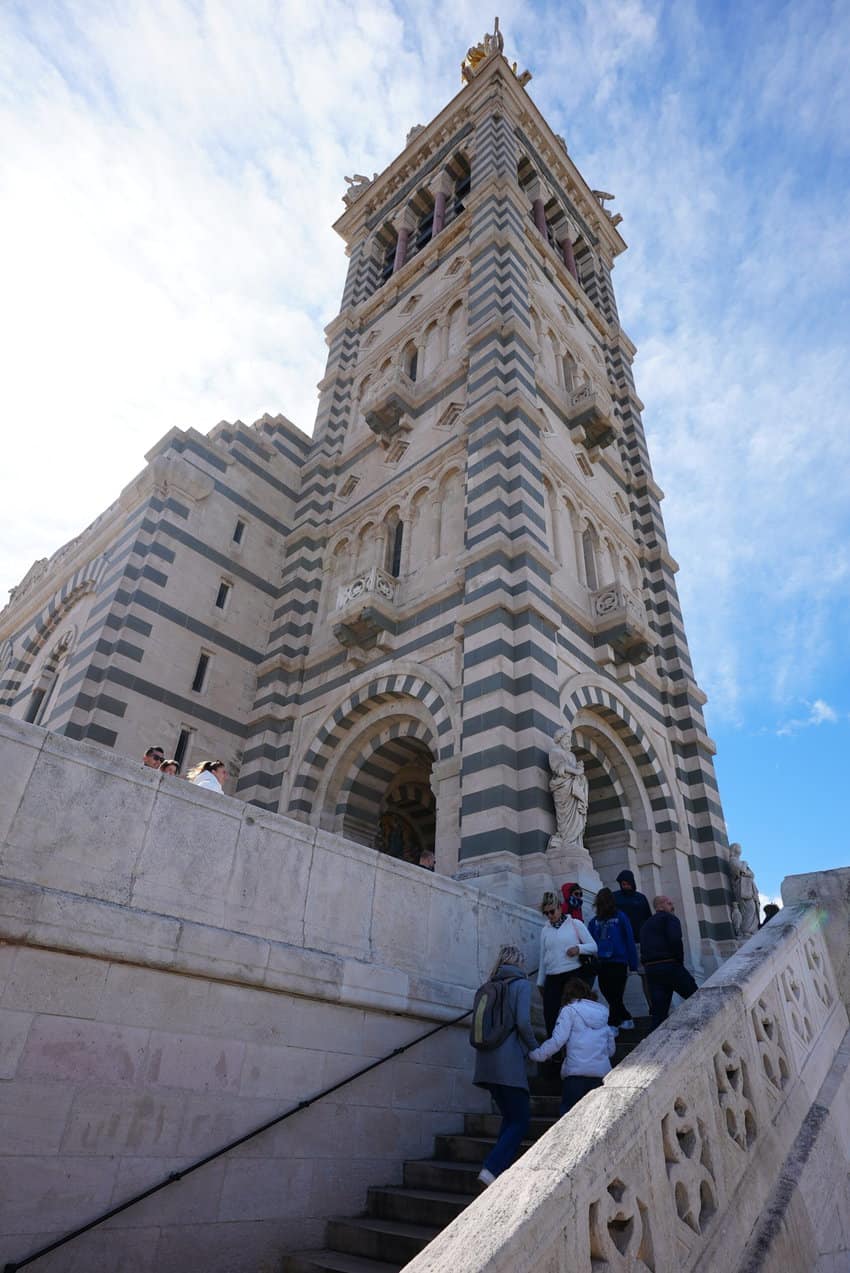
The Good Mother, atop the highest hill in the city, is a beacon of light unfettered by the buffeting winds. It was built in 1524, first as a fortress to protect the city from the armies of Charles V and later as the Basilica of Notre-Dame de la Garde. The cathedral welcomes all who worship or wander.
Marie and I were blown away by the grandeur of the Romano-Byzantine art including the ornately-painted mosaics and brightly decorated gold-leaf statues. There is a panoramic (albeit windy) view of the city from the front steps that is heavenly.
Note: Have patience with the crush of tourists in a queue that snakes around the building for the crypt and belfry are worth the wait.
Marseille: A City of Steep Inclines
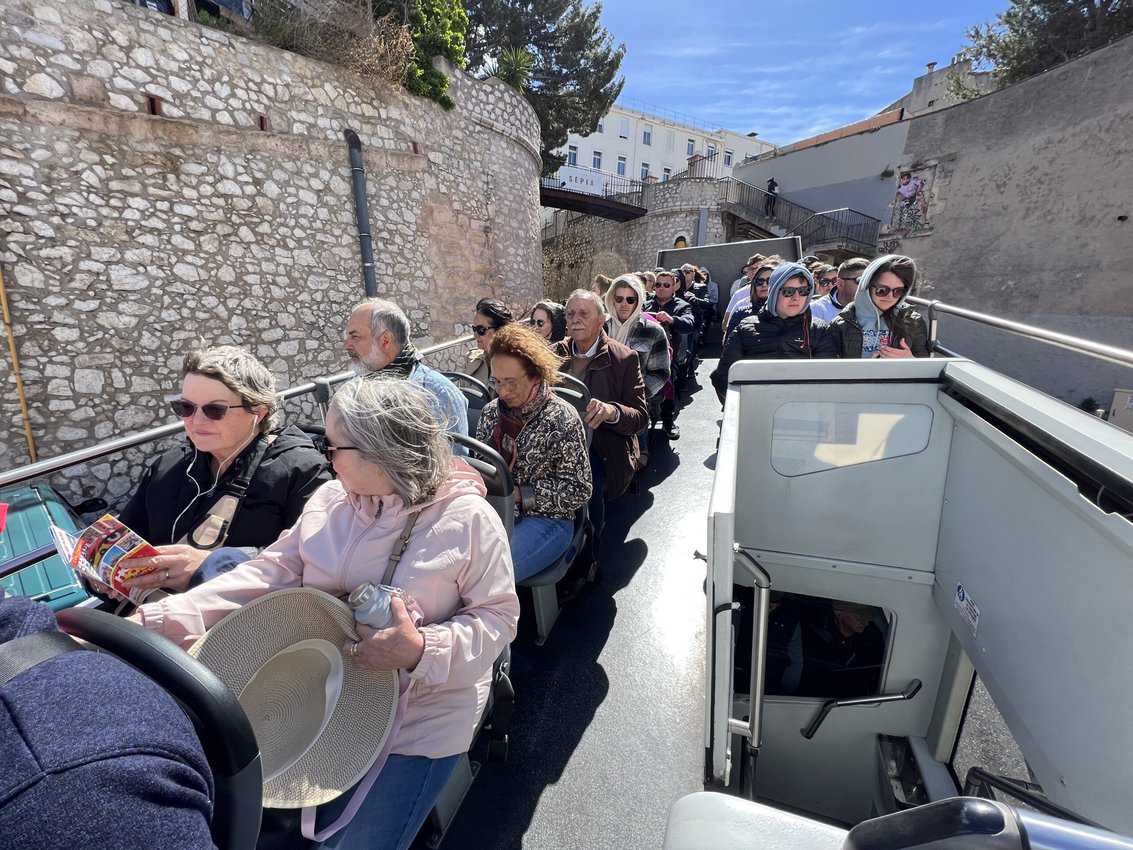
To journey to the basilica’s soaring heights we packed in like sardines (a local delicacy so don’t miss that) aboard Bus 60. To return we favored a more civilized approach aboard one of the panoramic double-deckers.
The red line made stops at all the key highlights with pre-recorded audio guides in English. Good thing we remembered to bring our earbuds with the old-school 3.5mm audio jack.
Back on the waterfront architectural wonders unfolded as we fought back the grip of the windy tempest. She was relentless that day but no match for the strength of our curiosity.
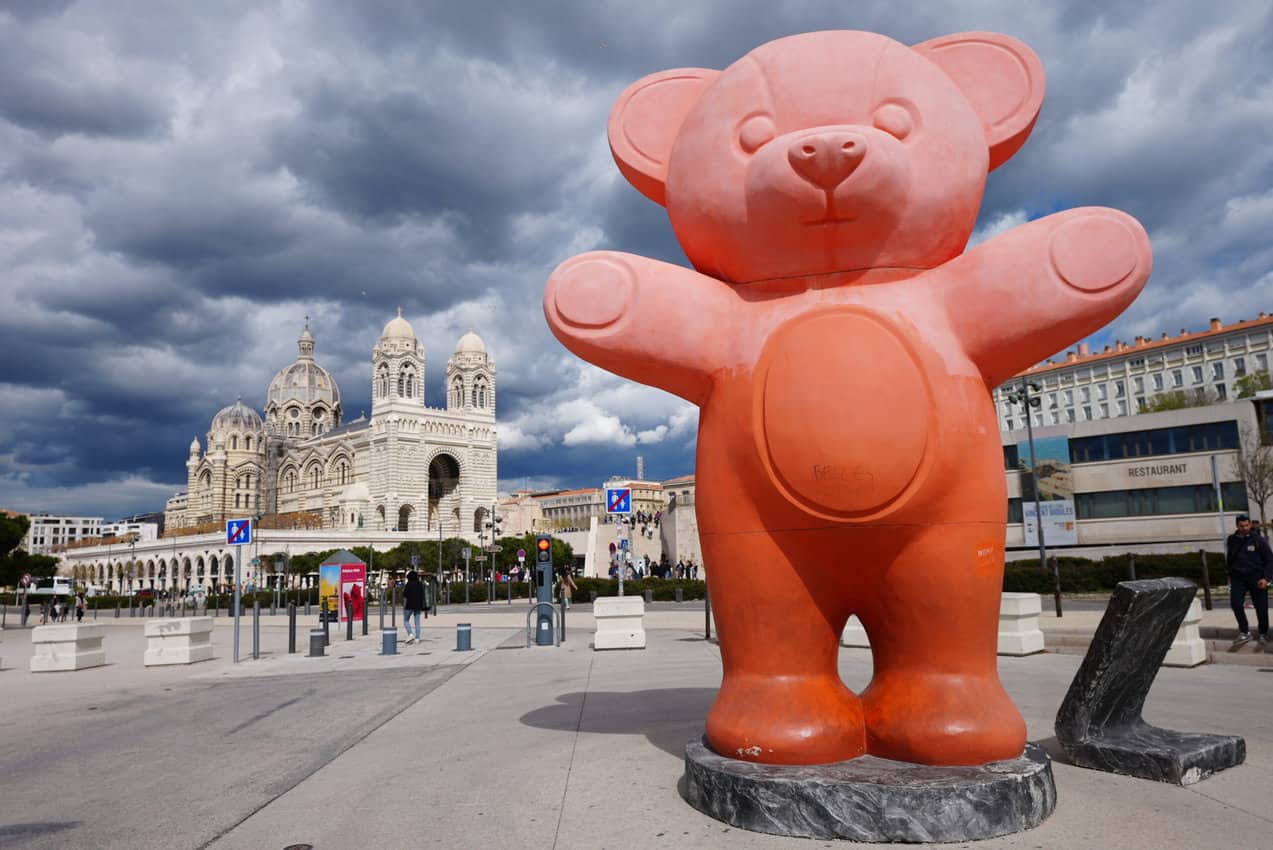
From Antiquity to Abstract
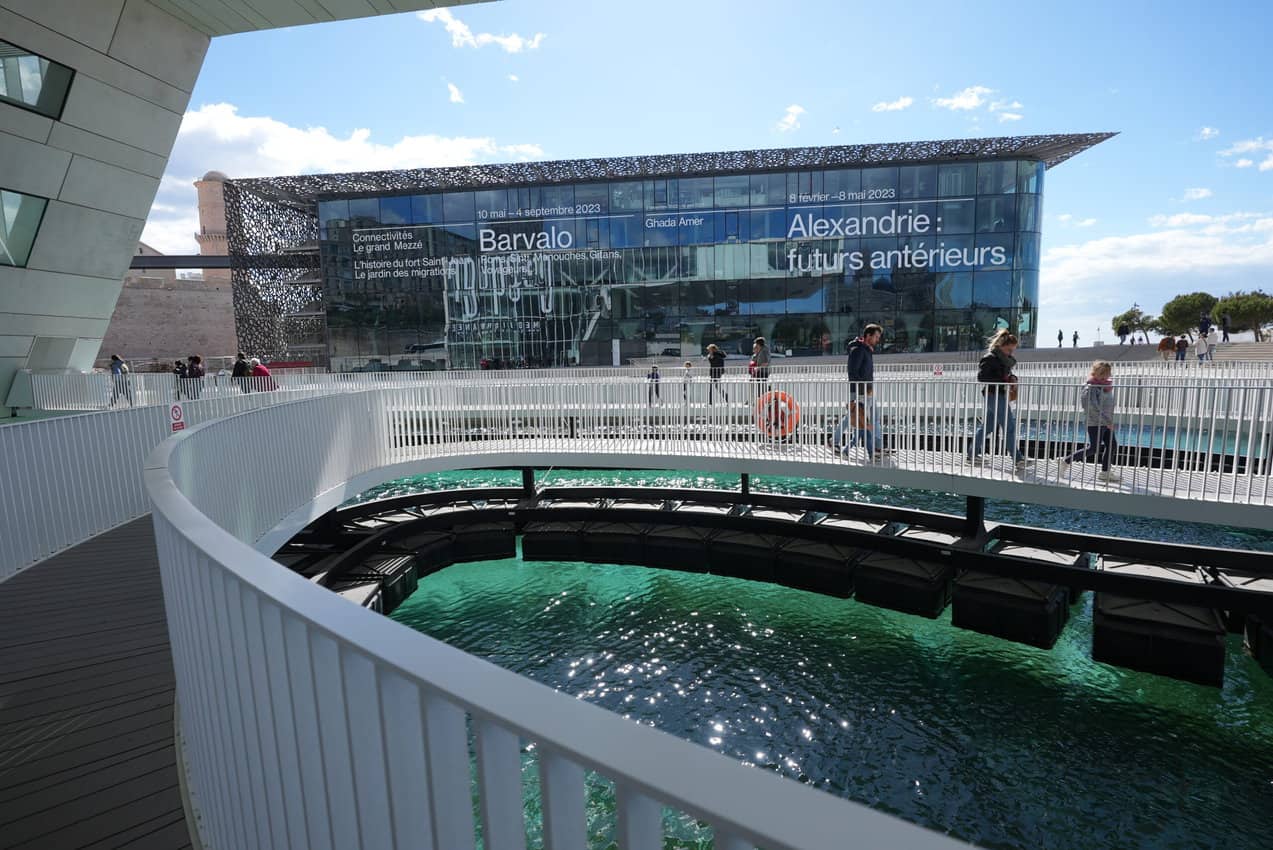
We paced ourselves through 2600 years of history starting with MuCEM, the Museum of European and Mediterranean Civilizations, which was, arguably, the reason Marseille won the Capital of Culture designation in 2013.
At the heart of this heritage museum was a trove of rotating exhibits that delved into anthropology, archaeology, and art history. The contents helped us to better understand the complexity of immigration and trade in Marseille but it was the 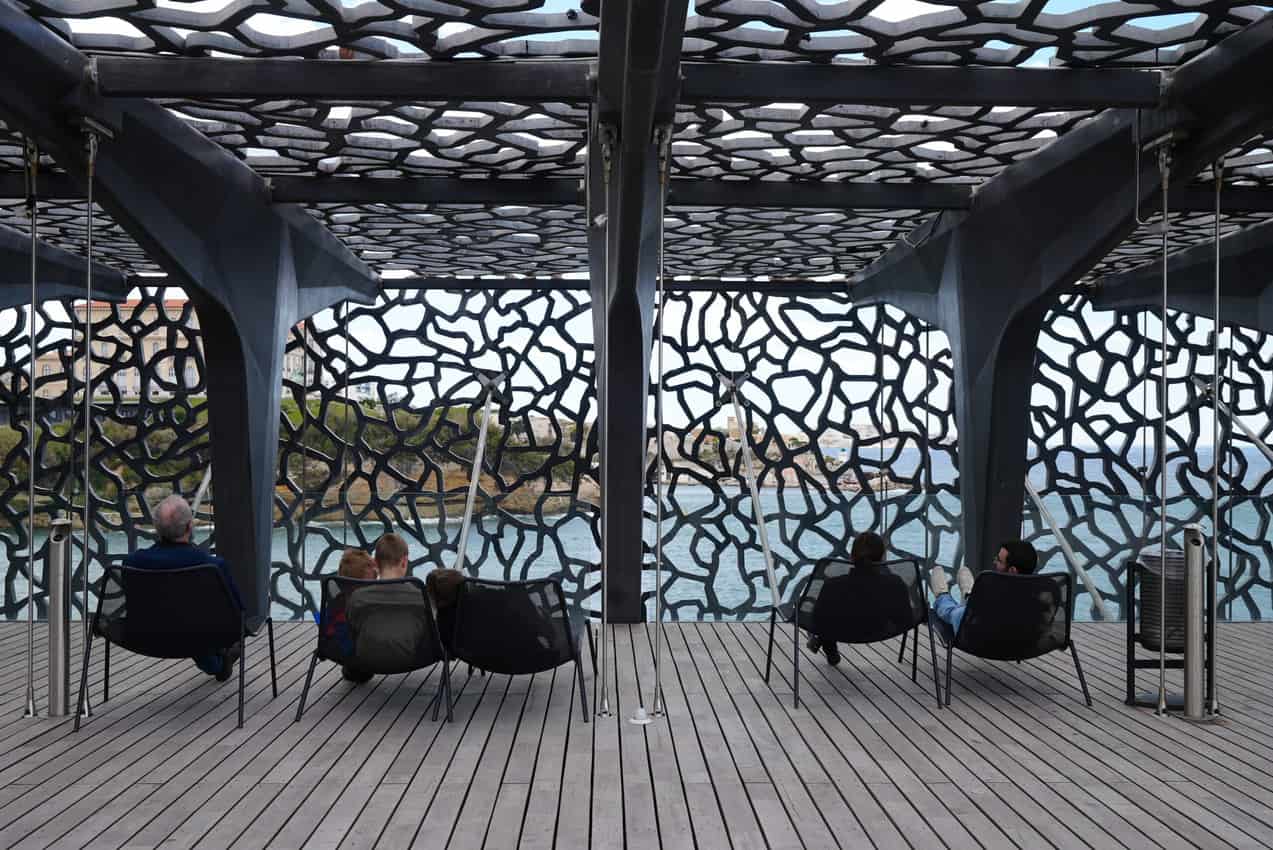 esoteric architecture of the space itself that was like movie magic.
Rudy Ricciotti’s Artistry
Being an unabashed tech nerd, it’s hard not to look at architect Rudy Ricciotti’s masterpiece and not think of the Borg collective. Star Trek geeks know what I’m talking about.
The enormity of the MuCEM takes the shape of an enigmatic glass cube wrapped inside a shell of black perforated lattice mesh. I could almost see the Borg Queen’s face in the shadows.
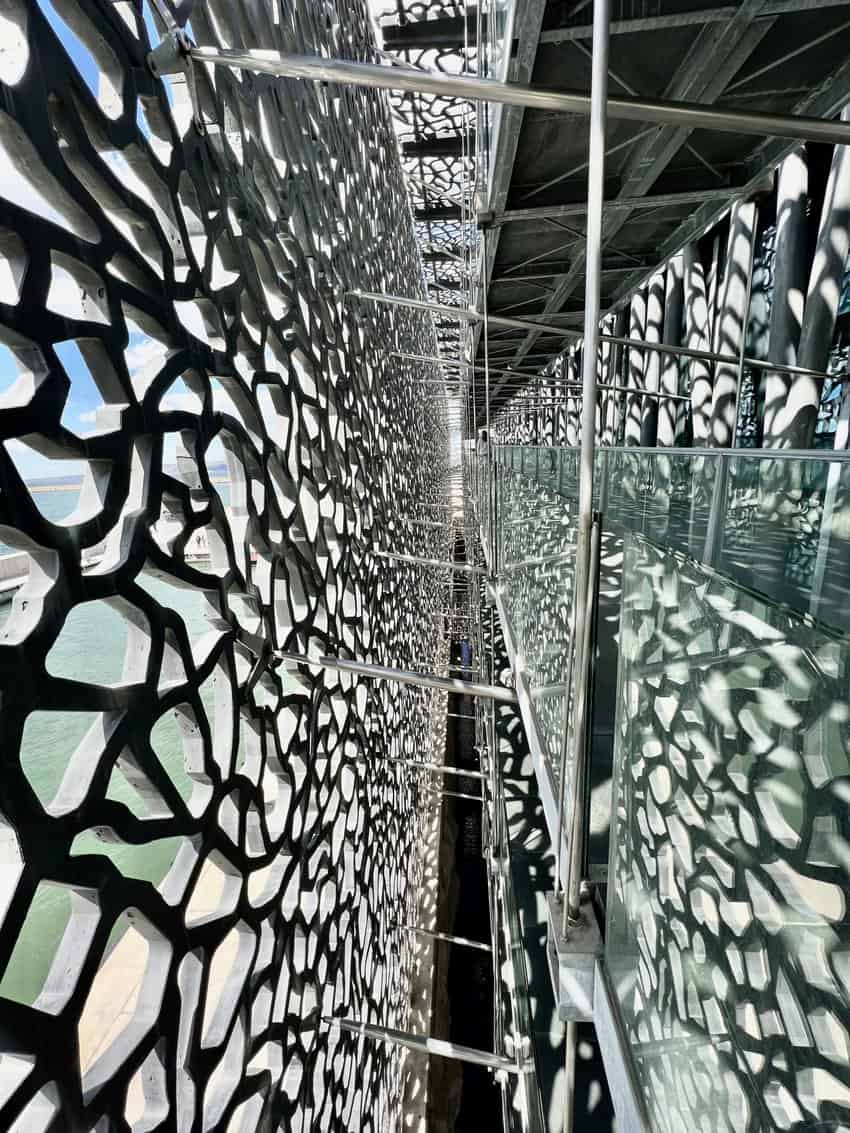
It’s impenetrable-looking but accessible by crossing a narrow metal footbridge stretched over a turbulent moat. Interlacing chutes and ramps shape the imagination once inside.
The museum was perched side-by-side with the 17th-century redefined Fort Saint-Jean. There were unbeatable views from both, and, as we soon discovered, the rooftop terrace proved a great place to reflect on how Ricciotti could have engineered such a masterpiece.
Prehistoric Penguins
Another intriguing museum right next door to the MuCEM was the replica of the Conquer Cave (Grotte Cosquer). Modeled on a subterranean grotto some 20 miles south of Marseille, the accuracy of the depiction was uncanny.
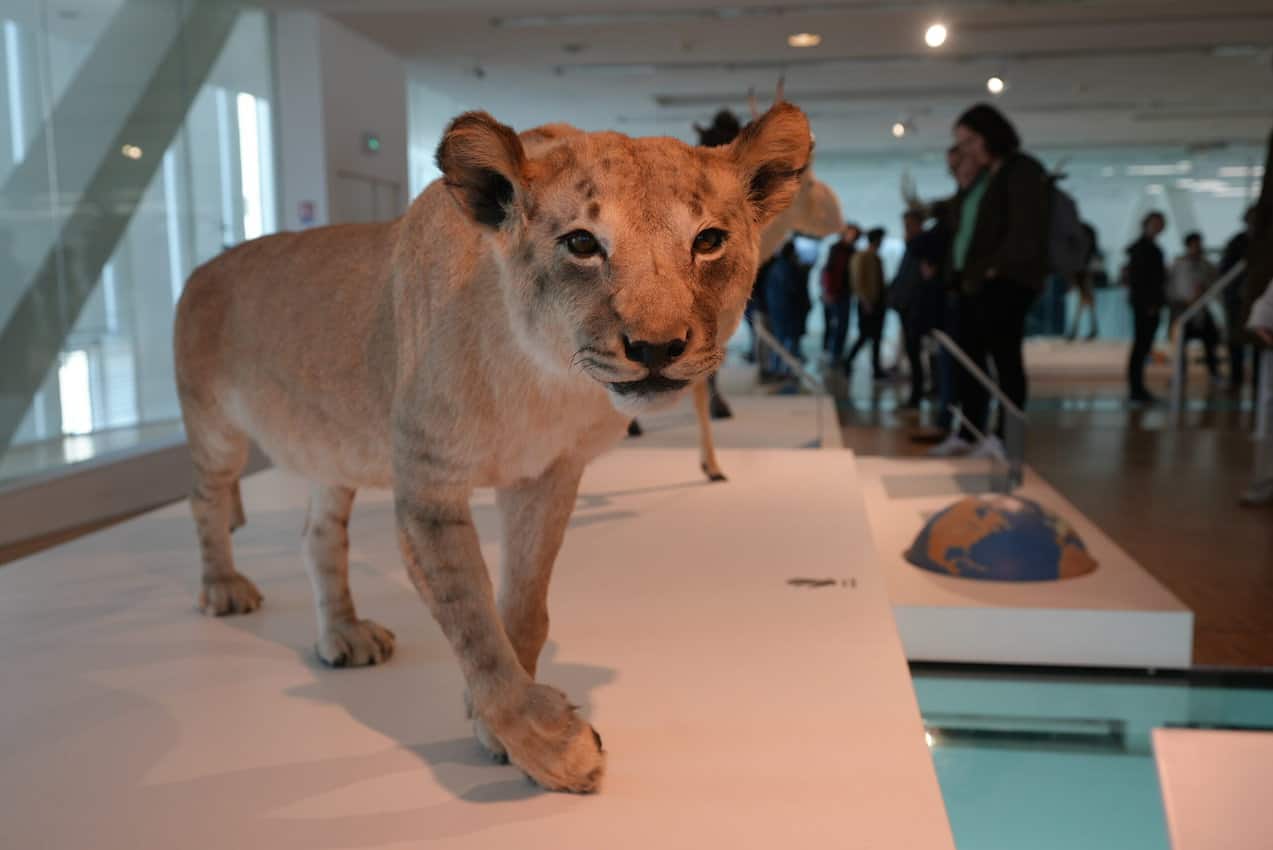
Prehistoric drawings of penguins, birds, and deer sketched by early homo sapiens dated back some 30,000 years ago. Today most of the animals engraved by our ancestors have gone extinct. Their real charcoal drawings are now at risk of rising waters ergo the importance of this mirrored attraction.
Underwater Dive
The Conquer Cave took 10 years to build but finally opened its doors in 2022. It’s partially housed underwater with the other half, a gallery section, cantilevered over the pedestrian square.
We boarded a small exploratory pod equipped with headsets to listen to a 35-minute narration while the ride swiveled and rotated through the underworld.
The sweet smells of Soap
At the Savon de Marseille soap museum, the famous trading brand cleared up any confusion over the importance of germ-free living. It was the saltwater marshes near Marseille that have always provided two key ingredients: soda and salt.
The museum was a quick study on the importance of how it was made and how the city benefitted. This was also affordable and fun especially the interactive scent-testing area where our noses turned a chalky white.
With the resurgence in bar soap popularity, French-milled beauty products make for the perfect gift to squeeze into a suitcase. Marie and I go on a shopping frenzy at the shop next door. We remembered to look for the soap-makers alliance logo to be assured of the highest quality.

Home Away from Home
Collectively, the four of us decided months earlier to commune together in Marseille’s ancient maritime Vieux-Port (Old Port) district. They opted for an Airbnb rental; we scored two nights overlooking the wharf in a stylish third-floor flat at the Maisons du Monde Hôtel & Suites.
The bed was like being at home but the pillows made it even better! In the morning, the hotel’s petite dejeuner of croissants, fruits, eggs, and meats was anything but small. Envious was Marie when she tasted the results of my cafe au lait from the cappuccino machine.
The only drawback was a lack of a refrigerator but, no matter, we used the deep window sill to keep our leftovers chilled. Coincidentally, this mid-range hotel proved to be just as affordable as my friend’s Airbnb option nearby.
Bouillabaisse Fix
Marseille cuisine is best known for a stew made of garlic and saffron-flavored fish scraps called bouillabaisse. The soup is best enjoyed at an outdoor table off the beaten path and crowded with locals. My soup was okay but I was much more smitten by the city’s selection of fine oysters.
Pearls of Wisdom
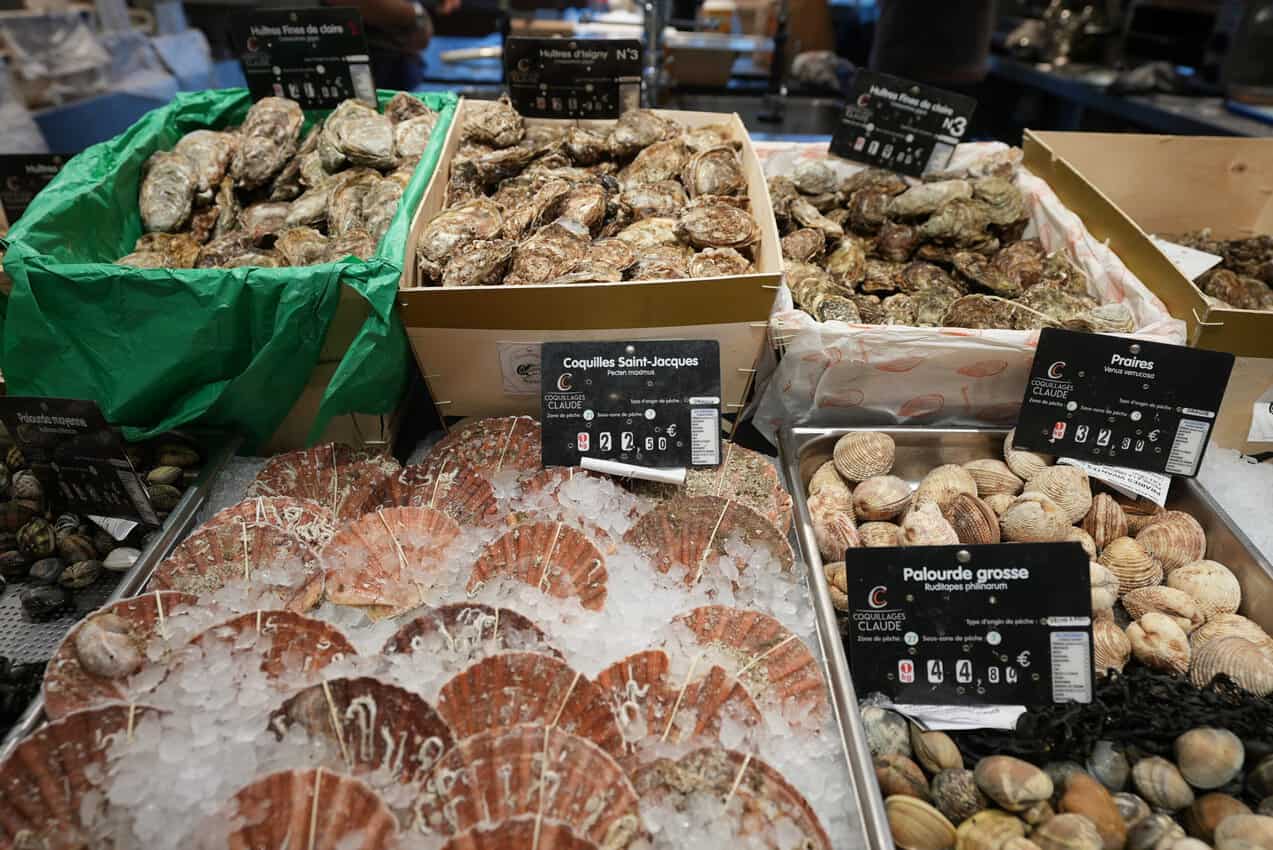
Throngs of oyster connoisseurs lined up at one of 12 food stalls inside The Grand Hall (Les Grandes Halles) for a freshly shucked delicacy, the prized Belon.
The courtyard concept opened in the epicenter of a neighborhood once maligned by high crime. Today, the only laws broken are those who eat oysters between May-August. Remember foodie tradition dictates that wild oysters be consumed in months ending with the letter “r.”
Fishmonger Flavors
My friends circled the rest of the stalls where modern merchants complimented institutional fishmongers that flaunted red mullet, bream, and grouper.
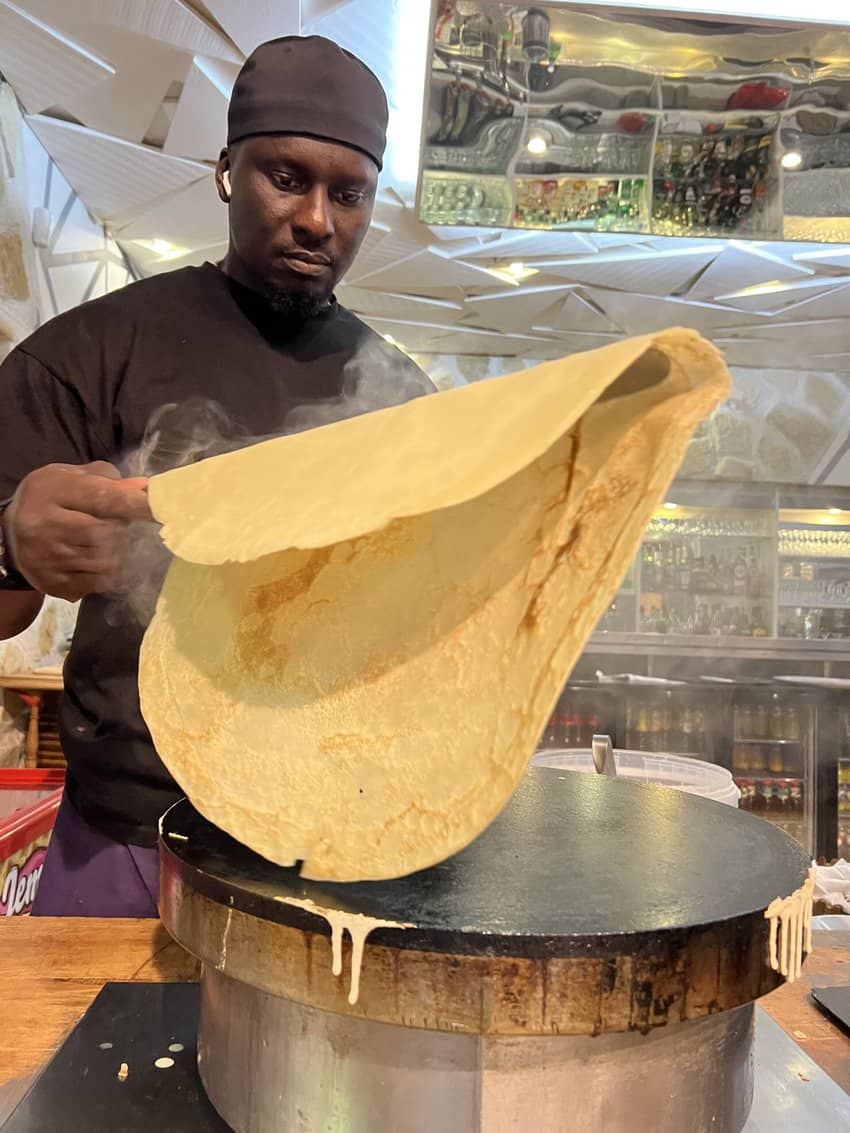
For dessert, we queued up at a counter with cooks hand-flipping a famous batter-fried chickpea snack called Panisse. (For the record, it’s an acquired taste.)
With so many bars and cafés along the Old Port, I finally decided to wrap up the day with a Pastis in hand and people-watch from my hotel. Pure bliss.
Stunning Fjords
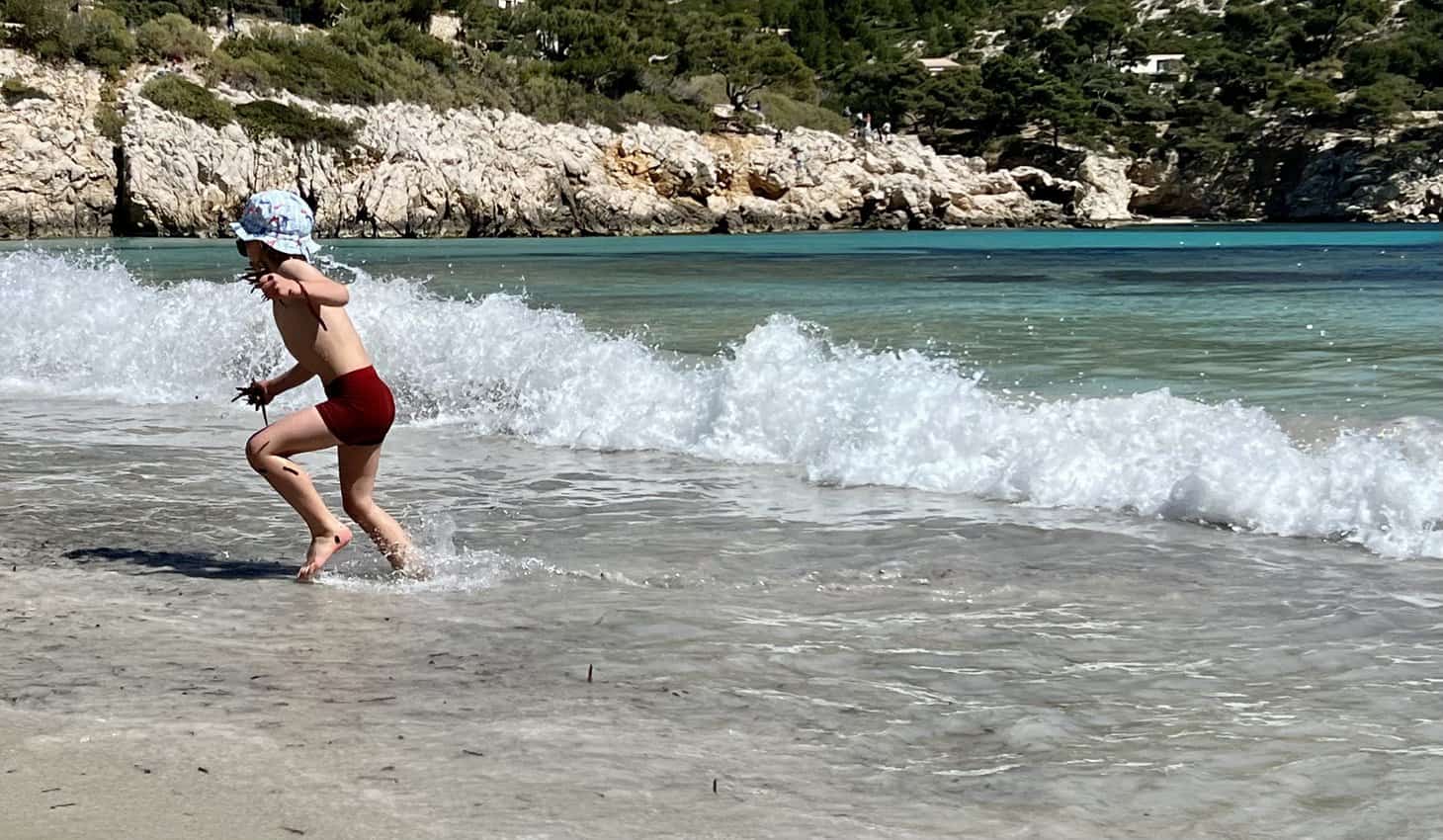
The next day, we awoke to calm skies and a tranquil Mediterranean. The winds had finally abated in time to visit the postcard-beach cove of Sormiou. Our friends had already fled for a trek up and over the famous Celanques National Park hopeful to arrive before the sun got too strong.
We lagged far behind but saved energy by renting e-bikes from a shop in Marseille. Trolib owner Emilien Viartrent outfitted us with our “cheaters” and the assurance of never getting lost with a GPS app called Komoot.
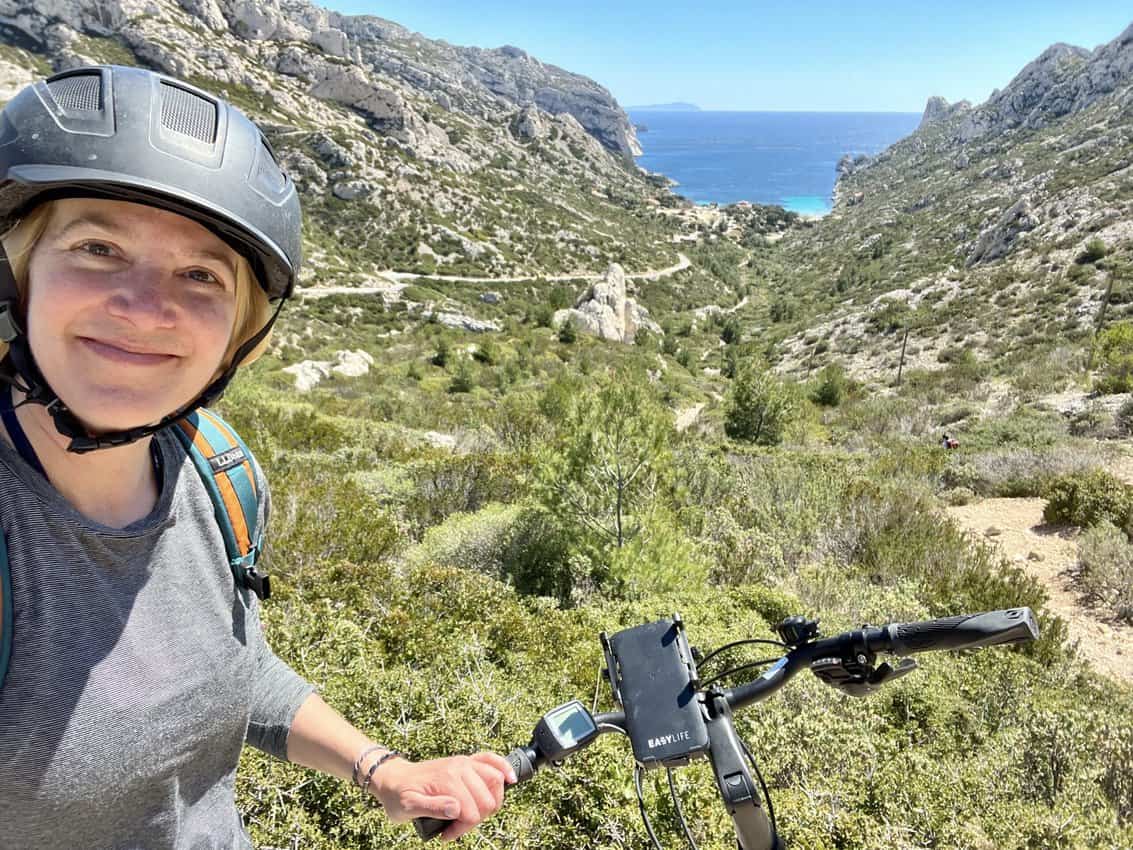
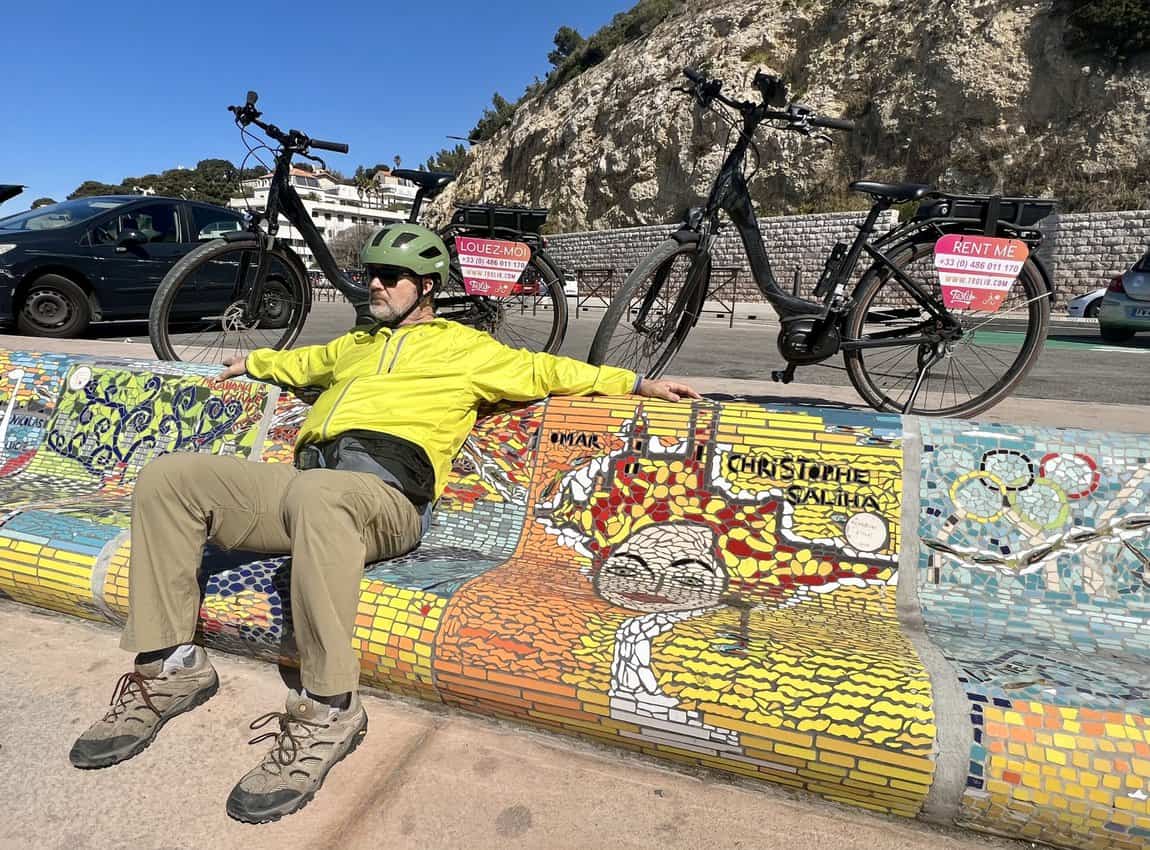
Biking alongside a twisty ribbon of highway revealed stunning limestone fjords and popular beaches. We sought a little R&R at one of the longest and most colorful mosaic benches in the world.
Then we zigzagged up and down a rocky massif brushing past pine trees and kicking up gravel. The steep hairpin turns were no joke.
Finally, donning the crest, we saw the bright, blue horizon just ahead. It was a race to the finish.
We bombed down the last stretch with wild abandon. We found our friends catching their breaths in the shadows of an old lifeguard station. Next time they too would rent e-bikes.
Grand Finale
Marseille is a city burgeoning with transformation and renewal. It’s moving forward, setting sail its once-sketchy and seedy reputation for bold and beautiful. As Alexandre Dumas once wrote, ‘nothing succeeds like success’ and Marseille is succeeding in getting younger with age every day.
Be sure to invest in a 24h, 48h or 72h City Pass to tour all the places we loved going. Visit Marseille Experience!


- Southern Australia: Cruising Victoria’s Coastline - November 9, 2024
- Southern Iceland Road Trip: Mesmerizing Landscapes - May 1, 2024
- Marseille, France: Biking to the Calanques - June 23, 2023





June 24, 2023 @ 2:56 pm
Sonja’s blog on Marseille was an absolute pleasure to read! I have now committed this trip to my bucket list!