
African Wildlife Safari and Zambezi Riverboat Cruise
It’s the only choice if Africa’s fragile ecosystem is to survive.
Instead of sleeping in a lodge and venturing into the game parks by day, take the luxury eco-riverboat option that allows travelers to breathe in the life of Africa’s floodplains.
By Cindy-Lou Dale
Senior Writer
The sun is a red orb sitting low on the horizon. The only sound is the eerie cry of an African Fish Eagle. A warm breeze plays with my hair, scenting it with the aroma of savannah grasslands.
It’s all rather splendid, quietly cruising along the Chobe River, between Namibia’s Caprivi Strip and Botswana’s Chobe National Park, which together contain one of Africa’s densest concentrations of wildlife.
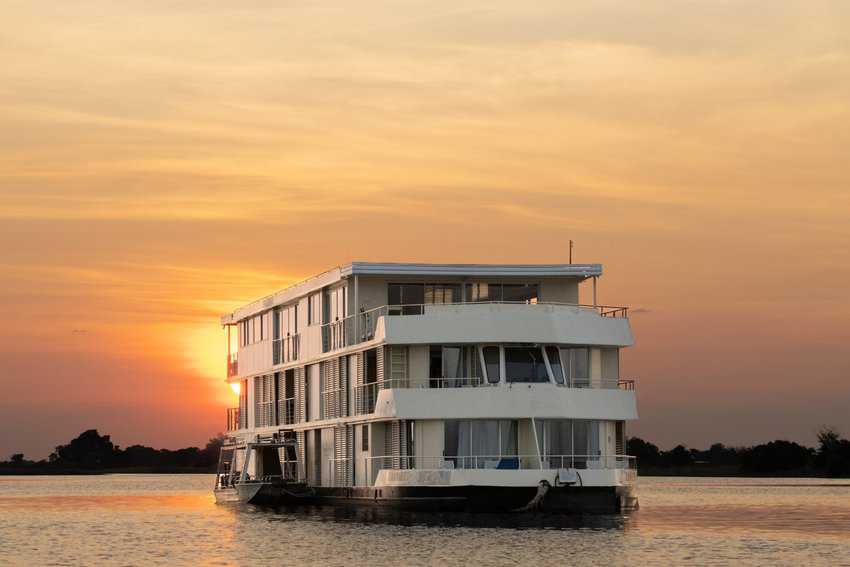
I’m onboard a sleek floating boutique hotel — the Zambezi Queen by Mantis. From afar, she looks like a floating sculpture, her white angular structure etched with floor-to-ceiling windows, and striped with balcony railings on each of her outer decks.
The only man I envy is the man who has not yet been to Africa, he has so much to look forward to.
Standing at the bow of the boat, on the second-floor deck, I see Africa from a different vantage point.
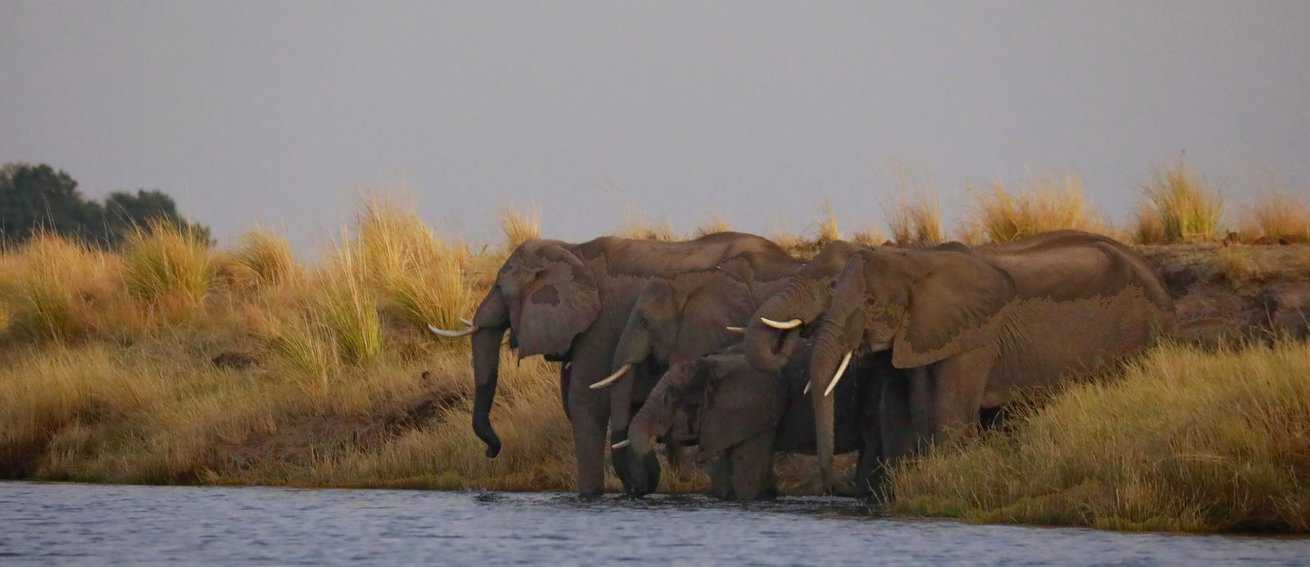
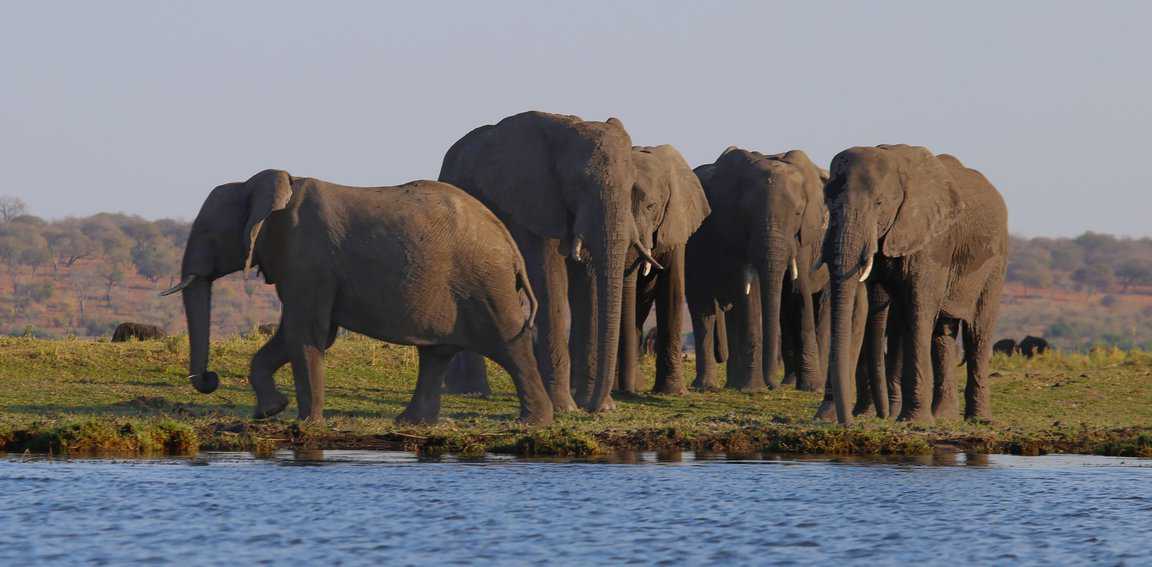
I’m looking head-on at a herd of elephants drinking from the Chobe. The animals look different from the waterside.
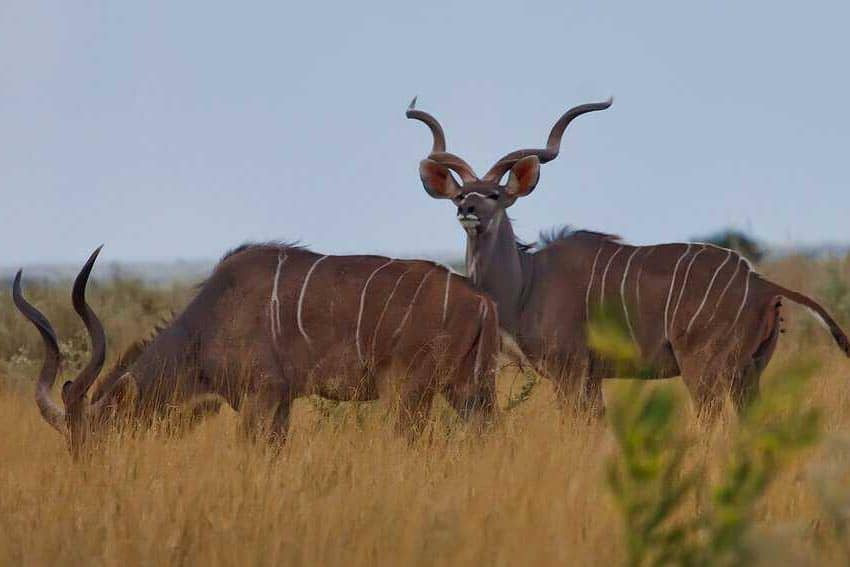
Instead of looking down on them from the height of a jeep, you’re gazing up or across. Kudus seem larger, hippos more menacing, crocodiles sunning on the riverbank, mouths agape. You’re encountering them in places that feel private. You feel insignificant on the water, more exposed.
On the Botswana side of the river is Chobe National Park. In the distance is a fast-approaching convoy of 4×4 safari vehicles packed with mobile phone-wielding tourists.
Each vehicle is driven by guides who are financially motivated to get close to the animals.
These vehicles would surround a herd of elephants and get uncomfortably near, which distresses the beasts to the point where they’re forced to relocate, only to be accosted by another conveyor belt procession of 4x4s. This forces the elephants to the riverbank, where the vehicles have no access, and crisp, clear photos for me.
This is by far the best way to safari. No sweaty, bumpy, and dusty game drives. Just chilling on the deck of an uber-luxury houseboat, G&T in hand.
A unique eco-travel experience.
Getting there is as exciting as the riverboat cruise itself and requires two flights and several border checkpoints.
A flight to Johannesburg (South Africa), then another to Kasane (Botswana) – the gateway town to the Chobe National Park.
After getting your passport stamped, you’ve officially exited Botswana and, via tender boat, transfer to Impalila Island where passport control officially welcomes you to Namibia. Minutes later you’re back in the tender boat; next stop is the Zambezi Queen.
A Welcoming Song
On arrival, you’re warmly received by the female staff singing a welcome song. You’re taken upstairs and shown to your cabin. The muted subtlety of the African-themed décor, the predominance of overstuffed pillows and soft couches all combine to create a sophisticated vibe.
The top (third floor) deck is where the common areas are – an indoor dining room, a lounge, and a bar. At the bow is a splash pool and sun loungers, at the stern is another bar and outdoor lounging area.
Later in the evening, I wandered to the stern to view the Milky Way. The cooler night had set in and released the scents trapped by the hot day – the sweet warm waft of the potato bush, and the sharp citronella smell of khaki weed. With zero light pollution its especially rewarding. You’ll lose track of time counting shooting stars. The boat itself is configured for just this kind of discovery.
The Chobe National Park boasts an elephant population currently estimated at 120,000 – and I am certain you’ll get to see every one of them.
I woke before dawn and stood outside on my deck in the mist smudged darkness of first light, breathing in the spicy wood scent of Africa.
A herd of elephants emerged ghostlike, silently approaching the water’s edge, they had a drink then left quietly, melting into the ground mist.
The sun began to rise, catching itself in the trees on the far bank, bleeding red and gold across the water. Then the birds, in an explosion of African colors, assumed, the responsibility of opening the day, singing the stories of their lives to all who would listen.
The African bush stirred some more with the high-pitched screeching of cicadas – a constant background of sound.
I quickly dressed and relocated to the stern of the boat, armed with my cameras. A thermos of fully leaded coffee appeared just as I spotted a huge kudu bull. He stood beside a thorn bush, his horns corkscrewing up a good four feet.
He stared me down – the perfect V on his nose my camera’s target. He sniffed the air then, with a magnificent leap, his horns laid across his back like medieval weapons, he disappeared, plunging greyly into the bush.
If you only visit two continents, visit Africa – twice.
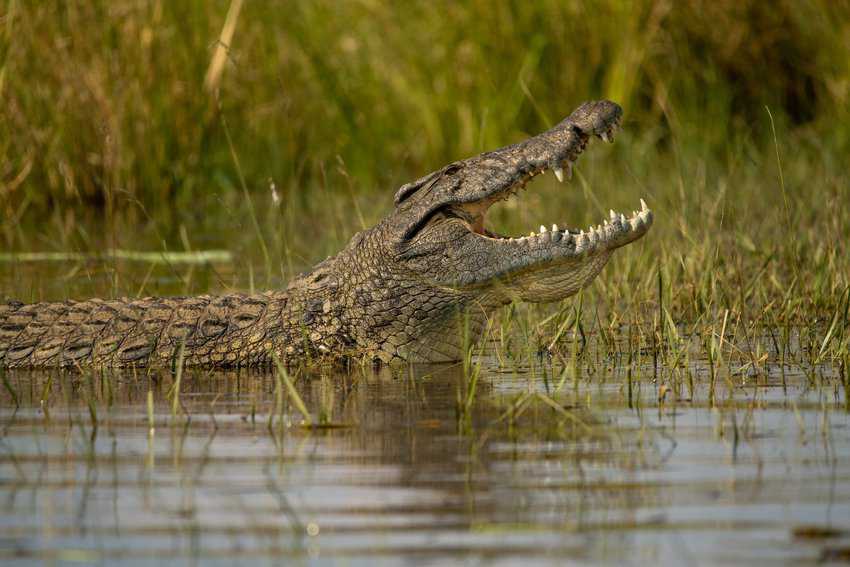
Turning to the opposite bank, my lens finds a bask of monster crocodiles.
Their knobby green-grey armor plating made them barely detectable in the wind-rustled reeds.
Several flung themselves with unsettling speed and agility into the water where I imagined them to be surging under the boat.
Before lunch, I had seen a kaleidoscope of giraffes, several hippo pods, a troop of baboons, and a herd of buffalo. But the most spectacular of all was the sighting of Eland – Africa’s biggest antelope, bison-like, with huge shoulder humps.
Sleek, taupe, and plump, they toss their long horns swish their tails, and chew their cuds, mouths flecked with green foam. They are without predators as they are too tall for lions and too big for leopards.
The afternoon turned into a thick mellow evening. The light-filtered syrup was yellow as the heat of the day melted away.
As the sun began to sink towards the horizon it turned the sky deep red, as if it were on fire. It was time for me to meet Captain Patrick Muhanubi, a tall, softly spoken man, who gave me the spec of the Zambezi Queen.
The Zambezi Queen ticks all the green eco boxes.
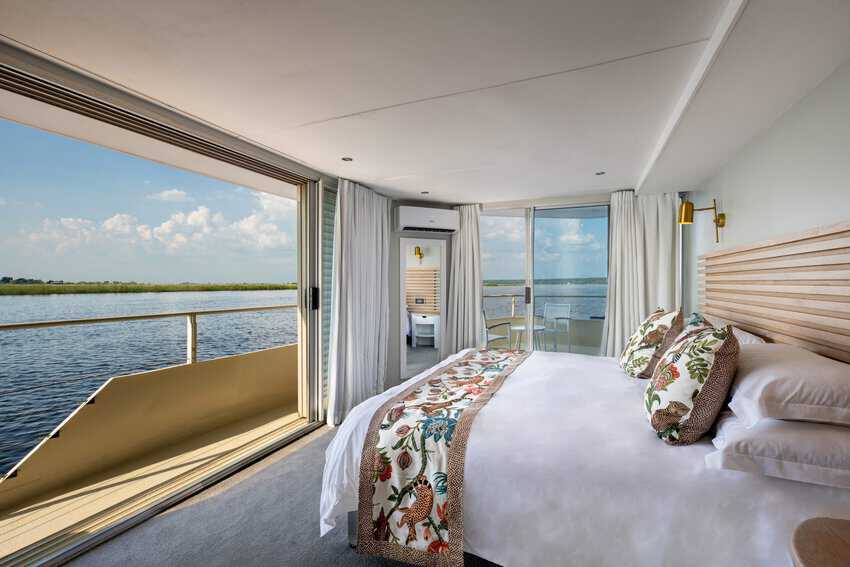
The 42m long award-winning Zambezi Queen has 14 suites (each has its outer decks) and a 28-person crew – local Namibians from the surrounding villages. She runs on jet propulsion to avoid damaging the riverbed.
Hot water comes courtesy of solar panels; and generators are shut down at night, saving power and diminishing noise pollution.
He adds that the Zambezi Queen slowly plies a 25km stretch of the river alongside Botswana’s elephant-packed Chobe National Park.
Patrick continues to explain that two small tender boats are used for daily excursions. These smaller vessels take you nearer to the riverbanks, and the wildlife on it. These ‘game drives’ occur twice a day – at dawn, especially for those who want to try their hand at catch-and-release Tiger Fishing, and in the late afternoon for sundowners.
There’s also a cultural tour of a local village where the dark mouths of thatched huts house 65 industrious people.
There is little as stirring as many full-throated African voices raised in harmony.
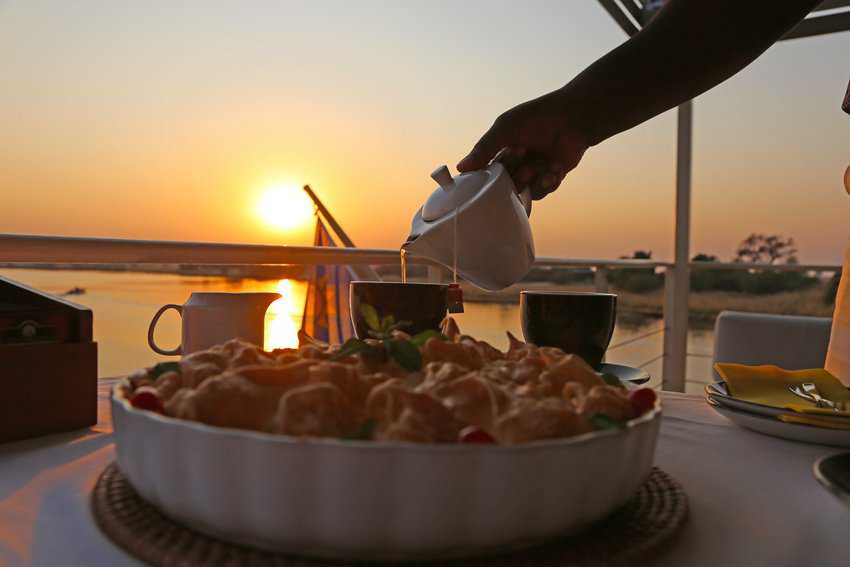
You will eat well too. The meals, including delectable deserts, are gourmet delights – a temple to fine cuisine.
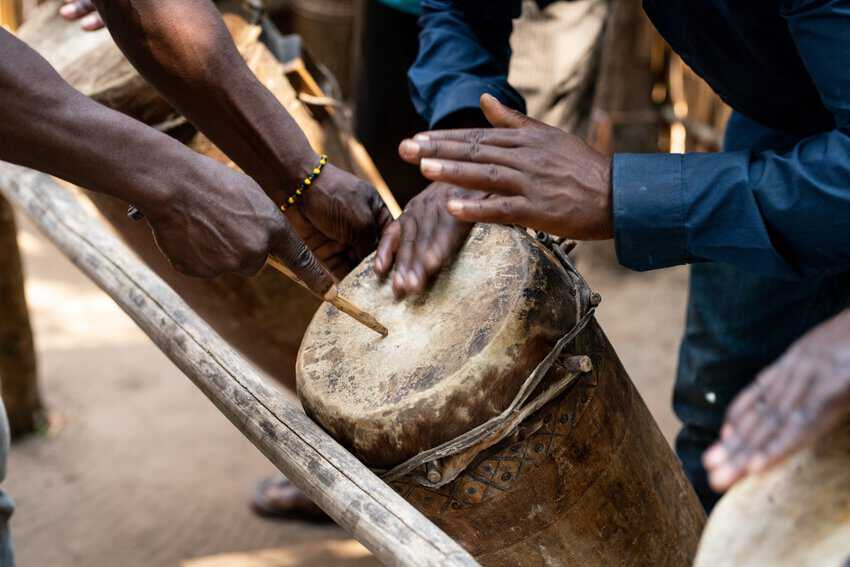
After dinner on the second night, new friendships were celebrated in the traditional African way – swirling robes and brightly colored dresses, drumming, singing, dancing.
Then the Westerners hit the floor to shake their traditional skirts. In closing, the choir sang an old African hymn, Nkosi Sikelel’ iAfrika – God bless Africa, give her life, watch over her children.
The Mantis Collection are committed to the continuous growth of their staff, empowering them to better their own lives, their families, and communities. Mavis, the onboard chef, had no formal education and started as a scullery maid. She was allowed to demonstrate her skills and soon rose in the ranks.
Similarly, Captain Patrick was initially part of the maintenance team and showed an interest in sailing. He too received the relevant training and in 2016, earned his stripes. It is a tourism win-win with a huge feel-good factor.
If safari history is imbedded in hunting, cameras have now replaced guns.
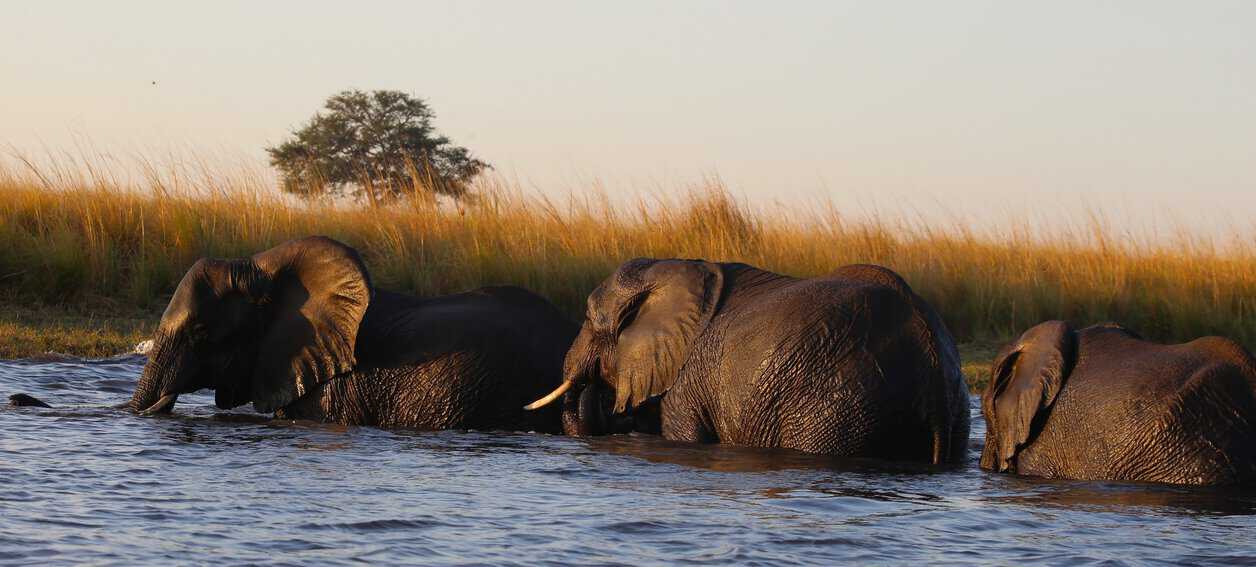
A large elephant herd was crossing the river whilst launch-boats were crowding them in.
A pleasure craft, filled with cheering travelers, blocked the bull leading the herd from exiting the river.
He turned right but another, even larger vessel blocked his passage, and to the other side was a collection of eleven launch boats directly between the elephants and the riverbank. He turned around to swim back to where they came, but then more boats crowded in.
The animals were distressed, the calves were exhausted, going underwater, and mothers were trumpeting and flapping their ears. Several of the smaller vessels recognized the imminent danger and made passage for the elephants.
Not the Only Tragedy
This is by far not the only wildlife tragedy – it’s all over Africa. In Kenya the Cheetah population is dying out, as they simply cannot hunt because of the interference of safari vehicles. In Africa, safari tourists have become the paparazzi.
What’s the solution? Shut down mass-tourism outfits and replace them with high-tariff, low-volume operators. It should be expensive. Very expensive. It’s a privilege, not a right.
As travelers, it’s important to practice responsible tourism and support conservation efforts in Africa by choosing tour operators that prioritize sustainability and minimize their impact on the environment. This includes operators that follow ethical wildlife viewing practices, promote responsible waste management, and support local conservation initiatives.

- African Wildlife Safari and Zambezi Riverboat Cruise - October 30, 2024
- Taste of Ethiopia: a Food Tour of Addis Ababa - October 10, 2024
- The Elephant Camp, Victoria Falls, Zimbabwe - October 3, 2024


May 3, 2026 @ 1:24 am
This was such a fascinating read-what really stood out is how the safari experience is reimagined through luxury and perspective. The idea of exploring wildlife from a riverboat instead of crowded jeeps sounds incredibly peaceful and immersive. Watching elephants, hippos, and crocodiles from the water must feel far more intimate and less intrusive.
I also appreciate the emphasis on eco-conscious travel-luxury safaris today often balance comfort with conservation, helping protect fragile ecosystems while offering exclusive experiences .
It’s amazing how travel like this transforms a typical safari into something deeply meaningful and unforgettable!
May 4, 2026 @ 2:24 pm
Thank you, Vikash — I’m glad that came across.
Having been there, the difference is very real. From the water, you’re not chasing wildlife — you’re meeting it on its own terms. The encounters feel calmer, less engineered.
But it’s not automatically low-impact. I saw firsthand how quickly things tip when too many boats or vehicles crowd a sighting — the animals feel it immediately.
That’s why the model only works if it stays genuinely low-volume. Otherwise, it’s just a more comfortable way of doing the same thing.
Done properly, though, it’s exactly what you describe — a far more respectful and meaningful way to experience wildlife.
November 8, 2024 @ 12:09 am
An insightful and captivating article on the African Wildlife Safari and Zambezi Riverboat Cruise! It beautifully captures the majesty of the wildlife and the serenity of the river experience. The vivid descriptions bring the adventure to life. A must-read for anyone dreaming of exploring Africa.
May 4, 2026 @ 2:28 pm
Hi Reeta, thank you — I really appreciate that.
What stayed with me most about being there was that quiet tension beneath the serenity. The river feels almost meditative, but just beyond it there’s constant movement — wildlife arriving, retreating, watching. It’s never still for long.
I’m glad that sense of it came through.