Literary Tourism: Travel By the Book

Here Are 8 Places Around the World Inspired by Authors: Literary Tourism
By Myna German
“Literary tourism?” you say. “I’ve never heard of such a term.” Watch closely, because here’s where we pivot from personal anecdotes to microtrend.
Some of us travel for pleasure alone, like enjoying a beach on a sunny July afternoon. Some of us travel to learn new things, to discover new ideas. In literary tourism, we travel to enjoy a connection with our favorite authors. We travel to walk the streets where they lived and laughed and loved and cried. We travel to commune with our favorite characters.
Pico Iyer, British-born to Indian parents, who domiciled a long-time in California and wrote many books on multinational identity and cosmopolitanism, discusses the many uses of travel. In changing scenery and place, mingling with many strangers and cultures, we come to see the world differently and hopefully more expansively.
What is Literary Tourism?
Literary tourism is a type of cultural tourism that deals with places and events from fictional texts as well as the lives of their authors. This could include following the route taken by a fictional character, visiting a particular place associated with a novel or a novelist, such as their home, or visiting a poet’s grave. Some scholars regard literary tourism as a contemporary type of secular pilgrimage.
Tourism offers an escape from everyday woes, bustling careers and a “time out” to reconnect with loved ones in a novel way (Iyer, 1992). Some people flock to beaches and lakes for outdoor recreation, some people embark on an odyssey of the mind by taking courses or seeking literary sights. Cultural commissions in various countries designate sites and staff museums dedicated to famous authors.
Cities can brand themselves as destinations and find an identity in promoting pilgrimage to literary shrines within their borders. Writers have referred lovingly to their place of domicile or home in their books.
Here are some places you might visit for literary tourism purposes:
Dublin
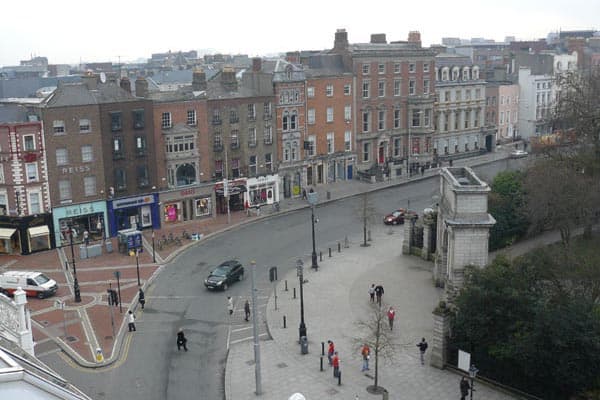
One such site in Dublin, Ireland where you can find James Joyce’s Historical Museum and Bloomsday tour. In his famous work, Ulysses (1923), Joyce details a 24-hour day in the life of hero, Leopold Bloom.
He awakens and carries out his ordinary business, visits pubs, and observes his wife mingling with her lover in a pub prior to going upstairs for an assignation. That pub is visitable on a mile-long foot tour of the neighborhood in Dublin. Artifacts with an informative film are visitable in an old house converted to a museum.
San Francisco
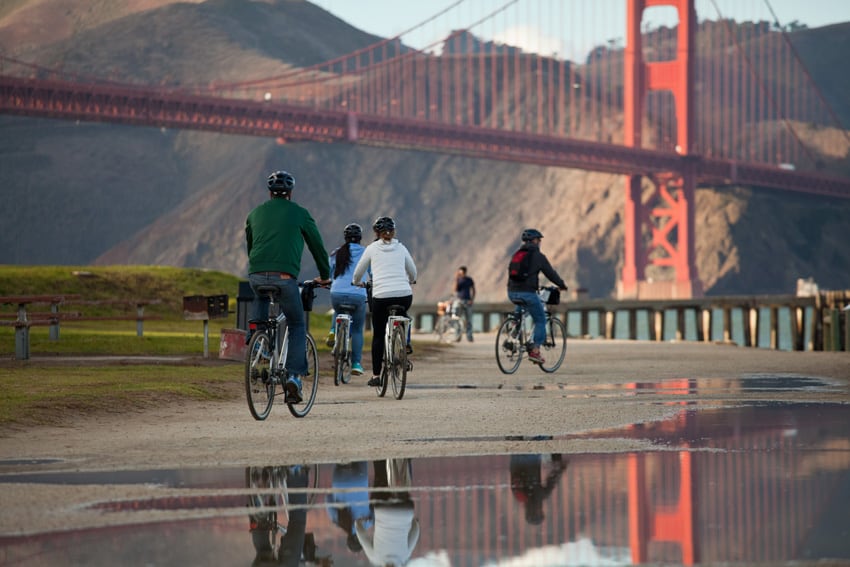
Poet Allen Ginsberg founded the “City Lights” bookstore in San Francisco, adopted it as a hometown after New York, and his store has attracted many visitors to North Beach. The bookstore has readings of his work periodically and carries all his books.
Ginsberg (1926–1997) was born in Newark, New Jersey, and was one of the leading voices of the Beat Generation, a literary movement that effectively began in San Francisco on the evening of October 7, 1955, when Ginsberg gave his first public performance of his poems, including the famous “Howl.”

Oxford, MS
Oxford is home to James Faulkner, the American novelist who epitomizes southern writing.
Every year, about 25,000 literary pilgrims come from around the world to visit Oxford, the heart of writer William Faulkner’s world. The fictional setting for most of his stories, Yoknapatawpha County is “one of the most convincing ever conceived by a writer,” wrote the late Willie Morris in a 1989 National Geographic cover story. “A microcosm not only of the South but also of the human race,” Willie observed.
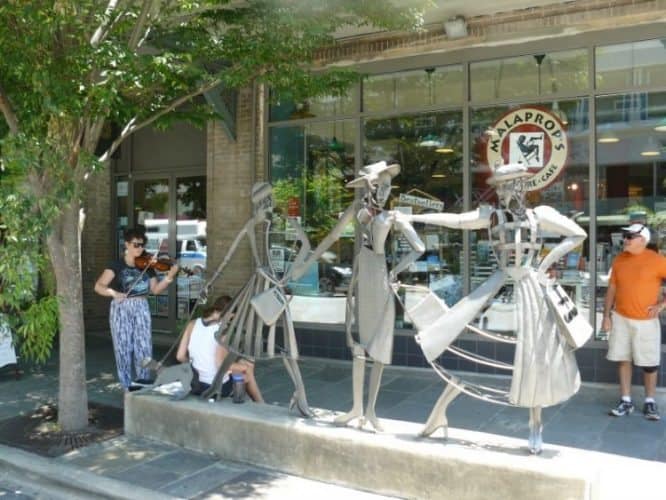
Asheville, NC
Thomas Wolfe writes affectionately of Asheville in “You Can’t Go Home Again” (published posthumously after his early death in 1938 at age 38) and he shows a tremendous sense of place and time in his books.
Wolfe lived in New York in later years, as well as sojourns in Europe, but many of his books discuss the long train ride from New York to Asheville to see his mother, who ran “The Old Kentucky Home” boardinghouse, which is a state-supported museum—a must-see on a visit.
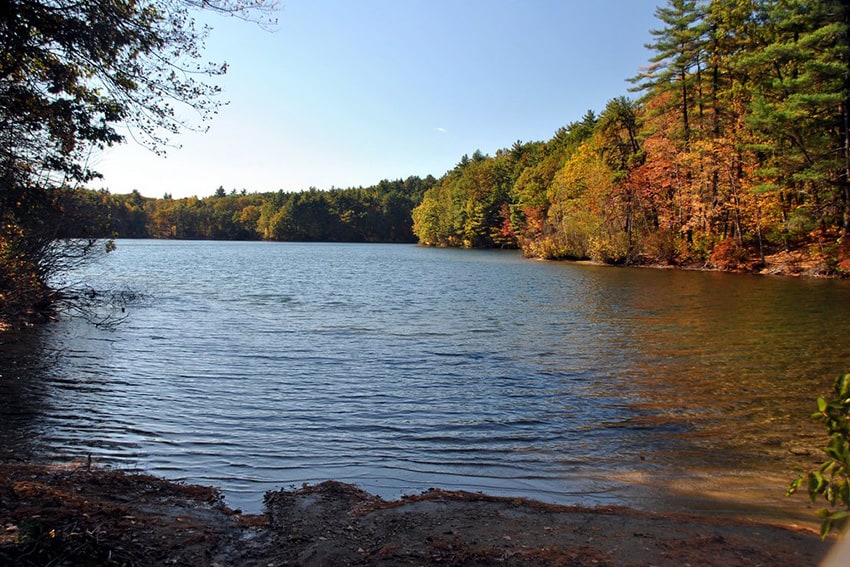
Walden Pond and Concord, MA
The transcendental poets and authors made this place home in the 1830s and 40s, about 25 miles outside Boston.
Henry David Thoreau retreated to the woods here to write Walden and it’s still possible to hike and swim in the very lake he wrote about.
He lived in a cabin for two years, resisting the influences of society to write the eponymous book.
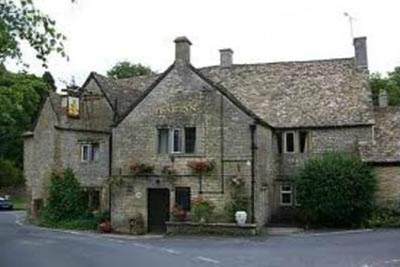
The Cotswalds, UK
It is no wonder that tourists flock to see the sites mentioned in a novel, albeit the author’s hometown or fictitious site.
In Jane Eyre, Charlotte Bronte makes the moors of northern England come alive and people that love the book flock here to see it.
Her sister, Emily Bronte, wrote Wuthering Heights in this lonely, isolated location in the 1800s.
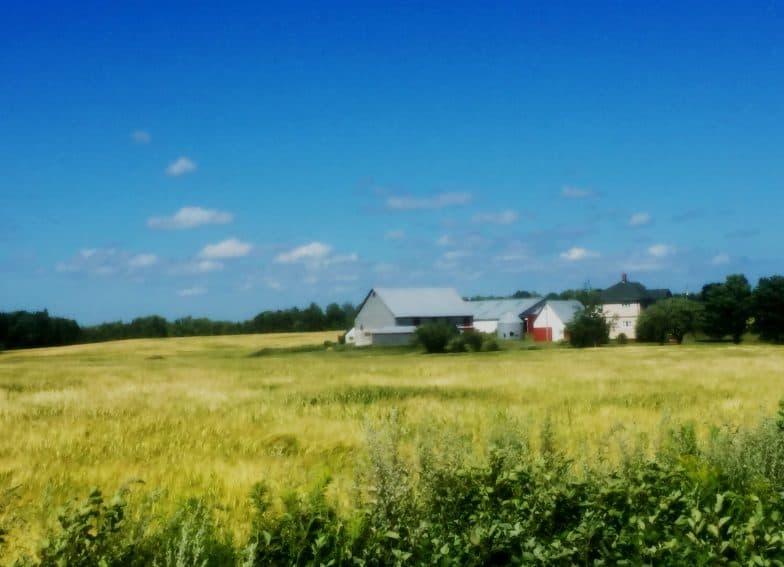
Prince Edward Island, Canada
Lucy Maud Montgomery (L.M. Montgomery) wrote Anne of the Green Gables, a coming-of-age novel about an orphan, her adopted parents and her fantasy world in this whimsical place.
Tourists flock across the ferry from the mainland to see the fabled cottage and island streets where her characters lived and loved and cried. Many four-hour organized tours depart from Charlottetown.
Key West, FL
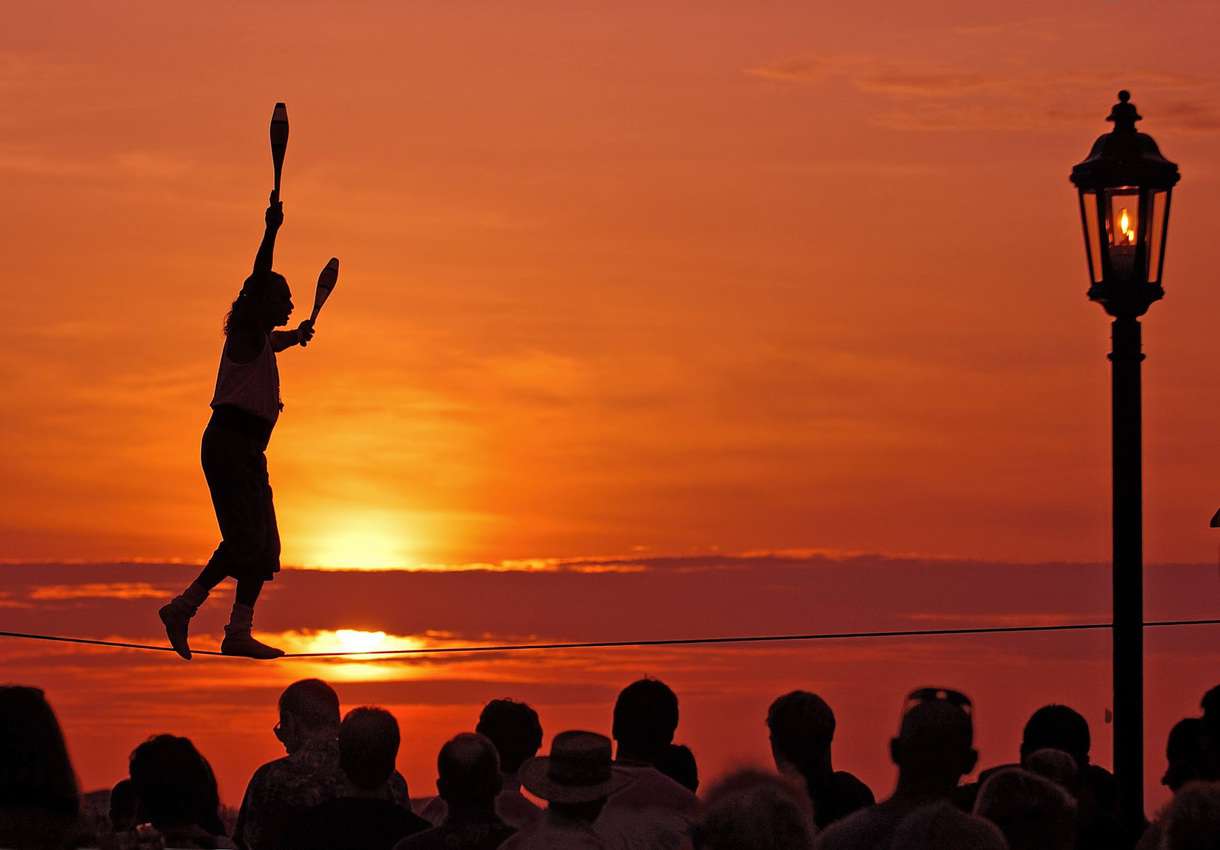
Author Ernest Hemingway divided his time between here and Cuba, writing his most famous novels such as The Sun Also Rises and Old Man and the Sea, picking up on the nautical themes that are almost in the air.
Culture is a collective asset. Creates joint values of set people. Travel almost the reverse, blending of people and cultures through movement
Literary places can be defined in various ways, but principally they acquire meaning from links with writers and the settings of their novels. Such places attract tourists and form part of the landscape of heritage tourism.
Literary tourism as subset of cultural or heritage tourism
In-place culture is a collective asset of a community. It creates joint values for a set of people. Travel is almost the reverse, blending people and cultures through movement and relying on transportation technology.
This writer has visited all of the suggested destinations. Your choice will vary based on what you read and the authors you are interested in, but definitely start out on these journeys. The more I do, the more I want to do. It has motivated me to start new novels by my favorite writers and also induced me to read writers that I never thought of.
It can be combined with nice hotels, scenic vistas, and all the regular trappings of tourism – motivated by escape and comfort — but it is deeply educational and can involve entire families.
Literary tourism offers opportunities and challenges for the serious traveler. It is not for everyone. Many people go to a city and discover there are literary sites to see, along with historic or other cultural. This article is written to suggest that you start with the literary and you will find other pleasures and side excursions along the way.
I find being a literary tourist quite a wonderful idea!

Myna German is a Professor of Literature and Communications at Delaware State University, Dover DE


- Slow Travel in 2026: Why Fewer Places Create Better Journeys - May 12, 2026
- How People Pay for Travel Today - May 5, 2026
- Last Minute Mother’s Day Gift Guide - May 3, 2026