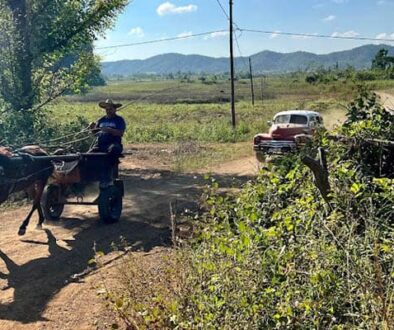
Laos Vows that Green Equals Gold
Southeast Asia’s emerging Underdog Country Laos Nails Tourism Sustainability
By Bruce Northam
Senior Writer

I’ve been visiting Laos, my favorite Southeast Asian country, for decades and still can’t get enough. In terms of development, which is always a murky term, people say Laos is 20 years behind Thailand. Sounds good to me.
But, large-scale development is arriving rapidly, as a high-speed train and a modern highway now cleave the country.
My recent assignment was supported by three organizations—SUSTOUR Laos Project, Lasting Laos, and Travelife—who have joined forces to help Lao tourism and society prosper in green mode.
This visit specifically focused on their unified campaign to encourage micro- to medium-sized tourism enterprises to adopt sustainable practices and earn certifications.
No greenwashing here, as I witnessed living proof of not only numerous, thriving initiatives, but also how this agenda directly benefits the Lao people.
I visited three of Laos’s greatest hits: its multicultural capital city, Vientiane; Luang Prabang, a World Heritage darling; and Vang Vieng’s adventurous mountain terrain.
This meant that many of the adventures were adjacent to the mighty, muddy Mekong River. The calming and centering gifts of Buddhism were never far away either.
Laos is a Laid-Back Heaven
To me, Laos is a laid-back heaven. Simply stated, the gentle Lao people are eternally open to sharing and caring. Honesty is another consistent human thread. One example is their currency, the kip, where $1 equals 20,000. As you can imagine, even small transactions use a stack of bills involving higher math, which can be confusing.
My tactic is often just laying out my bills so cashiers and servers can take the right amount. Not once was I let down. Lao people also seem to have an incredible work ethic, yet without unnecessary rushing. A local joke is that Lao PDR (People’s Democratic Republic) actually stands for please don’t rush.
Travel industry people often assign star ratings to hotels and restaurants. Laos trumps that star system with endless, genuine, and intimate family-star businesses. After endlessly circling the globe while using New York City as a home base, one of the ways I judge a place is based on motorized vehicle horn-honking.
Even in the bustling capital city, a French-Colonial maze, you’ll rarely hear horns; and the driving style is surely far more courteous than expected. I’m betting those lifestyle enhancements are beneficiaries of Laos’s 7.5m people being 90-percent Buddhist. Laos averages 60,000 American tourists per year—about the same number of souls attending one sold-out Yankees game.
Vientiane
One of the first things I do when I land in any country is get a haircut, as it’s a great way to quickly reset from your hometown vibe. I hit Vientiane’s mod Kicks & Kuts and was off to the races (without breaking the bank). My debut lodgings, Salana Boutique Hotel, is a classic dark-stained wood gem with a high-end yet affordable restaurant.
This nifty pad has all the accoutrements of an international hotel but no alienation of the beat on the street. And, the hotel has met the 256 criteria to become certified by Travelife, which includes playing a role in identifying dangers to children in tourism.
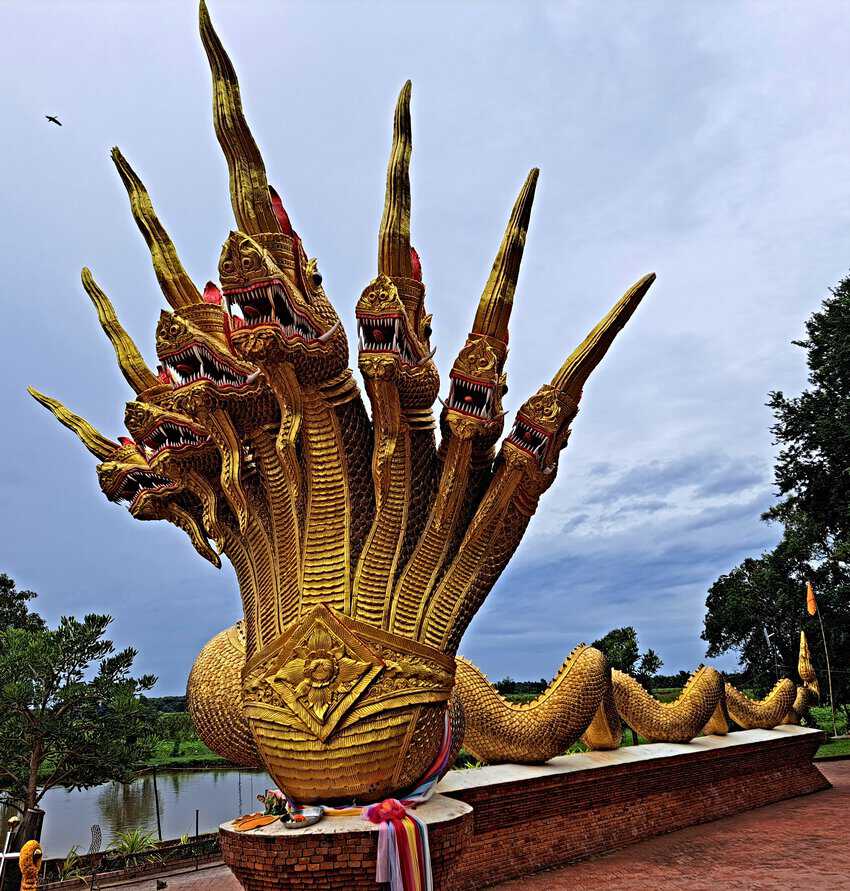
You won’t get more than a few blocks in any Lao town without encountering a Buddhist temple. The Nongkhamsen Temple is adjacent to recently protected wetlands and is not on the tourist circuit.
A highlight is its serpentine Naga sculpture with seven of each: heads, body curves, meters-high, and tons. Although sometimes portrayed negatively, it generally represents fertility, steadfastness, and immortality.
Part of the significance of seven is universal, as most cultures and religions use a seven-day week. I pondered the relevance of seven in my life and only came up with this song. How about you?
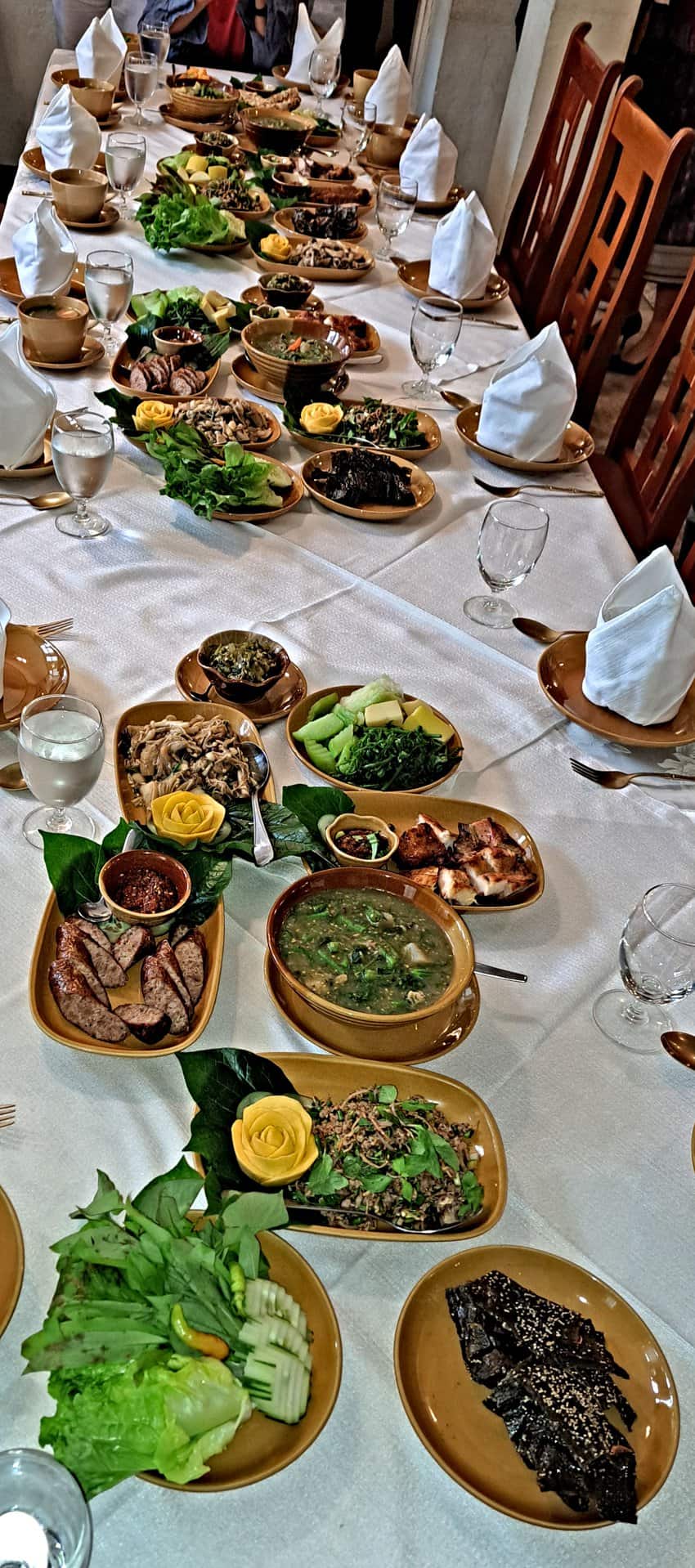
For Westerners, Lao cuisine is finally emerging as the healthy and delicious cuisine it’s always been.
A great example is the charming Kualao Restaurant, which has been family-run for 30 years. Its spicy, green orlam stew is a traditional dazzler (beef, quail, eggplant, wood-ear mushroom, yard-long bean).
It’s housed in an elegant, vintage villa that was once the residential estate of French-Indochina Colonial officials. The traditional Southeast Asian interior showcases East meeting West.
Its Lasting Laos sustainable restaurant certification assures that they prioritize the sourcing of local ingredients as well as local business services.
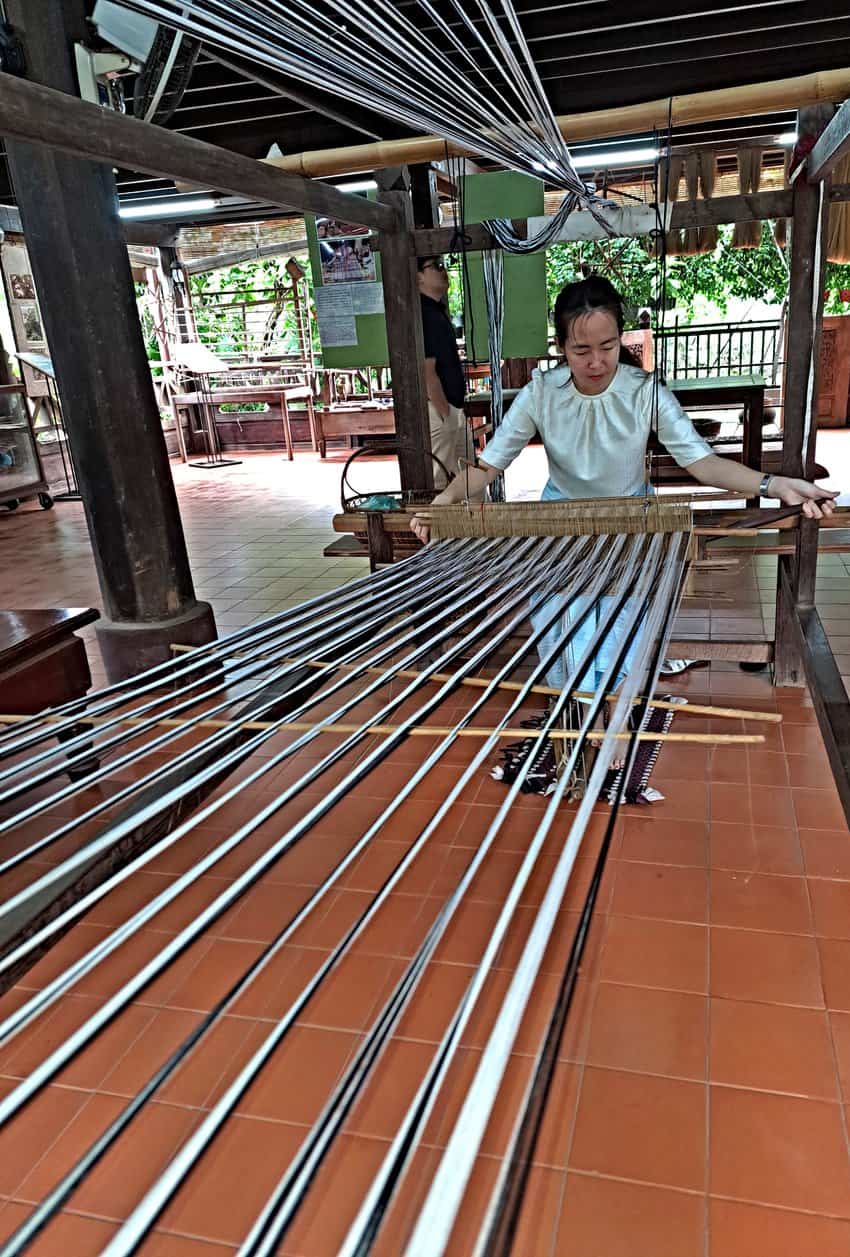
A personal benefit of such assignments is visiting attractions that I would otherwise consider too touristy. However, the Lao Textile Museum brings complex silk weaving to life. At this private museum/traditional Lao house that’s surrounded by gardens, flowers, and air plants, you’ll also get a mini-PhD on natural silk dying.
Laos remains the most heavily bombed country in history. In an undeclared war (1964-73), the U.S. dropped half a ton of bombs for every inhabitant.
Those 580,000 bombing sorties meant a planeload of bombs every eight minutes, 24 hours a day, for nine years. COPE provides free rehab for thousands of people with mobility-related disabilities, including prosthetics for UXO (landmine) survivors.
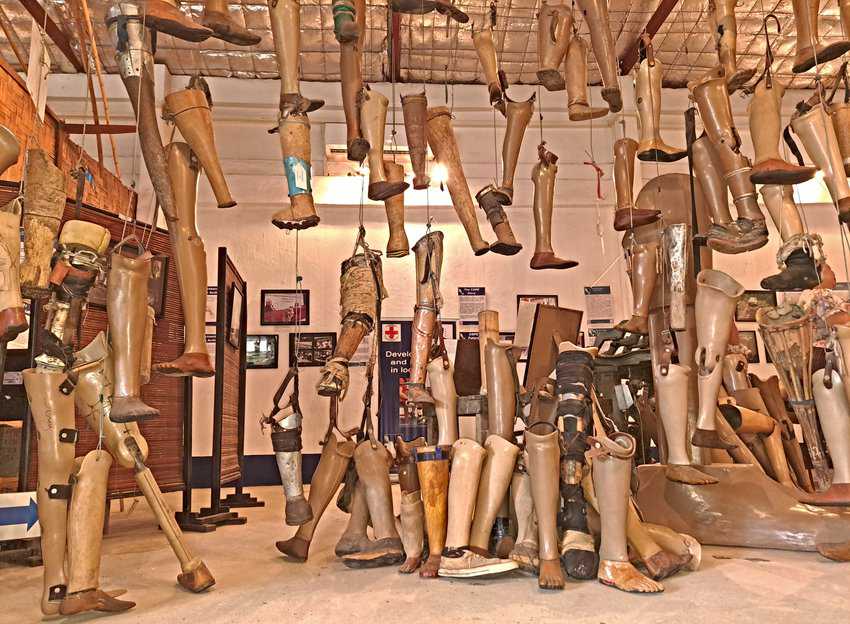
During the secret war in Laos, 270 million cluster bombs were dropped, and up to 80 million did not detonate. Five decades on, less than 10 percent of these munitions have been destroyed. I’m an extremely proud American citizen, but, unfortunately, such truths diminish that patriotism.
Luang Prabang
Laos’s star city, ancient Luang Prabang, might be considered this country’s San Francisco. It’s where trendy meets deep culture, and rich French-Colonial architecture blends with traditional Lao architecture.
Inhabited for thousands of years, it was the royal capital of the country until 1975. It has been a UNESCO World Heritage Site since 1995.
This means that new buildings have been limited and development must be in keeping with this magically artistic and walkable place.
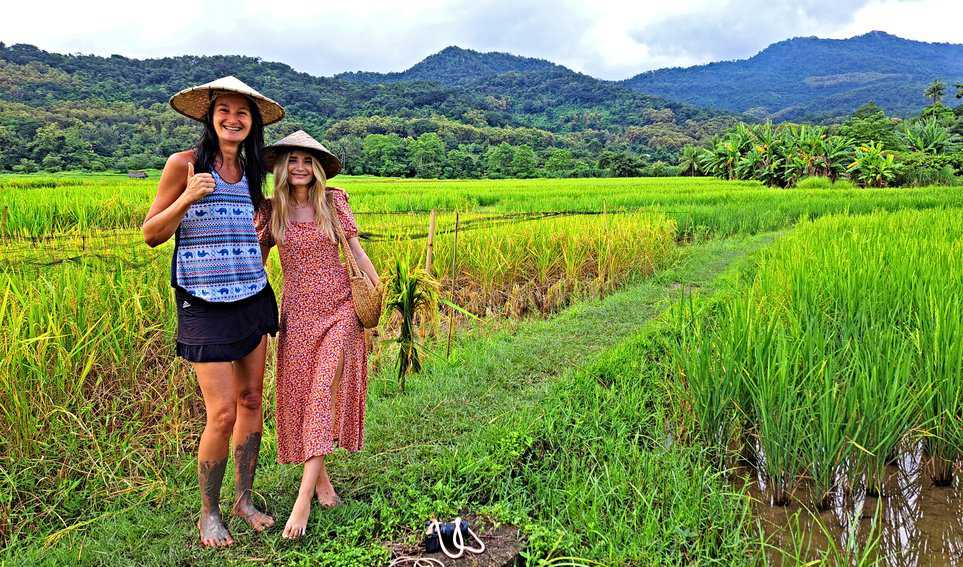
Sometimes, touristy offerings delight—even better when experienced barefoot! The Living Land Farm, where hands-on farming activities include rice planting, harvesting, and thrashing.
Add: traditional plowing with a water buffalo named Susan.
Its altruistic campus includes bungalow homestays and shares insight into traditional Laotian agriculture.
This uncommon enterprise also grows organic vegetables, which is shared with disadvantaged families who are also provided with free education and English classes. Come feel the mud!
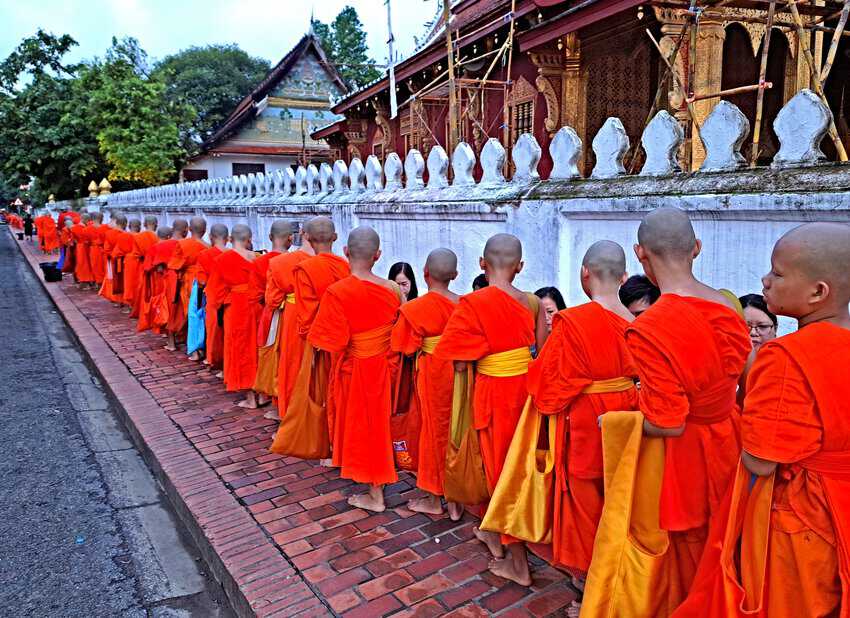
I attended an alms-giving ceremony at Vat Sensoukharam in the heart of Luang Prabang. In Laos, a monk’s day starts at 3:30am followed by chanting from 4 to 5:30am.
Then they go on an alms round, collecting their daily food for breakfast and lunch. They fast until the next morning. They have no possessions, not even clothes.
Thoreau preached simplification—this lifestyle simplifies simple. A reflection of the monks’ compassion is distributing any surplus food to those in need.
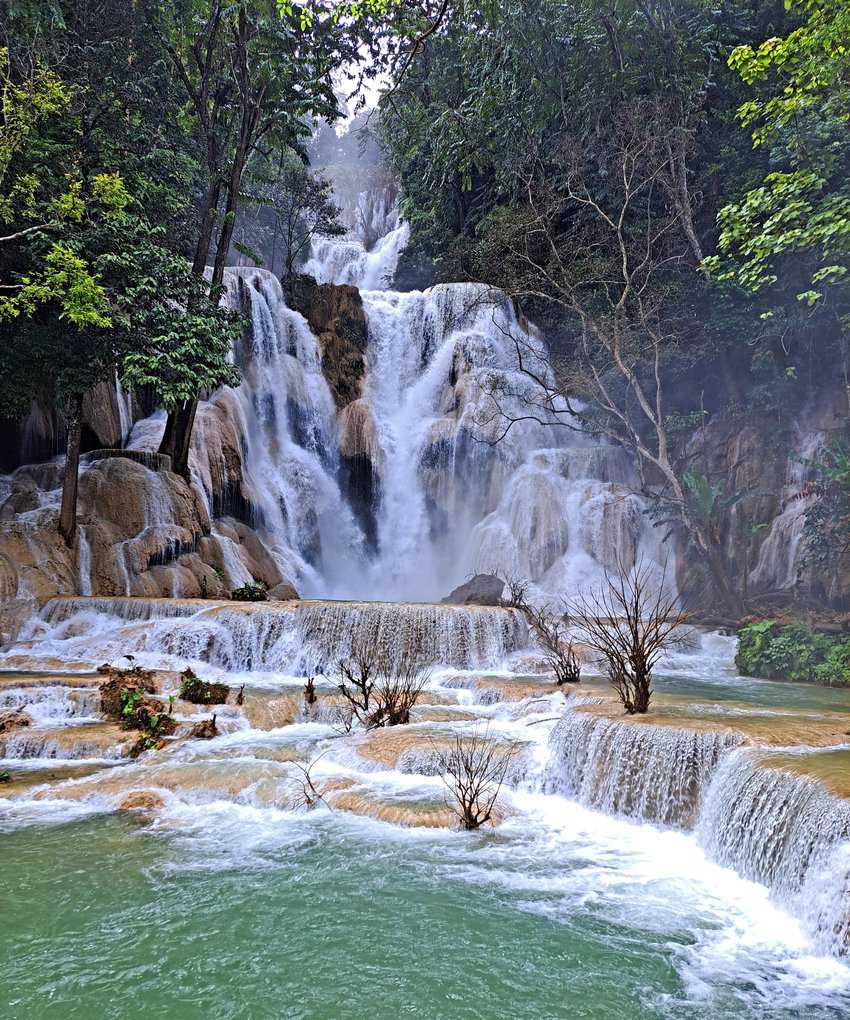
Kuang Si Falls is a big-time tourist attraction and for good reason. It has multiple milky-turquoise waterfalls cascading over a seemingly endless staircase of rocky tiers.
A 20-minute hike downriver from the main showcase of the falls means passing other equally beguiling falls and several natural swimming pools.
Nearby, another circus of beautiful waterfalls along the same river bisects and encompasses Carpe Diem Restaurant where you can enjoy a good Laotian meal.
Here, you can also swim or enjoy a drink. I must say, this is one of the most beautifully situated restaurants I have ever experienced.
As with all Lasting Laos certified restaurants, first-aid kits and employees trained in their use are onsite. Ps, there is no cost for businesses to attain the Lasting Laos certification.
From what I experienced while on this assignment, exhibit A of a new, benevolent business is the Laos Buffalo Dairy, which among other things, is tackling childhood nutrition with a solution that’s been hiding in plain sight for too long, as prior to this breakthrough, buffalo either plowed fields or roamed aimlessly.
Enter: Buffalo mozzarella, ricotta, other cheese varieties, cheesecake, ice cream, and yogurt for local and overseas palates.
Even better, buffalo milk is now added to fortify the country’s otherwise low-nutrition staple, rice. A trio of expats, one of them Head-Chef Rachel O’Shea from Wappinger Falls, NY, created this new industry.
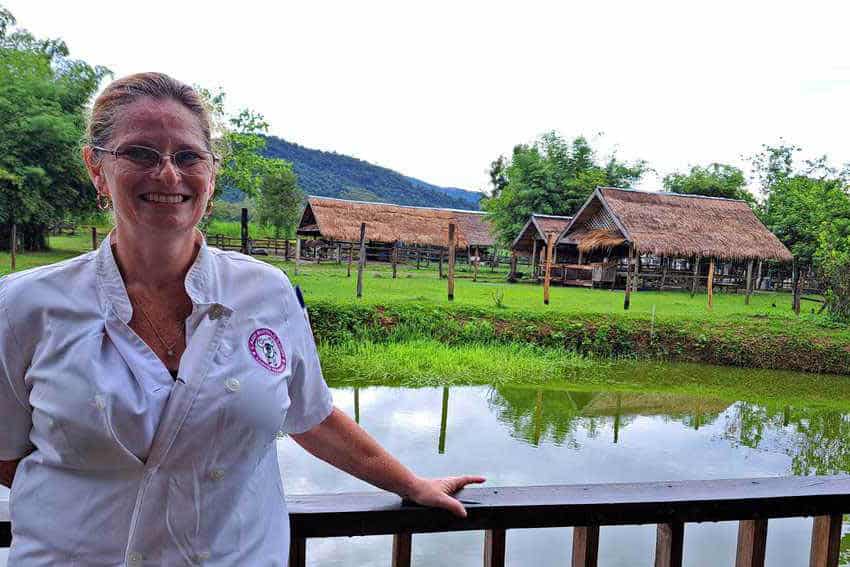
They are not kidding about being a socially responsible enterprise supplying local and overseas customers. While creating empowering local jobs, they rent buffalos from locals, vaccinate, cross-breed, and care for them in the process of making clean, organic, healthy food that would have otherwise never happened. Everybody wins.
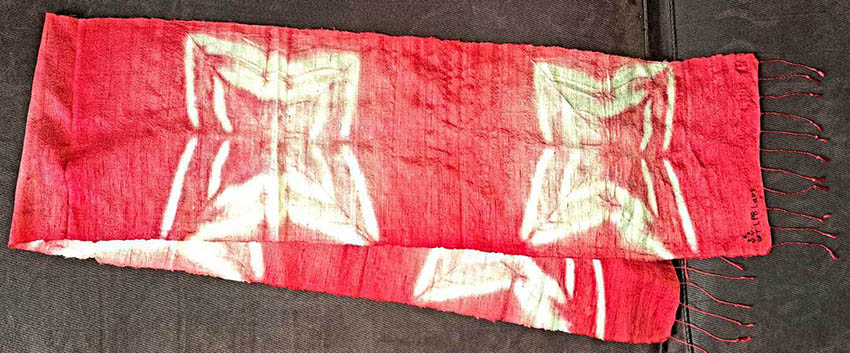
Overlooking the Mekong River, Ock Pop Tock (East meets West) pays homage to its English and Lao founders, where crafts workshops include hand-dying silk scarves, which was way more fun than expected. A prime example of a Lasting Laos certification is how their farm-to-table Silk Road Café recycles food waste into cooking gas and organic fertilizer.
The royal-style cooking here means more veggies and many items wood-fired and charcoal-fired. Try the Khai Paen & Jeo Bong (sautéed river weed seasoned with sesame, garlic, and tomato and Luang Prabang’s famous chili dip featuring roasted galangal).
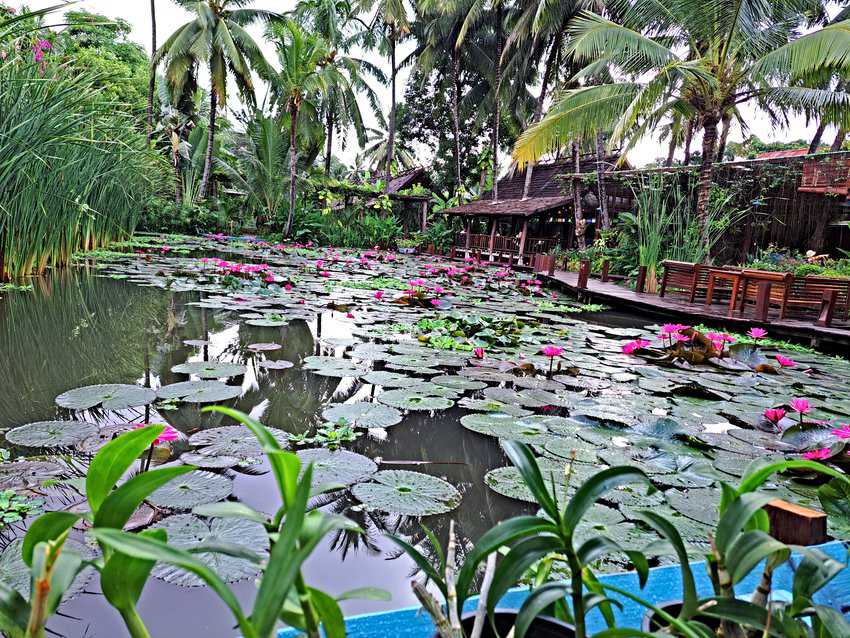
Sometimes, fabulous world-class hotels also hide in plain sight. From its exterior, you’d never know the magic that awaits within the walls of the Maison Dalabua.
Stylish, upscale rooms and comfy couches encircle lily ponds and lush gardens that make this a quiet refuge within a town that’s already a sanctuary. The outdoor breakfast buffet won’t disappoint; neither does the wonderful staff.
It deems themselves a charming retreat, but that’s an underestimation—it’s an alluring mini-paradise. Like all of the certified hotels I visited, behind the scenes, this staff minimizes the use of single-use plastics and has installed a proper chemical storage facility.
Vang Vieng
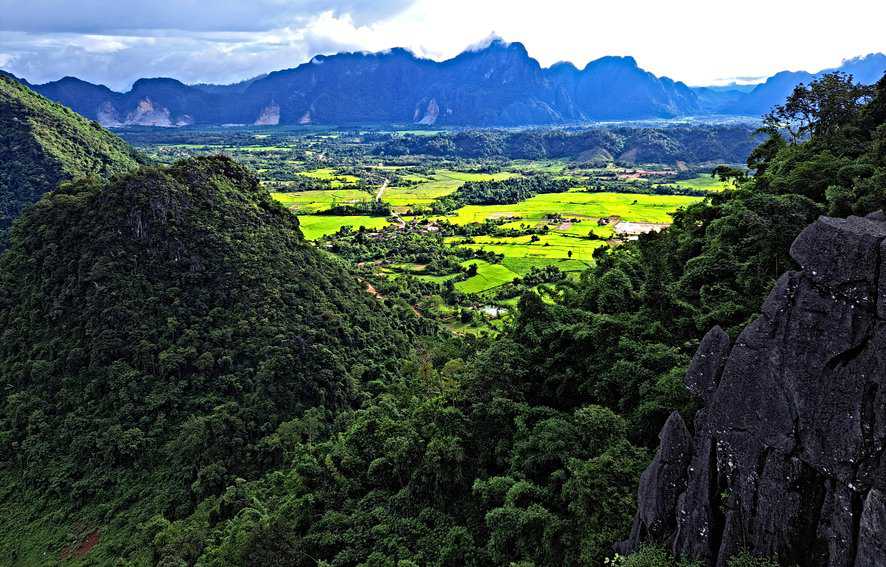
This once-legendary backpacker-hedonism town on the Nam Song River is encircled by magical limestone karst peaks that jut skyward from an otherwise flat green rice-paddy serenity. This idyllic hangout came to be as a result of a Vietnam War-era U.S. airbase and later the massive influx of party-seekers pausing along the Southeast Asia nomad circuit. Unfortunately, the spring break-style raving got out of hand. Way. In 2012, the Laotian government pulled the plug on the wildness and limited the myriad excesses, including riverside alcohol sales to river inner-tubers.
It’s still a really fun place, as the merriment endures—just responsibly. This viable tourism change-up has also resurrected the local Lao identity (pop. 25,000) and made it more inviting to earlier-to-bed visitors who want to wake up early to hike, bike, swim, and kayak in the magnificent surroundings.
An absolute star of Lao’s educational sustainability mission is the The Academy Training Hotel and Restaurant. Supported by funds from Luxembourg, 250 hospitality-training students earn two to three year diplomas.
Staffed by eager Lao apprentices overseen by an international management team, the campus in the heart of Vang Vieng includes student dorms and guest hotel rooms.
During my three recent visits to this real-world restaurant, which I also used as a part-time office, the staff, food, and ambiance was routinely superb. The future looks bright for these determined hands-on kids.
Where you hang your hat matters. Inthira Vang Vieng’s inviting minimalist vibe sets it apart from the pack. Structurally, this place is about cubic boldness. The human element means excellent service and exquisite open-air dining.
The 38 well-appointed modern rooms have private balconies with unobstructed views of the Nam Song River and the mountains that bless it.
Every room faces the same way, so you can’t go wrong here. Along with installing biodigesters to convert food waste into home cooking energy and fertilizer, this establishment set up a system to effectively manage all its wastewater before releasing it into the nearby river.
I’ve explored 150 countries. The ultra-mellow Lao people might be the kindest, most hospitable, and genuine humans on Earth. Laos endures as a one-of-a-kind retreat from whatever rat-race you’re experiencing.
And, as surefire tourism sustainability takes hold via the SUSTOUR Laos Project—funded by the European Union and implemented by Plan International Laos—it will surely continue to rank high as a traveler’s storytelling Nirvana.
Laos rocks—especially when it has an optimistic eye on a cleaner future.


- Saratoga County, NY: Roaming Out of Bounds - August 22, 2024
- St. Louis: Music Made Easy in a City of Neighborhoods - August 11, 2024
- Milwaukee: Small City, Big Outlook - January 30, 2024