San Cristobal de las Casas, Chiapas: Magical

San Cristobal de las Casas, Mexico: Mountains, Canyons and Spiritual Healing
By Nathaniel Adams
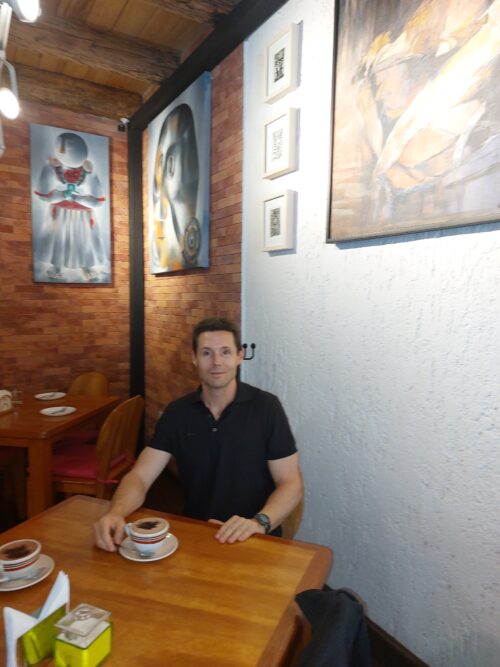
Several years ago I was traveling through the marvelous city of Oaxaca in southern Mexico and also met a Mexican woman passing through .
We compared travel stories and she told me she had never left her native land but had been to every region in Mexico.
Listen to the Podcast Episode… 4 mins
She was in love with her country and wanted nothing more than to make an endless journey through it. Naturally, I asked her what her favorite region was to visit. “Chiapas,” she told me without hesitating.
When I asked her why, she looked at me without expression and said, “It’s so beautiful there it might change your life.” And just like that, I knew I had to go.
An Unforgettable Colonial Town
Chiapas, the southernmost state in Mexico, and San Cristobal de las Casas, the unforgettable colonial town at its heart, have never been on the beaten path for most Western tourists.
And that is exactly the way the locals here want it to stay. Attracting much-needed tourist dollars while holding to some semblance of authenticity is a hard balance for any underdeveloped region to strike, but this place has done it better than most. You can feel that almost as soon as you arrive.
San Cristobal, with its narrow cobblestone streets and red tile roofs, has become something of a magnet for leftists from around the world who see Chiapas as a symbol of indigenous rights in the face of unrelenting globalization.
It has also become a center of spirituality, with yoga classes at dawn and life coaches administering emotional healing and positive energy to whoever may need it (mostly tourists, as it turns out).
But forget the new-age Buddhists: any traveler will be amazed by the town’s panoramic views, rich history, and great food. And as captivating as the sights and sounds of San Cristobal are, the adventure of Chiapas truly begins outside the colonial walls. The magic is in the mountains.
Speaking Indian Languages in Chiapas
Chiapas has one of the largest indigenous populations in Mexico, many of whom do not speak Spanish and have resisted cultural assimilation with the rest of the country for centuries.
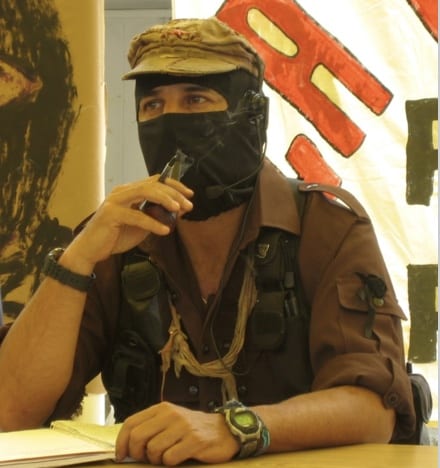
They became an international cause celebre in 1994 when an armed group calling themselves the Zapatistas took over the city of San Cristobal and declared an insurrection against the Mexican government.
They were led by a shadowy figure calling himself Subcomandante Marcos and claimed to act on behalf of all indigenous people in Mexico who had been marginalized and neglected by the Mexican state and the forces of globalization. The standoff ended after a week, but not before journalists and human rights groups from all over the world descended on this small city and broadcast its struggles to a global audience.
Gerta Loebell runs the popular cooking school in Chiapas known as El Tzitz. She arrived in San Cristobal in 1992 when it was still a small town, and remembers that week vividly.
“There were very few phones here then, and I don’t just mean cell phones. I mean landlines too, so it was very hard to communicate. The lack of communication and the sudden nature of the attack by the Zapatistas, which came as a total surprise to everyone, meant no one knew what was going on.”
War with the Mexican Government
Like everyone else, Gerta initially stayed inside with her three children, but when the Zapatistas declared that their war was with the Mexican government and not with the people of Chiapas, she began to venture out. At that time she ran a language school in San Cristobal, and it quickly became a meeting point for many locals.
Most of them sympathized with the Zapatistas, she told me, believing them to be on the side of the people. But there was also a reactionary group in town who, fearful of losing their status and property, led a vocal opposition against the insurgents. In any event, the rebellion put Chiapas on the map, so to speak, and to this day the region remains a hotbed of indigenous activism.
New Vibe in San Cristobal
But in recent decades there has been a new vibe in town, and I do mean vibe. Spirituality, personal healing, and a certain new ageism now permeate San Cristobal like a cool mist.
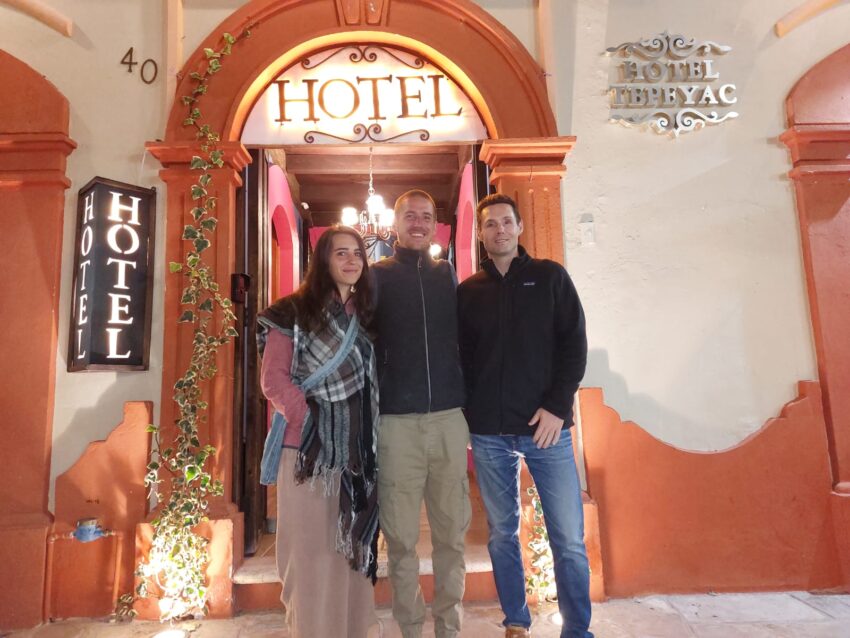
Lukas and Tanya are a young couple from Germany who left their conventional lives in Europe to become digital nomads and life coaches here.
“Our old lives were full of pain and incompleteness,” they told me. We sat at an Asian restaurant one night eating pad thai and talking about different ways of living.
It was inspiring to hear their story, and whether I was in need of healing or not they proceeded to give me great advice on living in the moment, loving who you are, and forgetting all of society’s rules that hold you back. Be brave and follow your dreams, they told me, otherwise, there is only drudgery.
There was no question they were following their own advice; they’d sold almost all of their possessions back in Germany, moved to Mexico, and Lukas now only owned one pair of shoes, a beat-up pair of sandals. You can find dozens of people like them in Chiapas, and that’s part of what makes this place great.
Moved to San Cristobal from Mexico City
Similar to Lukas and Tanya, my friend Nancy moved to San Cristobal from Mexico City after realizing her life was headed in a downward spiral.
“I was heavy into drugs and alcohol,” she told me. “My relationships with men were awful, just awful. And I was taking no pleasure in my work.
Now I live a much quieter life, with time to work on myself and live with more intention. San Cristobal allows you to do that and you feel a positive spirit here.”
You would never guess that Nancy’s life was once out of control. When I met her for the first time she was sitting alone in Plaza de la Paz, one of the majestic central squares of the city.
She looked so serene that I found myself drawn to her in a strange way. When she spoke it was so softly it was hard to hear her, but she politely explained to me that she had come to Chiapas to be alone and therefore couldn’t under any circumstances have coffee with me –or any man for that matter.
But I ran into her again twice in the next three days, and she laughed and said, “I think the gods are trying to tell me I’m supposed to meet you.”
Divine intervention hadn’t been my first thought, but in the spirit of Chiapas I agreed with her and we soon became friends.
I have her to thank for showing me the cafes with the best hot chocolate in San Cristobal, like Non Lo So on Diego de Mazariegos Street.
Seeing the Sunrise at Montetik Park
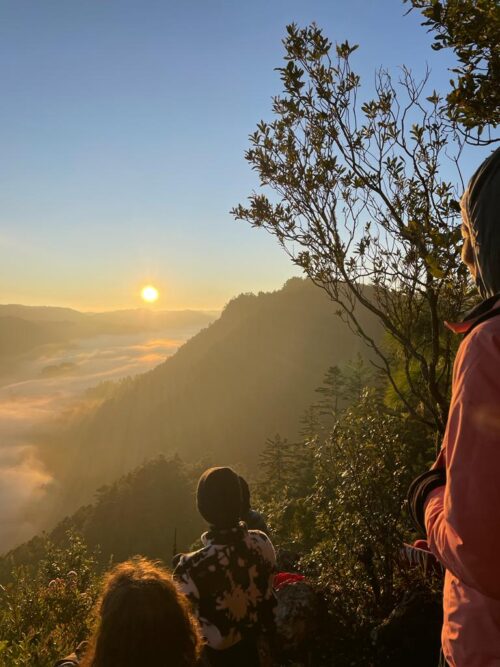
Finally, it was off to the mountains. I joined a small group one day at 4:30 am and took a taxi up to a rough trail with a chain across it to see the sunrise at Montetik Park.
As we exited, a man emerged from a shack next to the trail to collect a small entrance fee and give us a ticket. All we could really see of him comes from the light of his cell phone.
Then it was a long hike for an hour up an increasingly steep trail that ended in a forest of dense greenery and bursts of red flowers.
Birds sang to us from high above. At the overlook, we gathered around and waited. At last, dawn broke through the clouds and we breathed a sigh of relief, and of gratitude.
Someone had brought cacao and cups to get passed around with warm chocolate, unsweetened, and we sat on yoga mats or leaned against boulders to reflect on this fine morning before heading back down the trail.
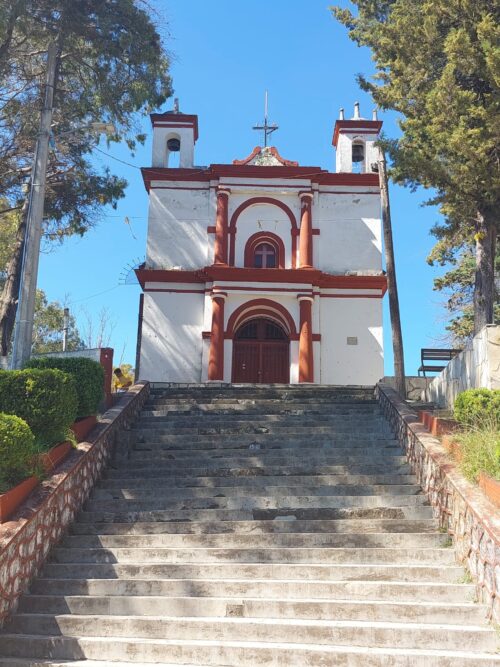
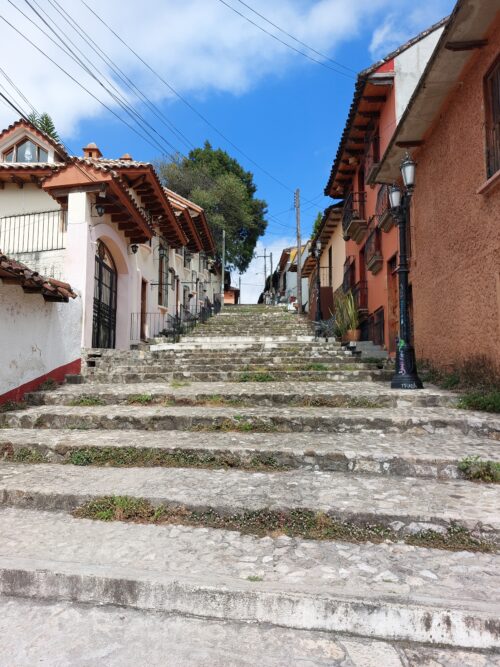
That was a special day. But a much closer hike lies right outside the city center, up to the Iglesia de San Cristobalito, a small red and white church with panoramic views from its front steps.
Completing the journey all the way up to the church is no small feat: over 250 steps on switchback staircases lie between the street at the bottom and the temple at the top.
But it’s well worth it, both for the beauty and serenity of the church itself and the extraordinary sight of San Cristobal down below. Behind the church is a small park with scenic walking trails, and a woman selling drinks and tamales can usually be found nearby.
La Esquina in San Cristobal
If you spend a week here you’re bound to walk into the tourist magnet called La Esquina, found on Miguel Hidalgo Street, one of the main drags.
Walk through the door and enter a beautiful courtyard interior with trees and plants that give it a calm, eco-friendly atmosphere.
Here you can find two levels of upscale cuisine featuring a Thai restaurant, a French fondue bistro, a sushi joint, and a craft beer bar with flat-screen TVs showing American sports at night.
Nothing to Do with Chiapas
It’s great if you want to have a nice international meal and pay a little more. The only problem is that the complex has nothing to do with Chiapas; we might as well be in Barcelona or San Francisco.
A friend of mine said San Cristobal will likely have more and more of these trendy places as the secret of this city continues to spread around the world. If so, I may not be back.
Close to the center of town sits Taniperla, a low-key Mexican fusion restaurant. A great mix of tourists and locals, you can get tacos and enchiladas here, but they also have a vegetarian special every day and offer a delicious kind of soup called Taniperla (hence the restaurant’s name) made from pozole and hard-boiled eggs.
Most nights you’ll find a guy walking around with a guitar and singing old Mexican classics, which only adds to the ambiance.
For those with a sweet tooth, Jangala is an incredible option. Chiapas produces lots of cacao, the seed from which chocolate is made, and this small shop sells some of the best ice cream and chocolate drinks in San Cristobal.
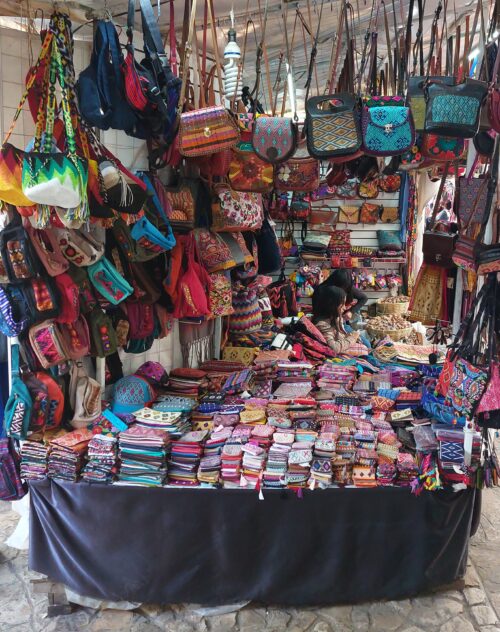
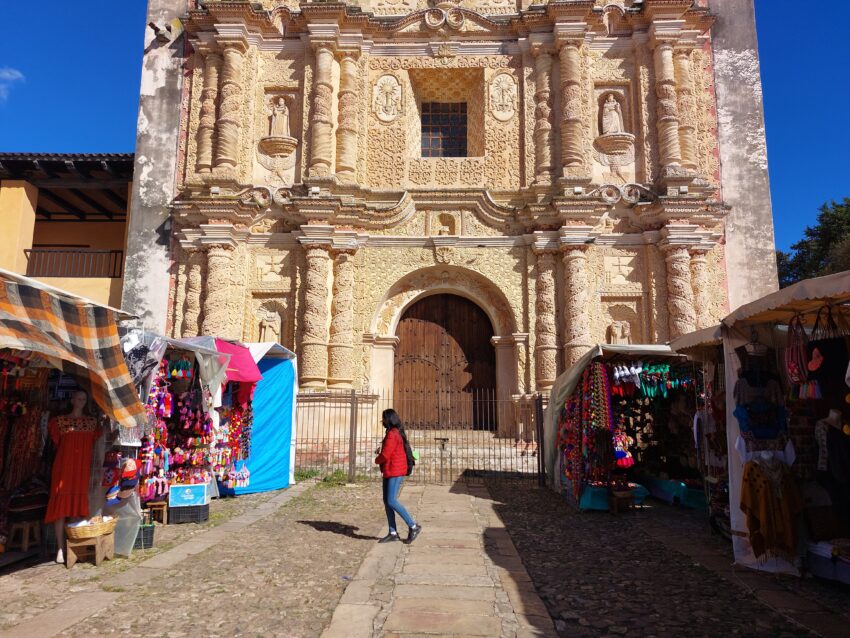
Then there is the Mercado Viejo, the Old Market. Take a couple of hours and stroll through this wonderland of traditional crafts.
Hundreds of artisans sit and work in stalls offering indigenous clothing and jewelry, fresh fruit and vegetables, beautiful flowers and spices from local sources, and everything in between.
There are plenty of shops selling modern goods too, from plastic toys to ripped jeans, so it’s a bit of a hit-and-miss adventure. But chances are you’ll walk away with something brightly colored to put on when the sun goes down and temperatures begin to plummet.
Chiapas: The Vibe is Relaxed
Chiapas has emerged from the violence of the 1990s unscathed. If anything, the myth of the Zapatistas has only added to the region’s natural attractions and inspired a whole new wave of travelers to journey here to see this old colonial district for themselves.
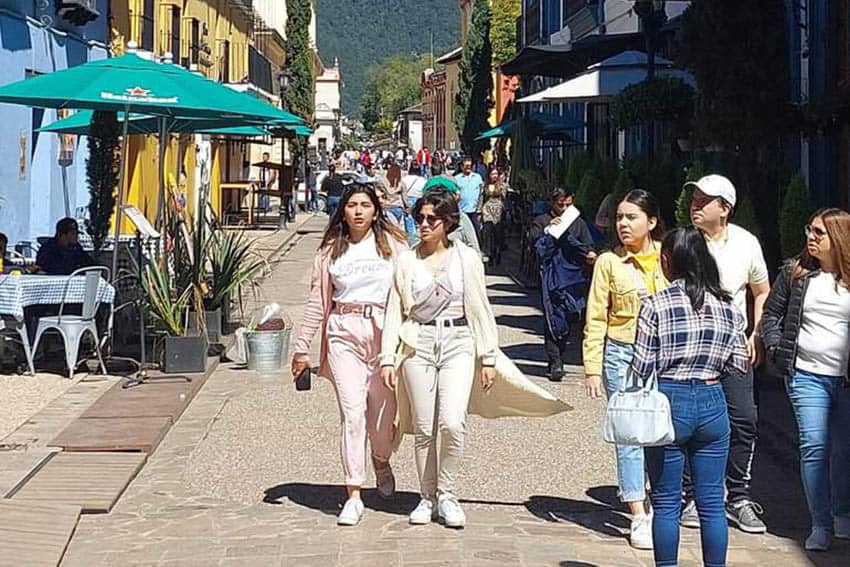
They’ve brought a new way of looking at the world and acculturated themselves in simple harmony with the indigenous people that have lived here for millennia.
The vibe is relaxed and peaceful, in general recognition that everyone is sharing a sacred place beyond the reach of the modern world.
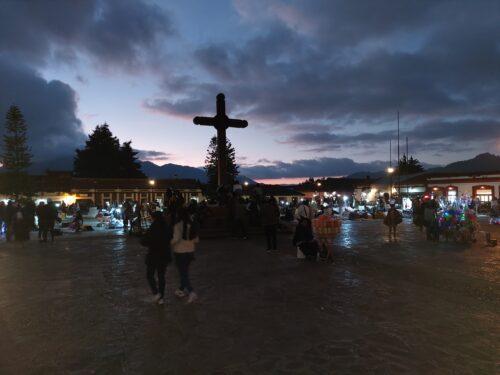
And yet in some ways, the new spirituality pulsing through San Cristobal obscures the best parts of this region. I’ve been to dozens of colonial cities around the world and this one is truly breathtaking.
Part of that is the authenticity of its structures – its streets and architecture – but another part is the chill in the air and the vistas of natural beauty visible from every corner.
The temptations of the landscape rival the sanctuary of the city, and every day you get to choose which one to visit. Perched majestically high up in the mountains, San Cristobal is a sight to behold and a city built to last.
I don’t know if it changed my life, but if I ever did want to change my life, a month here has made me feel better equipped to do it. And that, as they say, is half the battle.
 Nathaniel Adams is an attorney in the United States and an avid traveler who has visited more than 40 countries around the world. His first book, The Tragedy of Madagascar: An Island Nation Confronts the 21st Century, was published in December 2022.


- Rail and Castle: A Guide to Europe’s Most Iconic Routes by Train - May 14, 2026
- Slow Travel in 2026: Why Fewer Places Create Better Journeys - May 12, 2026
- How People Pay for Travel Today - May 5, 2026