Four of the Best Parks in Upper Manhattan

Exploring Some of Our Favorite Neighborhood Parks in Upper Manhattan
By Susmita Sengupta
New York, often considered to be a concrete jungle, is equally a city of parks and urban green spaces that are a lifeline to its millions of residents.
The city’s public parks, more than 2300 of them, serve as extended backyards for the many, many city residents who do not have their own lawns and yards.
Although “public parks” existed in early New York starting from the Dutch and Colonial eras, the story of New York City parks truly begins in 1856 when Frederick Law Olmsted and Calvert Vaux designed Central Park.
Central Park and Bryant Park
Tourists flock to Central Park and Bryant Park and now added to that list are the new divas – Little Island and the High Line. But for a different viewpoint, head to the upper spheres of Manhattan.
Here are 4 parks in Upper Manhattan that are truly wonderful to spend a few extra moments in on your next visit and while you are at it, explore their surrounding neighborhoods to get the true feel of this city that is like no other.
The Beautiful Riverside Park
From 72nd Street to 158th Street on the Upper West Side neighborhood of Manhattan, is Riverside Park, a waterfront park along the Hudson River, spreading out on multi levels with dramatic views all along its length.
Gardens, playgrounds, hiking trails, waterfront marina, bicycle paths, scenic routes – you can find all this and more here.
The landscaping of this park is the handiwork of many designers beginning with Olmstead Sr., to Calvert Vaux, Robert Moses and many others who worked across the years from 1872 onwards seamlessly creating a landscape masterpiece.
When walking along the winding pathways and meandering promenades, take in the picturesque beauty and notice also the variety of imposing monuments that pop up at various intervals.
More information on visiting Riverside Park can be found here.
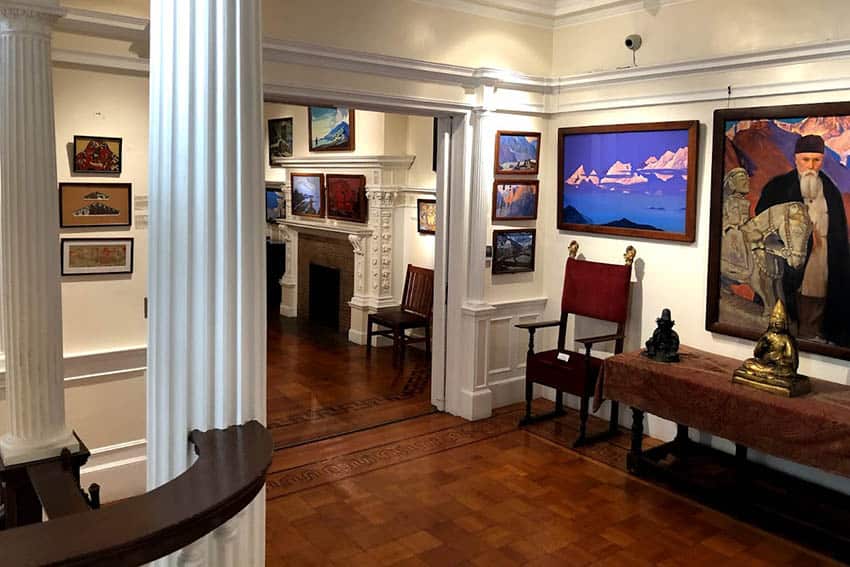
Enjoy Himalayan Art at Nicholas Roerich Museum
I left the park at 107th Street and entered the Nicholas Roerich Museum, situated just off Riverside Drive. Dedicated to the works of the 19th century Russian born artist, philosopher, and Nobel Peace Prize nominee, Nicholas Roerich, the museum is a treasure trove of his paintings and set designs.
As Roerich had settled down in India, his paintings bring to vivid life the Eastern spiritual worlds and the snowy mountains of the Himalayas of Ladakh and the Kashmir region of India, though his earlier art showcased his Russian heritage.
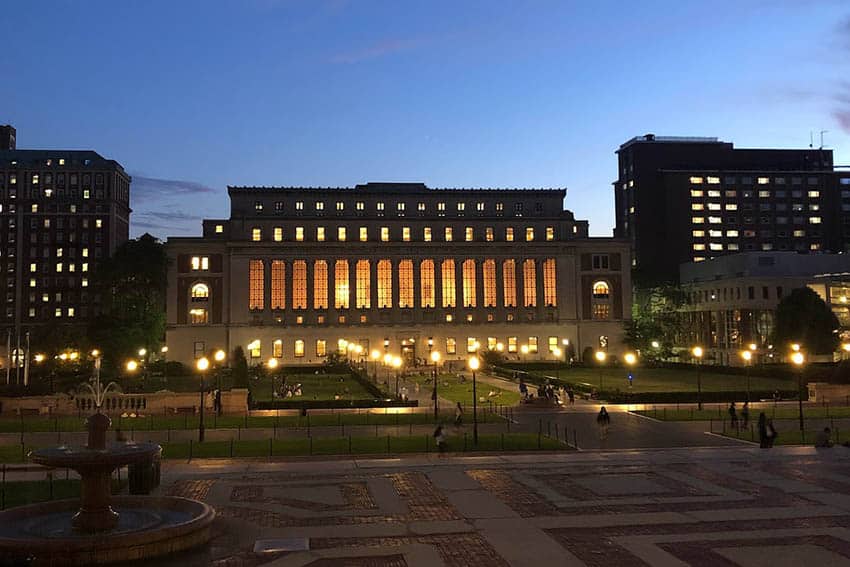
Step into Columbia University in the City of New York
While at 116th Street, I made a detour to see the magnificent campus of Columbia University, the only Ivy League institution placed in a major city. Heading to Broadway, I entered through the magnificent wrought iron gates on to College Path: to my left and up the expansive flight of stairs was Low Library, where the Pulitzer Prizes are held and on my right was Butler Library, the primary library for the university, both magnificent classical buildings. You are free to walk around the sprawling campus and perhaps even visit the university church, St. Paul’s Chapel and admire its beautiful stained glass windows.
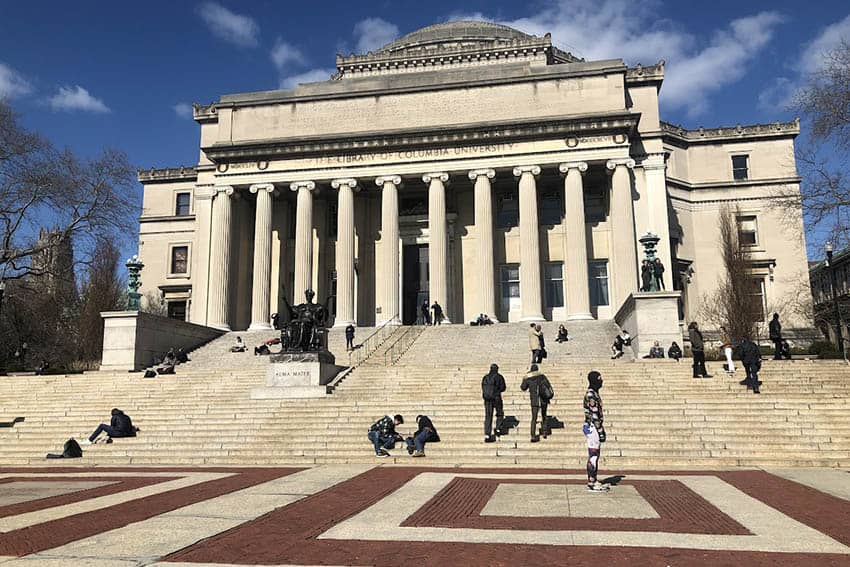
If you are visiting on a Thursday or a Sunday, do not miss the lovely Greenmarket that pops up on 116th Street and Broadway to stock up on some food to have an impromptu picnic on the steps of the Low Library.
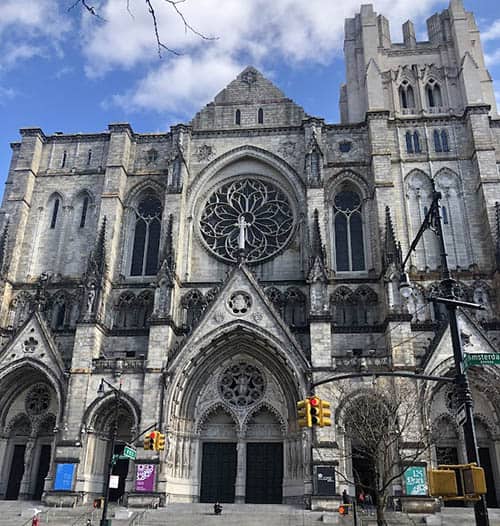
Tour Cathedral of St. John the Divine
Next you can head to Amsterdam Avenue to admire the largest cathedral in the Western Hemisphere. The fame of Cathedral of St. John the Divine lies in the fact that it is still unfinished, construction having begun in 1825.
There are many tours available ranging from self-guided tours to tours offering highlights, climbs through spiral staircases and many more.
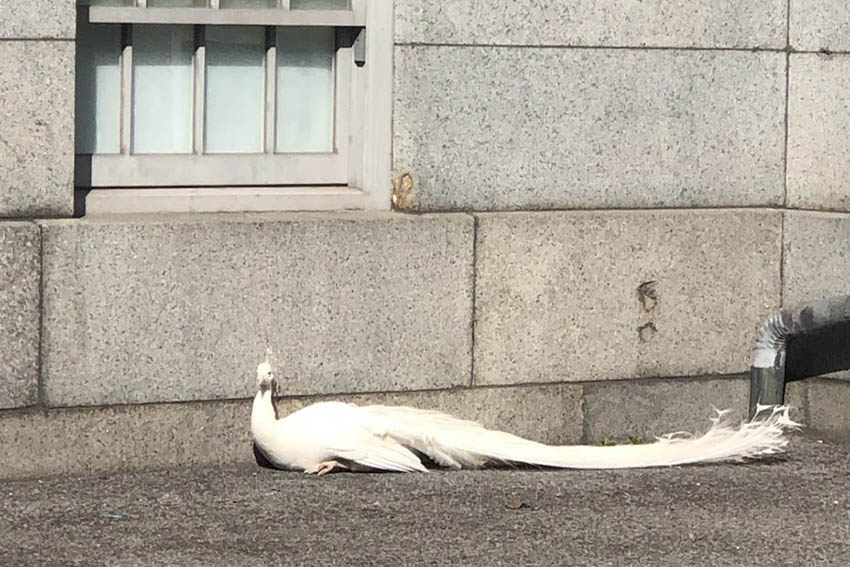
I loved visiting the expansive gardens where a major draw are the white peacocks. Visit the adjacent tiny park to admire The Peace Fountain, a bronze sculpture depicting the triumph of good over evil.
The Tiny Delight of Sakura Park
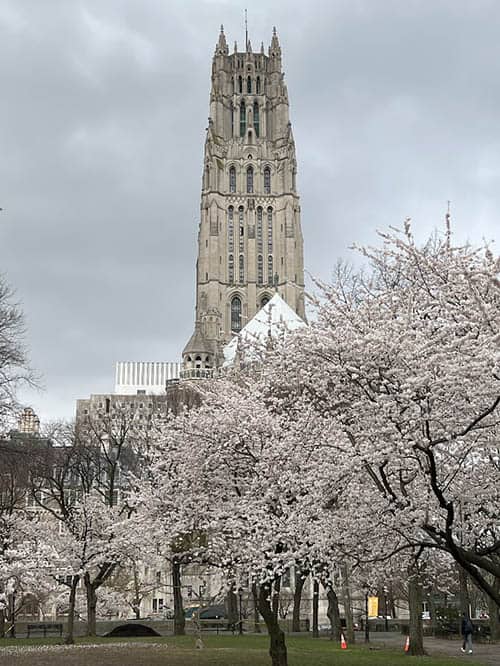
In the Morningside Heights neighborhood of Manhattan, on West 122nd Street, between Riverside Drive and Claremont Avenue, is the tiny jewel of Sakura Park, a must-visit in the spring season.
The park gets its name from the 2000 cherry trees (Japanese:Sakura) that were gifted to New York City by Japan in 1912 and were planted in both Riverside and Sakura Parks.
More information on Sakura Park can be found here.
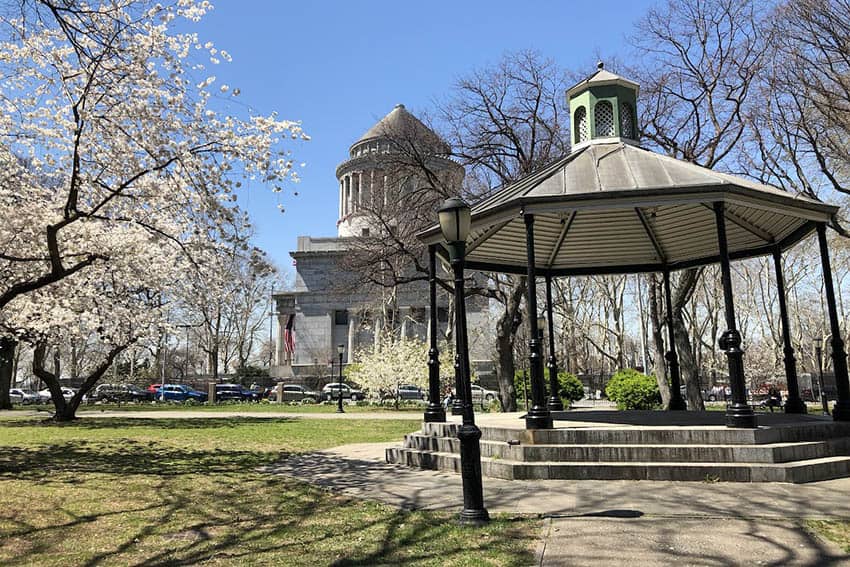
A Moment at General Grant National Memorial
After walking amidst the lovely pink and white flowering cherry blossoms, I headed to General Grant National Memorial, on Riverside Drive and 122nd Street.
This U.S. National Memorial is the final resting place of Ulysses S. Grant, the commander of the Union Army during the Civil War and the 18th U. S. President and his wife, Julia Dent Grant.
Known locally as Grant’s Tomb, the building overlooking the Hudson River is the largest mausoleum in North America and was designed by architect John H. Duncan in 1897 in classical style with granite and marble.
Marvel at Riverside Church
Inspired and modeled after the 13th century Chartres Cathedral in France, the Gothic style Riverside Church is an imposing presence in the neighborhood between Riverside and Sakura Park. Admire the expansive and beautiful nave that can seat 2000 worshipers. Definitely stop by the small and exquisite Christ Chapel and take a look at the famed 74 bell Laura Spelman Rockefeller Memorial Carillon, one of the largest in the world.
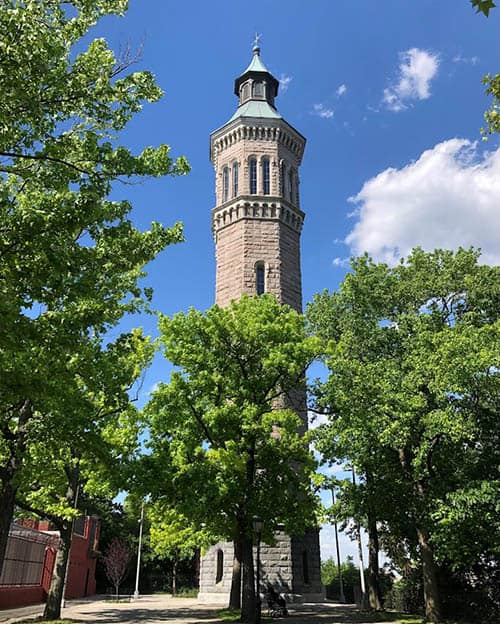
Magnificent Highbridge Park
In the upper reaches of Manhattan is Highbridge Park, located in the Washington Heights neighborhood. The park is placed on the western bank of the Harlem River and stretches between 155th Street and Dyckman Avenue.
Constructed between 1867 and the 1960s by piecing together land that was obtained by the NYC Parks department, it includes the bridge, a tower and a reservoir.
The park had been closed for around 40 years, before it was restored, renovated and opened to the public in 2015.
Stepping on to the pathway leading into the park, we soon found ourselves in the midst of a mini forest where the air was cool and filled with birdsong and a quietness at odds with the cacophony of the city beyond.
I looked around and noticed the rock cliffs and rugged outcroppings that define the northern part of Manhattan.
We made our way to the steep set of stone stairs that led to the High Bridge, the piece de resistance of this park.
The High Bridge built in 1848 is the oldest standing bridge in New York and was used to carry the Old Croton Aqueduct, the city’s water supply system.
The bridge spans the Harlem River over 16 stone arches evoking a Roman aqueduct.
As we stepped on to the pedestrian walkway on the bridge, the vista opened up and I got a completely different aura of Manhattan.
The view was splendid as I gazed out at the Harlem River bridges – the Alexander Hamilton Bridge, the Macombs Dam Bridge and the Washington Bridge, all quite old bridges that link Manhattan to the Bronx.

Walking across the pathway on top of the bridge, I crossed over from Manhattan into the Bronx and realized that the surface was differentiated by different brick colors and patterns.
The Bronx side also had informational plaques that told the story of the bridge, celebrating historic moments.
Find all information on Highbridge Park here.
Admire High Bridge Water Tower
When I looked towards the Manhattan side, I saw the other attraction of this park: the Neo-Gothic style High Bridge Water Tower, a 200-foot high octagonal tower that used to hold a 47,000 gallon water tank was built in 1866-1872.
The tower I felt could certainly be at home in an European castle but looked very picturesque here too. It is a New York City Landmark that was stabilized and restored from 2019-2021.
Glorious Fort Tryon Park
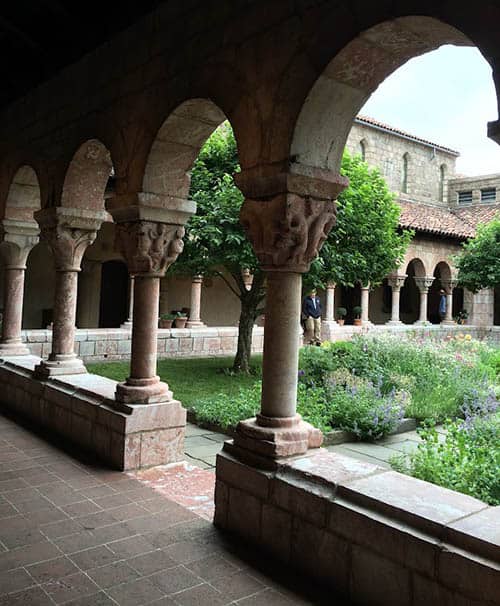
In the Hudson Heights and Inwood neighborhoods in far Upper Manhattan, lies Fort Tryon Park, helmed in by Riverside Drive, Broadway, Henry Hudson Parkway and 192nd Street.
The spectacularly landscaped park is the handiwork of the Olmsted brothers, sons of Frederick Law Olmsted, who used the steep topography in this area of Manhattan to create a park with many architectural interests.
After years of disrepair and decline, the park got rejuvenated in recent years and its many woodlands, pathways, gardens and playgrounds have once again become popular amongst locals and visitors.
You can get some of the most spectacular views of the Hudson River from its many overlooks and terraces.
Learn more about Fort Tryon Park here.
Get Enchanted by The Met Cloisters
And the prime attraction here is definitely The Cloisters, the uptown outpost of the Metropolitan Museum of Art.
The museum is a magnificent replica of monasteries from the Middle Ages and is made up of five Romanesque and Gothic European cloisters. Head here to see medieval art and artifacts and gigantic tapestries – the highlight of this museum.

Susmita Sengupta, an architect by background, is a freelance writer based in New York who loves traveling with her family. She has written frequently for GoNOMAD, Go World Travel Magazine, Matador Network and other travel web magazines.


- Slow Travel in 2026: Why Fewer Places Create Better Journeys - May 12, 2026
- How People Pay for Travel Today - May 5, 2026
- Last Minute Mother’s Day Gift Guide - May 3, 2026