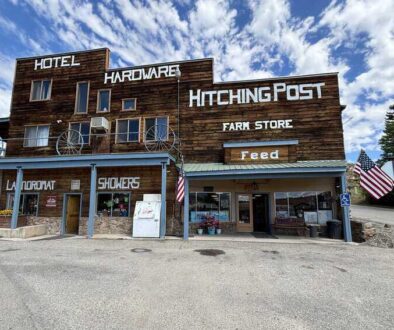
Driving Idaho’s Unparalleled Scenic Byways

Fall in Love with Idaho on a Scenic Byway Adventure through the Gem State
By Sara Sheehy
Fall is my favorite season in Idaho. I’m sure some of my fellow central Idahoans would disagree with my assessment, favoring the perfectly groomed winter slopes of Sun Valley Resort to the foliage-bright banks of the Big Wood River. But they won’t sway my opinion. Fall in Idaho is magical.
This is the season where I become a tourist in my backyard, embarking on road trips to explore hidden corners of the Gem State. I adore the perfectly temperate days and crisp, frosty nights.
I love that, in the fall, I can enjoy quiet moments around town, hike without seeing another soul, and wake up to the first dusting of snow on the mountain peaks.
Fall in Idaho is the time for slowing down and enjoying the adventure.
Exploring Idaho
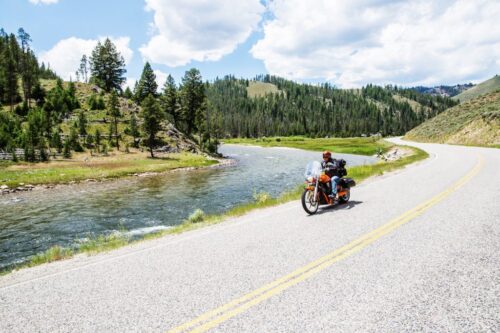
If you’ve never traveled to Idaho, here is what you need to know: it’s big. Much bigger than you probably imagine. Driving from north to south, if you were crazy enough to attempt such a thing, would take over 11 hours without stopping.
And, you’d have to scoot around the roadless expanse of the Frank Church River of No Return Wilderness — the largest designated Wilderness in the lower 48 states — to do it.
My advice? Forget seeing the whole state in one pass. There’s simply too much of it. No, Idaho is best explored in pieces.
In my opinion, there’s no better place to start than the 280-mile loop through central Idaho that connects the Sawtooth, Salmon River, and Peaks to Craters Scenic Byways.
This route winds along scenic rivers, past mountain ranges, across open rangelands, over lava fields, and through quintessential Idaho towns that echo of a bygone American West.
This is a journey to fall in love with Idaho.
Swanky Sun Valley
When I share that I live in Idaho, I usually get one of two reactions. The first and most common is a mildly perplexed look followed by, “Oh!” This causes me to smile a secret smile — they don’t know yet how incredible this state is.
The second reaction is from someone who can place Idaho on a map and is racking their brains for a destination to share. Sometimes they’ll fish out the capital city, Boise, but more often, they produce the name of my adopted hometown, Sun Valley.
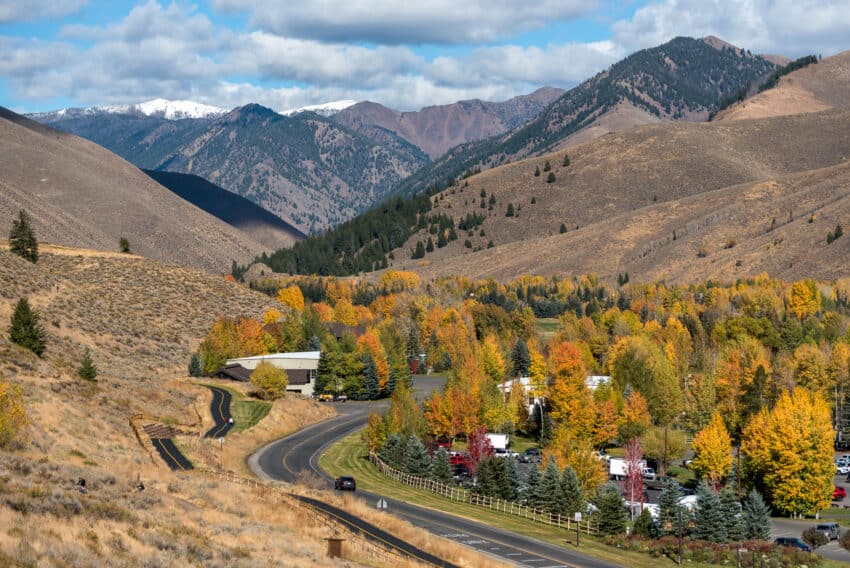
Sun Valley Resort, which opened in 1936, is the oldest destination ski resort in North America and my first stop on the Sawtooth Scenic Byway. The village of Sun Valley still holds all of the glamour and decadent charm of its early days with luxuriously appointed hotels and trendy boutiques.
I walked the meticulously landscaped grounds with a perfectly foamed latte from the Konditorei, one of the resort’s dining options, in hand. All the while, I admired the Austrian-inspired architecture and stopped to watch ice skaters on the year-round outdoor ice rink.
With my swank quota filled, I drove a mile southwest to the more relaxed town of Ketchum for a tasty and filling Pollo al Carbon burrito from Despo’s.
Into the Wilds
The Sawtooth Scenic Byway enters the Sawtooth National Recreation Area (SNRA) just north of Ketchum and Sun Valley. This 756,000-acre recreation area is home to several mountain ranges, meadows, alpine lakes, and over 700 miles of hiking trails.
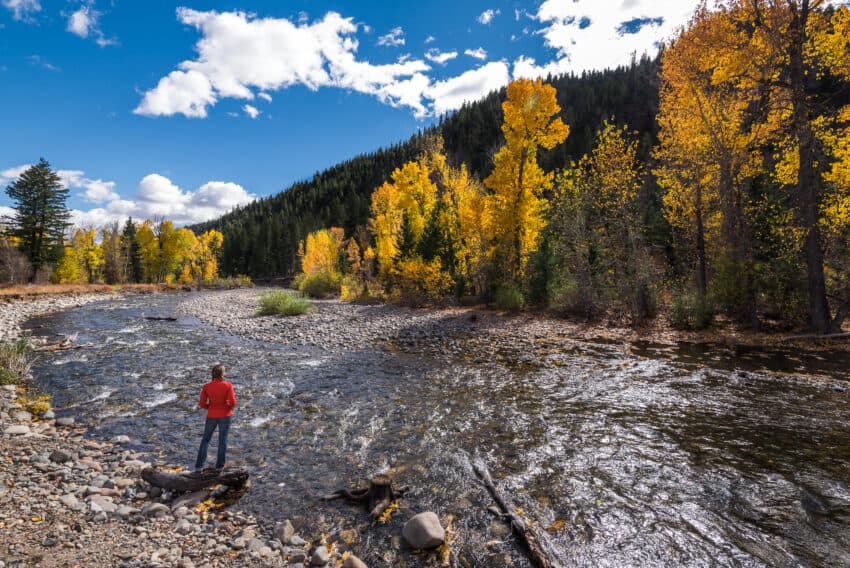
As I traveled north, the highway, which parallels the free-flowing Big Wood River, climbs in elevation, making the journey like a time machine.
There were still flowers in bloom in Sun Valley’s gardens, but by the time I reached the top of 8,701-foot Galena Pass, fall was in full swing.
Along the way, I pulled over to explore the roadside forests of aspens and riverside cottonwoods, both alight with leaves of bright orange and yellow.
In the words of poet Robert Frost, I still had “miles to go before I sleep;” otherwise, I’d have stopped for a quick hike to an alpine lake or a walk along the 20-mile Harriman Trail, named in honor of W. Averell Harriman, the founder of Sun Valley Resort.
The Sawtooths
Up and over Galena Pass I went, leaning into the switchback curves and keeping an eye out for deer, elk, and wayward drivers. The beauty of this pass pulls people’s attention away from the task at hand and out into the expansive Sawtooth Valley below.
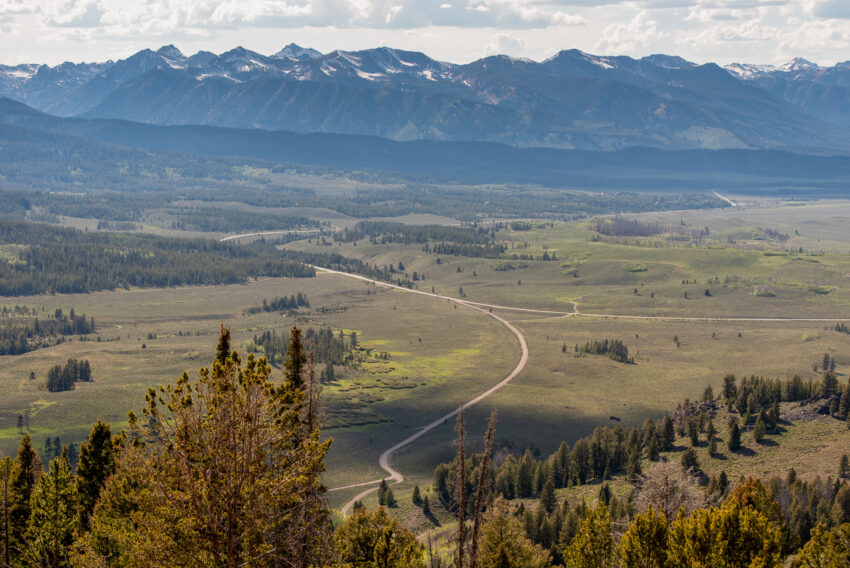
I stopped at the Galena Summit Overlook to take in the birds-eye view of the Sawtooth Mountains. Though I’ve seen them plenty of times, my reaction is always the same — just look at those peaks. Jagged like a saw’s teeth, they are imposing, majestic, and above all, exhilaratingly (or terrifyingly, depending on your perspective) wild.
Despite their rugged appearance, there are easily accessible locations in the Sawtooths. One of those, a recreation area along the stunning shores of Redfish Lake, was my destination for the night.
I made the winding descent to the valley floor, which was lined with large, picturesque ranches with timber homes and free-roaming cattle. Three road-accessible alpine lakes — Alturas, Pettit, and Redfish — lie at the base of the mountains.
I turned onto the road to Redfish, which is the most developed of the three lakes with a restaurant, a lodge and cabins, and numerous Forest Service campgrounds (all open seasonally, typically from mid-June to early October).
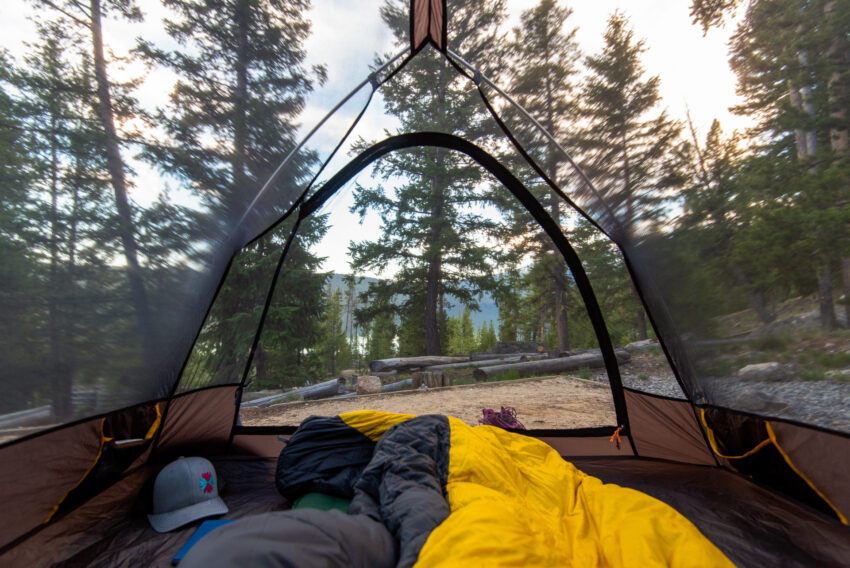
The main beach and docks at the Redfish Lake Lodge look down the length of the 4.5-mile lake to soaring Mount Heyburn and Grand Mogul, which frame its southern edge. I set up camp at Sockeye Campground and enjoyed the sound of lapping waves and the crackle of campfire late into the evening.
The entire Sawtooth Valley is part of the Central Idaho Dark Sky Reserve, one of only 18 dark sky reserves in the world. The night was cloudless and clear, with millions of stars stretching from horizon to horizon.
Stanley, Idaho (Population: 63)
The next morning, my tent was glazed with frost. Bundled in a down jacket and a winter hat, I packed up camp and made the quick drive to the nearby town of Stanley.
Stanley is a tiny outpost with a big personality that sits at the crossroads of the Sawtooth Scenic Byway and the Salmon River Scenic Byway.
The town swarms with hikers, bikers, rafters, and campers during the summer, but only 63 souls brave the long and isolated winter, which often records the coldest daily temperature in the continental United States.
I stopped at the Stanley Baking Company & Cafe for a piping hot plate of Basque Scramble and a cup of tea before I waved goodbye to the Sawtooth Scenic Byway and said hello to the Salmon River Scenic Byway. I ordered a fresh-baked cinnamon roll for the road, for good measure.
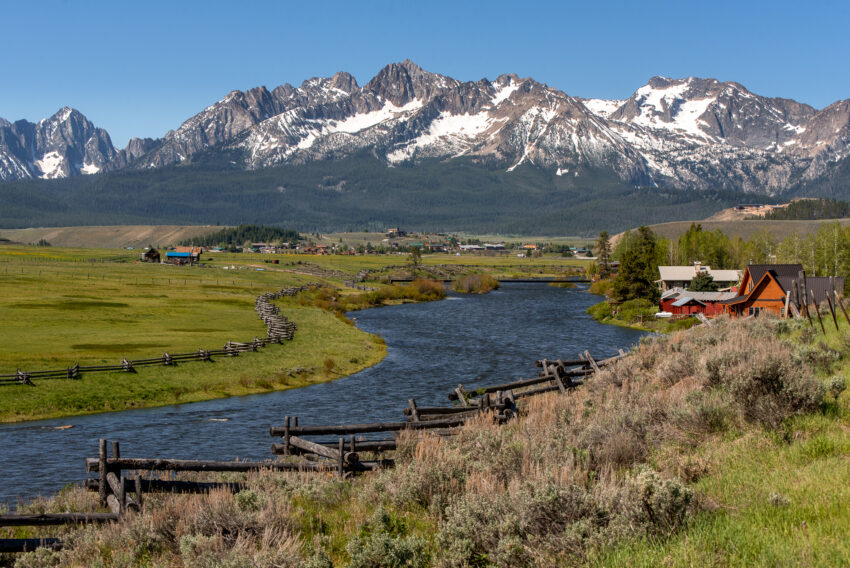
Before I left town, I detoured into a roadside pullout to snap a picture of the Sawtooth Mountains. The scene looked like it came straight out of The Sound of Music.
Prospector Territory
The wild and scenic Salmon River begins in the Sawtooth Valley and flows, undammed, for 425 miles to the Snake River. Its scenic byway hugs close to the river itself, resulting in a winding, narrow, and somewhat nervy drive. But for all its twisting and turning, there is beauty around every corner.
Traces of this area’s long mining history dotted the roadside. I stopped at a pull-out and walked down to the river’s banks and past the remains of Sunbeam Dam, built in the early 1900s to provide power to a nearby gold mine.
It operated for only a year before both the mine and the mill were shuttered. The dam was partially dynamited in the 1930s to allow the river to flow free once again.
In the late 1800s, this whole area, from the shore of the river to high in the mountains, would have been crawling with prospectors anxious to strike a profitable mining claim.
I was reminded of this as the valley widened and I spotted my favorite type of road sign: the brown ones that mark a historic or natural landmark. I didn’t even hesitate as I turned left, over the river, toward Bayhorse Ghost Town.
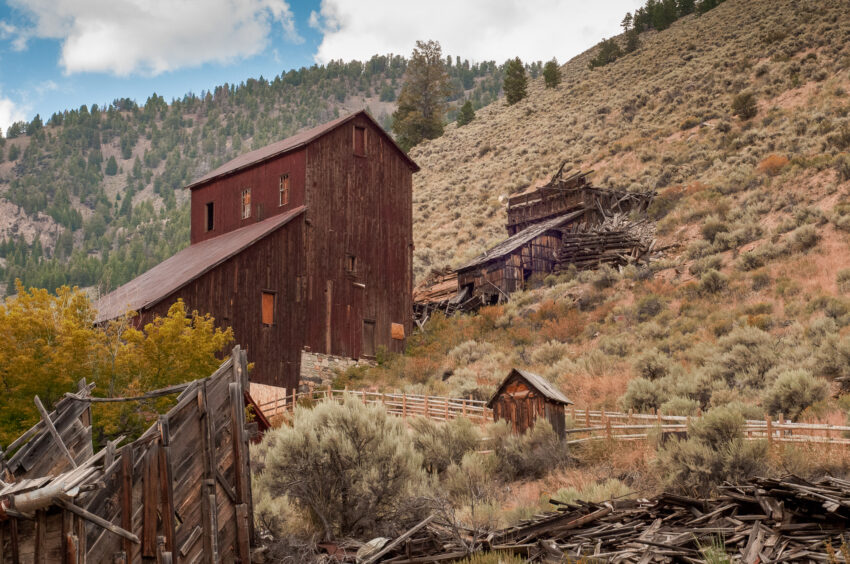
Bayhorse was settled in the 1870s and mined extensively for gold, silver, copper, lead, and zinc. Like many mining towns, its heyday lasted just a decade, hitting its peak by the mid-1880s.
It is part of Idaho’s Land of the Yankee Fork State Park. As I wandered on the gravel paths through the historic remains of the town, I marveled at the sprawling stamp mill constructed on a steep hillside and the squat, sturdy building puzzled together from local stone.
Back on the road with a growling stomach, I motored to the town of Challis for a Rodeo Burger with tater tots (this is Idaho, after all) at the Village Inn.
Tall Peaks…
The Peaks to Craters Scenic Byway, which begins in Challis, travels through one of the most unique landscapes in Idaho. It features the tallest mountains in the state and lava-filled plains at Craters of the Moon National Monument and Preserve.
After lunch, I threaded my car through the surprisingly narrow, cliff-lined Grand View Canyon. Shortly after, the road climbed through the open range to Willow Creek Summit at 7,161 feet.
Keeping a close eye out for free-roaming cattle (in Idaho, if you hit one, you have to compensate the rancher for its value), I watched as the Lost River Mountains came into view.
At 12,662 feet, The Lost River’s Mount Borah is Idaho’s tallest peak. Rising out of a landscape of homesteads and pasturelands, it looks particularly impressive.
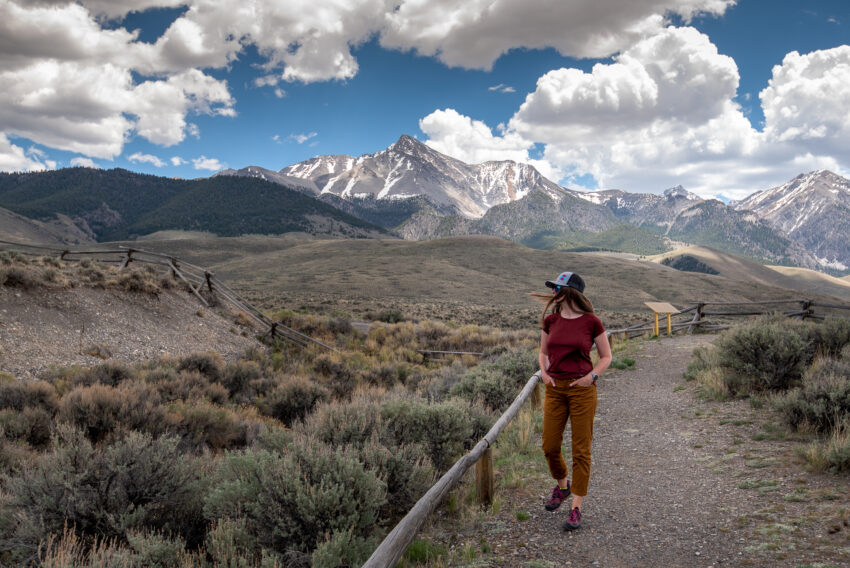
I turned east onto a well-graded dirt road to make a short 2.5-mile detour to the Lost River fault scarp. In 1983, a 6.9-magnitude earthquake rumbled across the base of the Lost River Mountains, causing the peaks to rise six inches while the valley floor fell six feet.
The resulting 20-mile scarp can be seen up close and personal at a modest interpretive site. Even if informational signs don’t strike your fancy, go for the view of the mountains. It was spectacular.
Back on the highway, it was only 20 minutes to the village of Mackay. The small downtown is modest and focuses on the essentials — food, drink, and gas — but I didn’t go for the town itself. Instead, I drove west to Mine Hill, a historic mining district that can be toured by vehicle, ATV, or bicycle.
I made my way to check out the ghost town of White Knob and then stretched my legs on the 2-mile round-trip hike to Shay Trestle, a wood bridge spanning a hundred-foot gorge.
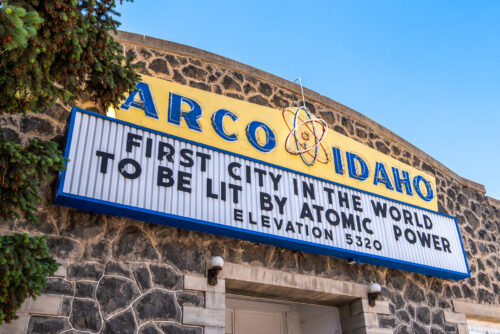
I stopped in Mackay for a soda, snack, and gas to fuel me through Arco, the first town in the world to be lit by atomic power, and then on to the volcanic landscape of Craters of the Moon National Monument and Preserve.
…to a Landscape of Lava
Perhaps the last thing you’d expect to see after driving through mountains, along rivers, and through ranching communities is a moonscape of hardened lava as far as your eye can see, but that’s exactly what was up next.
The first time I saw Craters of the Moon National Monument & Preserve, I thought the ground had been shaped by heavy machinery.
But no, this landscape, which can easily be seen from space, is au naturel, formed during eight volcanic eruptions between 2,000 and 15,000 years ago.
It’s otherworldly enough that Apollo 14 astronauts trained here before their moon launch in 1971.
I started at the visitor center, where interactive displays showcase the park’s explosive past. From there, I drove the national monument’s seven-mile Loop Road, which is full of scenic viewpoints and short hikes.
My favorite was the wander through the Indian Tunnel, a partially collapsed, 800-foot lava tube.
Leaving Craters of the Moon, the lava followed me for miles until it gave way to farmland.
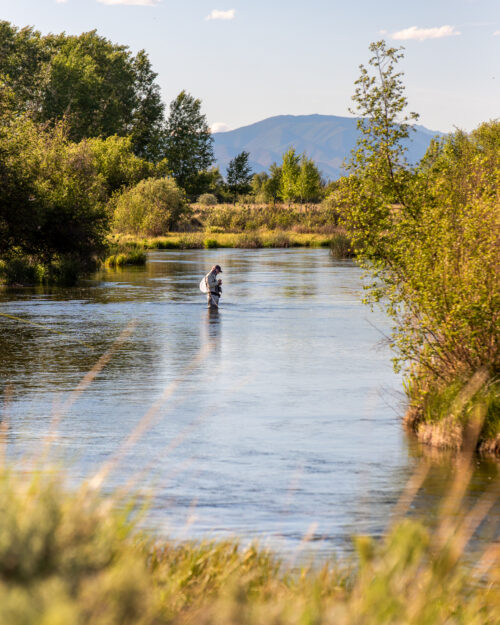
Turning right toward Picabo, I made my way to The Nature Conservancy’s Silver Creek Preserve, a spring-fed creek that is one of the world’s most famous fly-fishing destinations.
I don’t fish, but it didn’t matter. The creek winds through the sagebrush desert and is gorgeous in its own right.
I amused myself by walking on its banks and trying to identify the dozens of birds I saw through my binoculars.
From Silver Creek Preserve, it was just a few miles back to the Sawtooth Scenic Byway and the close of my loop through the beauty of central Idaho.
 Sara Sheehy is a travel writer who loves dirt roads, alpine meadows, and powder days. When not traveling with her husband and dog, she lives in the mountains of Sun Valley, Idaho.


- Gifts for the Stylish, Thoughtful, Home-Loving Dad - June 2, 2026
- Father’s Day Gifts for Traveling and Adventurous Dads - June 1, 2026
- How to use Avios Points to Reduce your Travel Costs - May 29, 2026