Mekong or Amazon? Exploring the World’s Great Rivers
Mekong or Amazon? Exploring the World’s Great Rivers by Water
By George Allen
The Amazon and Mekong rivers are titans of biodiversity and culture, each offering distinct experiences for travelers. The Amazon, Earth’s largest river by volume, carves through the world’s greatest rainforest, while the Mekong sustains Southeast Asia’s agriculture and traditions. Choosing between them depends on priorities—whether one seeks raw wilderness or cultural immersion, megafauna or ancient temples. Regardless of the choice, both rivers promise unparalleled adventures by water.
Rivers That Shape Continents

Rivers are the arteries of civilizations, and none are more influential than the Amazon and Mekong. The Amazon’s sheer scale dominates South America, while the Mekong’s intricate delta nurtures Southeast Asia’s rice bowls. Exploring these waterways reveals not only ecological wonders but also humanity’s deep connection to flowing water.
One of the most immersive ways to experience the region is through an Amazon river cruise, providing intimate access to remote rainforest regions, encounters with wildlife such as pink river dolphins and sloths, and visits to indigenous communities.
The Amazon River: A Realm of Superlatives
As the largest river system on Earth, the Amazon stretches approximately 6,400 kilometers, a length that rivals the Nile. Its discharge is immense, reaching 209,000 cubic meters per second—greater than the combined output of the next seven largest rivers. Covering a basin of seven million square kilometers, this mighty river spans nine countries.
Its biodiversity is unparalleled, hosting around 40,000 plant species, including 16,000 types of trees. The Amazon’s ecosystems support an astonishing 2.5 million insect species and 3,000 freshwater fish species—more than double the variety found in the Mekong. Some of its most iconic creatures include the arapaima gigas, the largest freshwater fish in South America, the Amazonian manatee, and the elusive black caiman. However, the region faces significant threats, with deforestation claiming millions of hectares of trees annually and gold mining polluting rivers with mercury.
Beyond its ecological riches, the Amazon is home to more than 500 indigenous groups, some of whom remain isolated from modern society, such as the Mashco-Piro. Cities like Manaus, Brazil, stand as testaments to the river’s historical significance, featuring structures like the famous opera house built during the rubber boom era.
Meanwhile, Iquitos in Peru, the largest city inaccessible by road, depends entirely on the river for transportation. Cultural traditions also thrive along the Amazon, with practices such as shamanic healing using ayahuasca and sustainable agroforestry that supports Brazil nut harvesting.
The Mekong River: Asia’s Lifeline
The Mekong River spans approximately 4,350 kilometers, flowing through six nations: China, Myanmar, Laos, Thailand, Cambodia, and Vietnam. It is vital in supporting economies, sustaining over 60 million people through rice cultivation, fishing, and transport. Vietnam’s Mekong Delta alone contributes to half of the country’s rice production, reinforcing its significance as a food source.
The Mekong’s waters are home to fascinating creatures, including the critically endangered giant catfish, which can grow to an impressive 300 kilograms. The river also supports fewer than 100 Irrawaddy dolphins, whose populations are at risk. In total, the Mekong hosts 1,300 fish species, 20 percent of which are endemic. Despite its incredible biodiversity, the river faces serious conservation challenges, including hydropower dam construction—11 major dams on the mainstream and over 100 on tributaries. Overfishing has also strained ecosystems, with fish catches declining by 50 percent over the past two decades.

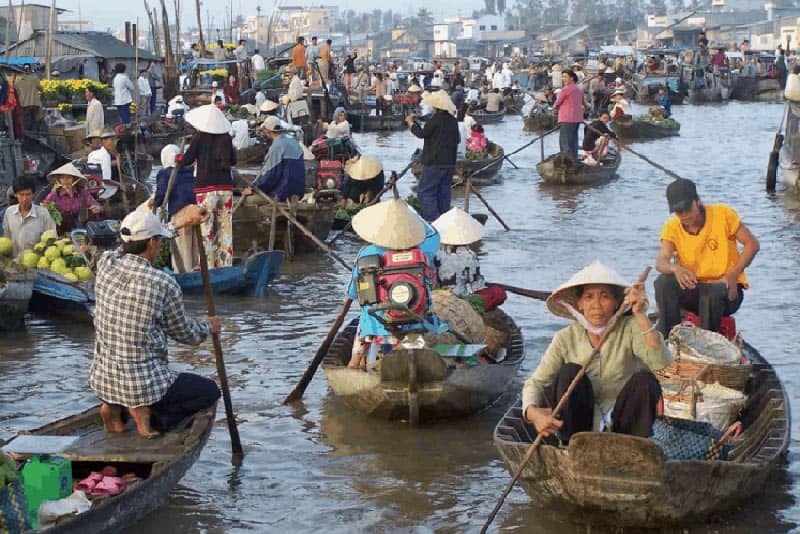
The Mekong’s cultural richness is equally captivating. In Luang Prabang, Laos, visitors can witness UNESCO-listed heritage sites and take part in morning alms rituals. Cambodia’s Tonlé Sap is Southeast Asia’s largest freshwater lake, renowned for its stilted villages that offer a glimpse into traditional lifestyles. Meanwhile, Vietnam’s bustling floating markets, such as the Cai Rang market, operate before dawn, providing an unforgettable experience of local trade.

How to Choose Between Amazon and Mekong
For those drawn to untamed wilderness, the Amazon stands as the world’s most biodiverse region. It offers extraordinary opportunities for wildlife photography, with jaguars, giant river otters, and vibrant macaws among the most sought-after sightings. Scientists also flock to the Amazon, with research hubs like the Tambopata Reserve serving as centers for studying its vast ecosystems.
In contrast, travelers seeking a blend of culture and gentle adventure may find the Mekong more suitable. Flowing past ancient temples, bustling markets, and rural villages, it preserves traditions that have endured for centuries. The Mekong also provides a relaxed exploration experience, offering cycling routes, calm waters, and immersive village homestays. For culinary enthusiasts, the journey is a feast, with dishes such as pho and amok curry, complemented by fresh tropical fruits.

The Future of These Rivers
Scientists warn that if the Amazon loses 20–25 percent of its rainforest, its ecosystem could face irreversible desertification. Indigenous-led conservation programs, such as those pioneered by the Kayapó people, aim to safeguard the forest by integrating traditional wisdom with modern monitoring tools.
The Mekong River faces its own existential threats. Upstream dam construction in China has significantly reduced sediment flow, affecting the fertile delta downstream. Despite these challenges, solutions are emerging—community-managed fisheries in Cambodia, for example, are helping restore fish stocks while promoting sustainable practices.
Conclusion: Rivers of Contrasts, Rivers of Hope
The Amazon captivates with its raw scale, while the Mekong mesmerizes with human stories deeply entwined in its waters. Both rivers confront pressing environmental threats, yet they also inspire hope through conservation efforts, from Brazil’s reforestation commitments to Cambodia’s fisheries management.
Exploring either is to witness the delicate balance between nature and civilization.


- Slow Travel in 2026: Why Fewer Places Create Better Journeys - May 12, 2026
- How People Pay for Travel Today - May 5, 2026
- Last Minute Mother’s Day Gift Guide - May 3, 2026