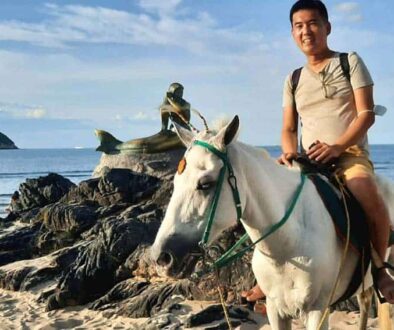
Living Free as a Digital Nomad in Thailand

How Thailand Taught Me to Live Differently
By Sarah Jones
For six years, my life moved in a straight line. Same train into London every morning. Same grey platforms. Same office inside the Department for Culture, Media and Sport, where the weeks blurred together until I could barely remember what season it was.
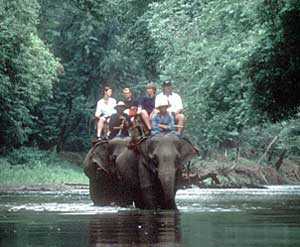
I used to look around the carriage and wonder how everyone had agreed to this rhythm without ever questioning it. Then the world went quiet during COVID, and the silence made the routine feel heavier than ever. One night, I booked a one-way flight to Thailand before I could talk myself out of it. It was time to become a digital nomad… abroad.
Staying a Few Months?
I landed in Bangkok with no plan beyond staying a few months. I thought I would wander, write a little, maybe teach English if I needed to. I imagined myself drifting between islands like a character in a travel novel.
What actually happened was far less glamorous and far more life-changing. Somewhere between the night markets, monsoon storms, and long afternoons working from cafés near the sea, I stopped counting the days ahead and started paying attention to the ones I was living.
Having a VPN for Windows became less about secrecy and more about stability. I stopped thinking of it as a “tech tool” and started seeing it the same way you see travel insurance or cloud storage, just another thing that keeps your life functioning while you move between countries.
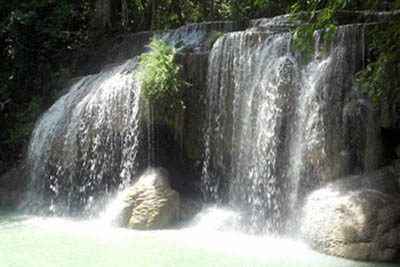
Thailand has a way of slowing you down without asking permission. Even Bangkok, with its traffic and neon and endless movement, has pockets of calm if you know where to look. I spent my first weeks wandering through temples and side streets, learning that the city is older and more layered than it first appears.
Rising like a Stone Flame
Wat Arun rises over the river like a stone flame. The Grand Palace glitters in the sun in a way that feels almost unreal. Even the street food has its own rhythm. You learn quickly that the best meals often come from the smallest carts.
Living abroad also changed the way I thought about work. Back in the UK, I barely thought about internet access. In Thailand, especially while moving between islands, cafés, airports, and shared Wi Fi networks, it became impossible not to. I learned fast that digital nomads rely on VPNs far more than they admit. It is not about secrecy. It is about stability.
When your banking app refuses to load because you are in the wrong region or a client portal locks you out because it thinks you are logging in from a suspicious location, a VPN becomes as essential as travel insurance. It is one of those quiet tools that keeps your life functioning while you move between countries.
The fantasy version of becoming a digital nomad usually skips the awkward middle section where your savings disappear faster than expected. Mine certainly did. Thailand was cheaper than London, but not free, and after a year of drifting between islands and apartments, reality caught up with me.

I became an English teacher almost by accident. A small school needed someone quickly, and I took the job because I needed stability more than adventure. Teaching grounded me in a way travel never had. I stopped moving constantly. I learned enough Thai to survive conversations. I started recognising people instead of places.
Around the same time, I became more aware of how dependent daily life abroad is on public Wi Fi, banking apps, and remote access. It only takes one bad connection to create a serious problem. Most digital nomads learn this the hard way.
You can be sitting in a café in Chiang Mai, a city famous for its temples and mountain views, and suddenly discover that your entire workday depends on whether the router decides to behave. Chiang Mai is one of the world’s biggest digital nomad hubs, yet even there, the simplest tasks can fall apart without a stable connection.
Eventually, I shifted into online content management, which is what I still do now, but the teaching period mattered. It forced me to build an actual life rather than treat the country like an extended holiday. I rented long-term apartments. I learned where to buy the best fruit. I found a favorite noodle shop. I stopped feeling like a visitor.
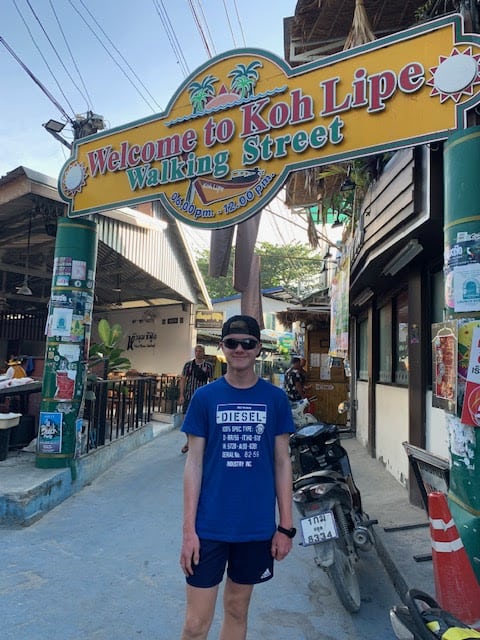
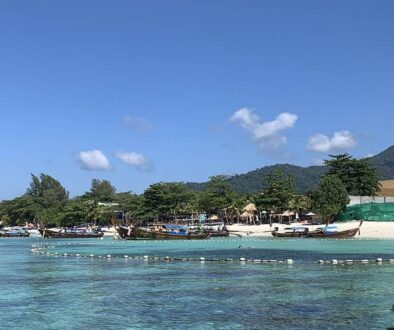
The place that changed me most was Koh Lipe. I lived there for two years, and it still feels surreal to say that out loud. Before Lipe, islands always felt temporary to me. Lipe worked differently.
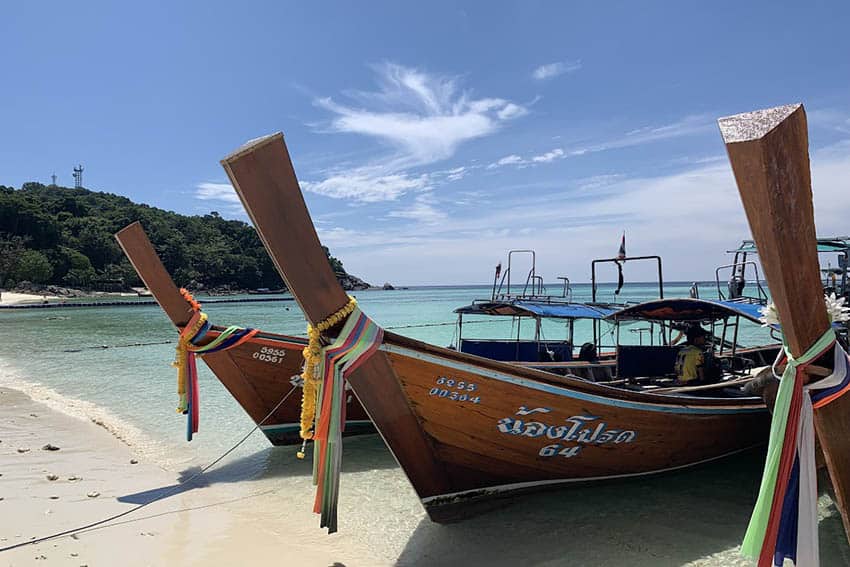
The sea gypsy communities, especially the Urak Lawoi people, shaped the island’s atmosphere in ways that tourists rarely see. Longtail boats drifted in at sunrise while the beaches were still empty. Families cooked seafood over open fires in the evenings.
Children ran barefoot through the sand. There was a calmness to daily life that never felt staged.
I used to bring my laptop onto the beach early in the morning before the heat became unbearable. I would answer emails while fishing boats crossed the water in complete silence, apart from the distant engines.
That rhythm changed my relationship with work. I stopped treating life as something squeezed around employment and started building work around the shape of my days instead.
Most people obsess over flights and apartments before moving abroad, but visas are usually the thing that decides whether the lifestyle is sustainable. Thailand has become far more structured around remote workers than when I first arrived.
The newer DTV visa options reflect that shift. But visas only solve part of it. Loneliness catches people off guard far more often than paperwork. So does the lack of routine. When nobody tells you where to be each day, you realise how much structure work culture quietly provides back home.
That is why slower travel works better. Staying somewhere long enough to recognise the fruit seller near your apartment or the woman who makes your coffee each morning matters more than chasing the next island. Thailand rewards people who stay still long enough to notice the details. The smell of grilled chicken drifts through a night market. The way storms roll in so suddenly that the entire sky changes color. The limestone cliffs of Phang Nga Bay rise out of the sea like something painted by hand.
What keeps people in Thailand long term is rarely the scenery, though the scenery is extraordinary. It is the feeling that life can be arranged differently. That work does not have to dominate every hour. Those mornings can belong to you again. Even now, years later, I still think about those train journeys back in Britain. The strange thing is not that I left. It is how normal staying once felt.
Sarah Jones is a freelance writer from London, she lived in Thailand for four years.


- Living Free as a Digital Nomad in Thailand - May 21, 2026
- The Quiet Travel Moments We Remember Most - May 21, 2026
- Portland Maine for Tasty Lobster and City Flair - May 20, 2026