
Kurdistan’s Marvelous Monastery

The Monastery Inside a Mountain: A Hiking Adventure in Kurdistan, Iraq
By Annie Chen
GoNOMAD Senior Writer

When some friends suggested taking a day-trip to hike around the Rabban Hormizd monastery, I agreed to join, not because I have a particularly deep interest in religious structures or because I’d heard of it, but because I yearned to see more of Kurdistan.
I ended up experiencing a whole other side to Kurdish culture, learning enormously about their history, and seeing firsthand some of the famed nature in Iraq.
Road Rules
The first thing to take note of when driving in Kurdistan is with 5.5 million people in the entire region, traffic isn’t so terrible.
Since there are very public transportation options, most people drive or take taxis, and as a result, the roads are surprisingly well-kept.
Highways, particularly the highly-trafficked route between Erbil and Duhok, are smooth and wide enough for two to three lanes per direction.
With that being said, there is an unexpected element I quickly learned about the infrastructure of the highways.
Due to the on-ramp and off-ramp set-up, the entrances for the major highways are more like general roads that merge with concrete dividers that start later than they should.
Two Parallel Roads
As a result, a highway with 2 lanes going in each direction actually has cars driving in both directions on both sides of the concrete divider. It is more similar to two parallel roads: even with a dotted line in the middle, drivers have to stay in the far right lane most of the time otherwise they would end up hitting an oncoming car at full speed.
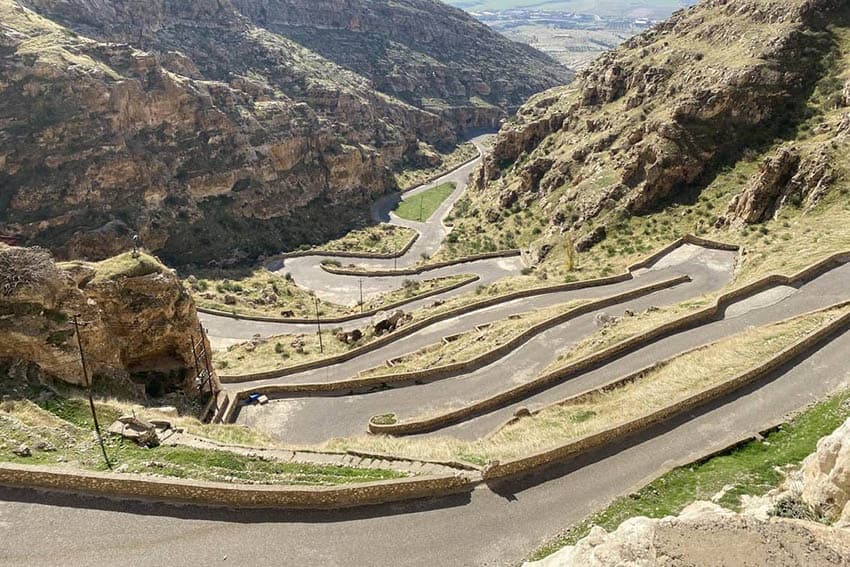
It took me a moment to realize the oddities of what was happening when we first merged. Once in a while, I’d look to the left and see a car driving in the same direction as us, on the opposite side of the concrete barrier, similarly playing the never-ending game of chicken that we were.
My friend, seeing the horror in my initial reaction, chuckled and told me an expression that they have here, “In the US, they drive on the right. In the UK, they drive on the left. In Iraq, we drive in whatever’s left.”
 Getting there
En route to Alqosh, the small town where the Rabban Hormizd monastery is located, there are massive fields on either side of the highway rich with oil, like many parts of this region of the world.
Staking their Territories
Mining and engineering companies have staked their territory, and enormous pipes and drilling equipment are clearly visible from the road.
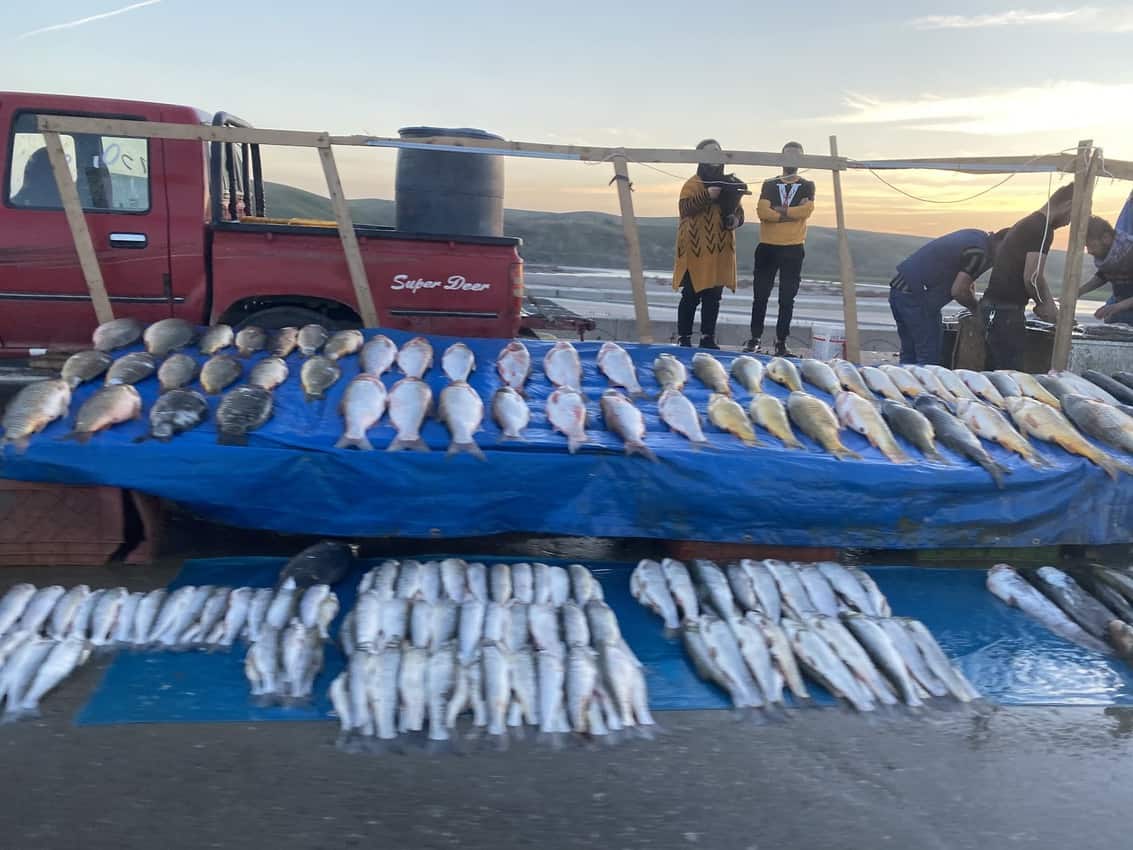
A bridge along the way supports several fishermen with large and small catches from the river below, lying flat on a tarp on the floor or a low table.
A pair of young boys stand at the entrance to the bridge with fluorescent pink cotton candy, standing out amidst the surrounding scenery of browns and greys.
Local rice farmers with nearby fields chat with one another as their bags of short-grain rice stand at attention.
My friend mentioned that this locally grown rice was quite well-known and had a unique taste, so we made it a point to grab a bag on the way home.
A handful of Syrian refugee camps sit at varying distances from the highway as well. One just outside of Erbil’s city limits is closer in view, and I could spot the identical blue, square rooftops of the temporary shanties.
On the far side, hole-ridden tarps blow in the wind and an occasional person walks up to the entrance, following a pedestrian path running alongside a metal fence with barbed wire looping around the top, instead of driving through the heavily-guarded gate.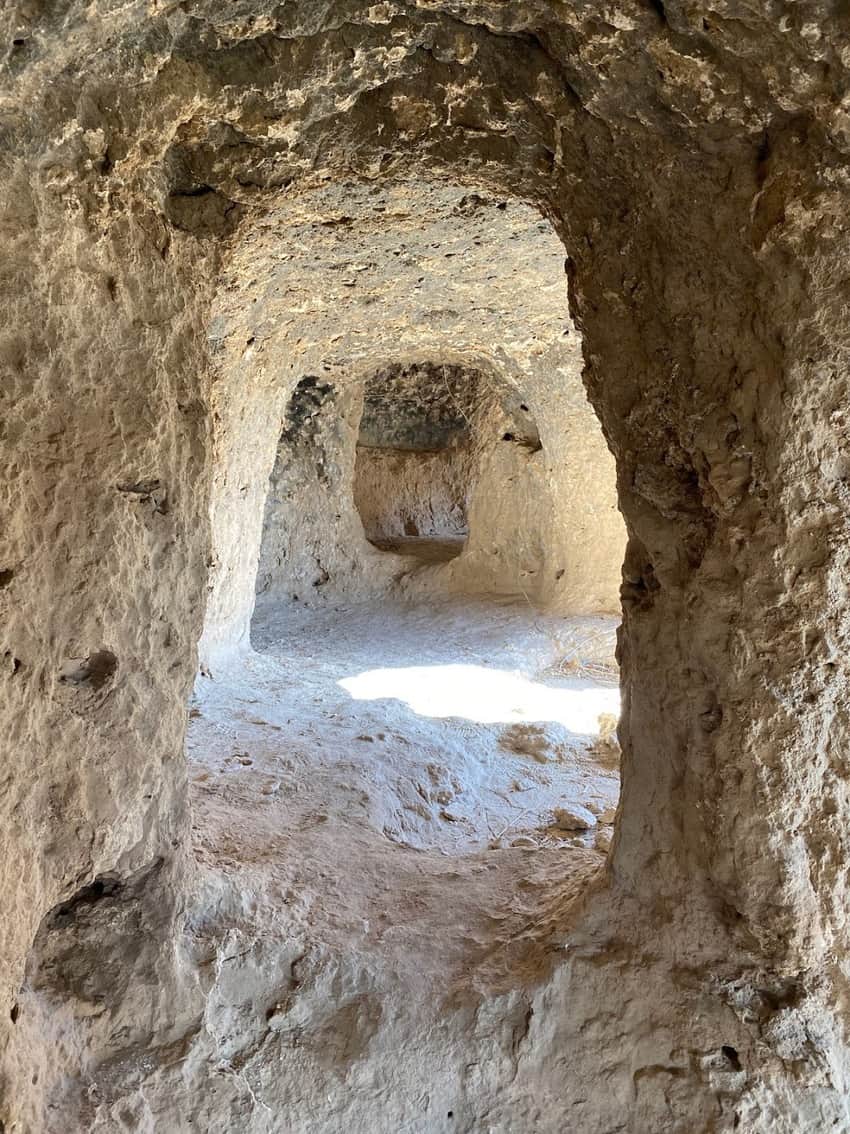
There are two checkpoints on the main highway, where bright orange cones slow down incoming traffic and pairs of military security guards will peer inside cars to get a better look at who is traveling from one province to another.
Occasionally, they ask for a departure point and arrival destination, or to see an iqama, the national identification card.
A smaller checkpoint at the entrance to Alqosh is more casual, as not many outsiders visit the town or the monastery, and the guards were delighted to tell us that our “friends, the foreigners” had passed through 5 minutes before, immediately connecting us into one group.
Religion
Alqosh lies in the Nineveh governorate, named after the ancient Assyrian city of Nineveh. The Yazidi population, one of the oldest and persecuted religious minorities, is concentrated in this part of Iraq, northwards of Mosul, and around the Dohuk area.
Speaking Kurmanji
They primarily speak Kurmanji, one of two large Kurdish dialects here – the other is Sorani. Their community does not grow in size easily, as one can’t marry and convert into the Yazidi religion.
Thousands of Yazidis have been displaced, and there remain few safe pockets of the world where they cluster together freely.
They are often identified by their traditional style of dress. The women wear long, white scarves trailing down the back of their heads, while the men sport loose-hanging brown tops and pants that billow out at the hips.
A large belt wraps over the clothing and secures everything in place, and many of them will wear a turban on their head.
Along the roads, and nearing Alqosh, the distinctive silhouette of Yazidi temples dot the skyline.
The Yazidi place of worship is a small, white structure, topped by four lateral faces meeting at a point, not dissimilar to a more angular orange squeezer.
They are often found atop a hill, so the pointed top is visible for miles around, or occasionally, on flat ground, at a holy point.

Alqosh is also a Christian town, so while in other parts of Kurdistan, it would be more difficult to casually find alcohol, my companions were delighted, at the end of a long, hot day, to find that many of the local shops touted various brands of affordable cold beer.
Moreover, they did not object to the drinking of the beers publicly, which is a stark contrast to the risk of harassment and discrimination we take in Erbil if we are spotted carrying (unopened) bottles of alcohol in the streets.

Rabban Hormizd Monastery’s History
The monastery belongs to the Chaldean Catholic Church and dates back to 640 AD. As our guide somberly explained, through the centuries of history, it had even survived 400 monks being beheaded by Genghis Khan.

A short bell tower on the exterior walkway, just past the cherry blossoms brimming with bees, is still one of the iconic symbols of the structure and tourist-favored-photo-spot and is a testament to the resilience of the monastery through the ages.
Right at the end of the parking lot, curving right up a short series of steps towards a 6-foot-tall cross looking down the windy road to Alqosh were six stone tombs.
There is etched writing on top of the tombs, detailing the story of the brave Peshmerga soldiers, part of the Kurdistan military that watches over the region, who were killed instantly by rockets during an attack by Iran.
At the entrance to the structure, there is a memorial dedicated to the Iranian priest, St. Hermus, who was the one to plead with the Pope to bring back the monks after the tragedy and restore the working functionality of life in the monastery.
His life’s work is celebrated each April on his memorial day, and monks from the region come to the monastery to pay tribute to him.
The guide made the extra effort to point out the newest historical landmark for the monastery – a glimmering road approximately 14 km away marked the nearest that ISIL got to the monastery. He deeply sighed, “It’s better now, without Daesh, you know.” and led us inside the main entrance.

The Monastery
The monastery’s main plaza opens up with a set of olive trees several decades old, and still producing fruit, as the guide proudly plucked a few for us.
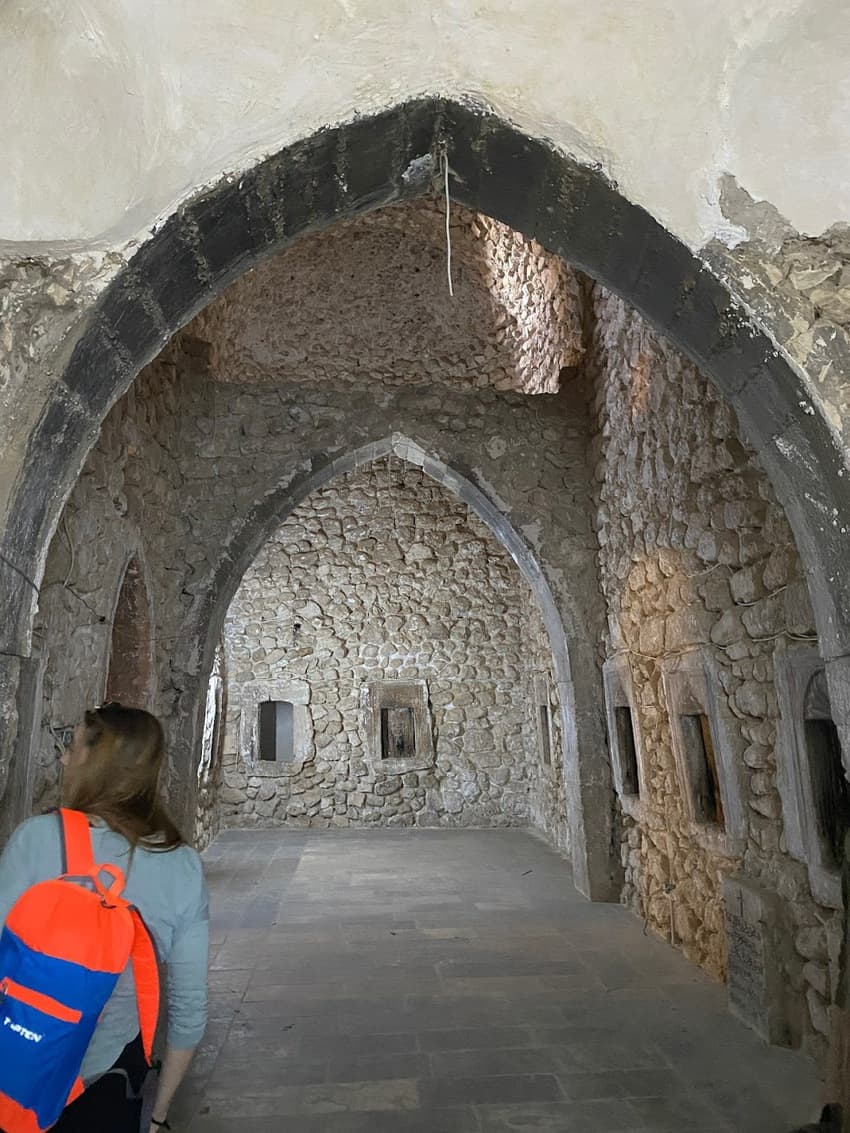
From one end of the plaza, tunnels and caves carved by hand out of the mountain side have round entrances where up to 120 monks slept and lived at one time.
Peering from one doorway to another, it’s possible to see several chambers in one view, all at different levels and many compartments with breathtaking views.
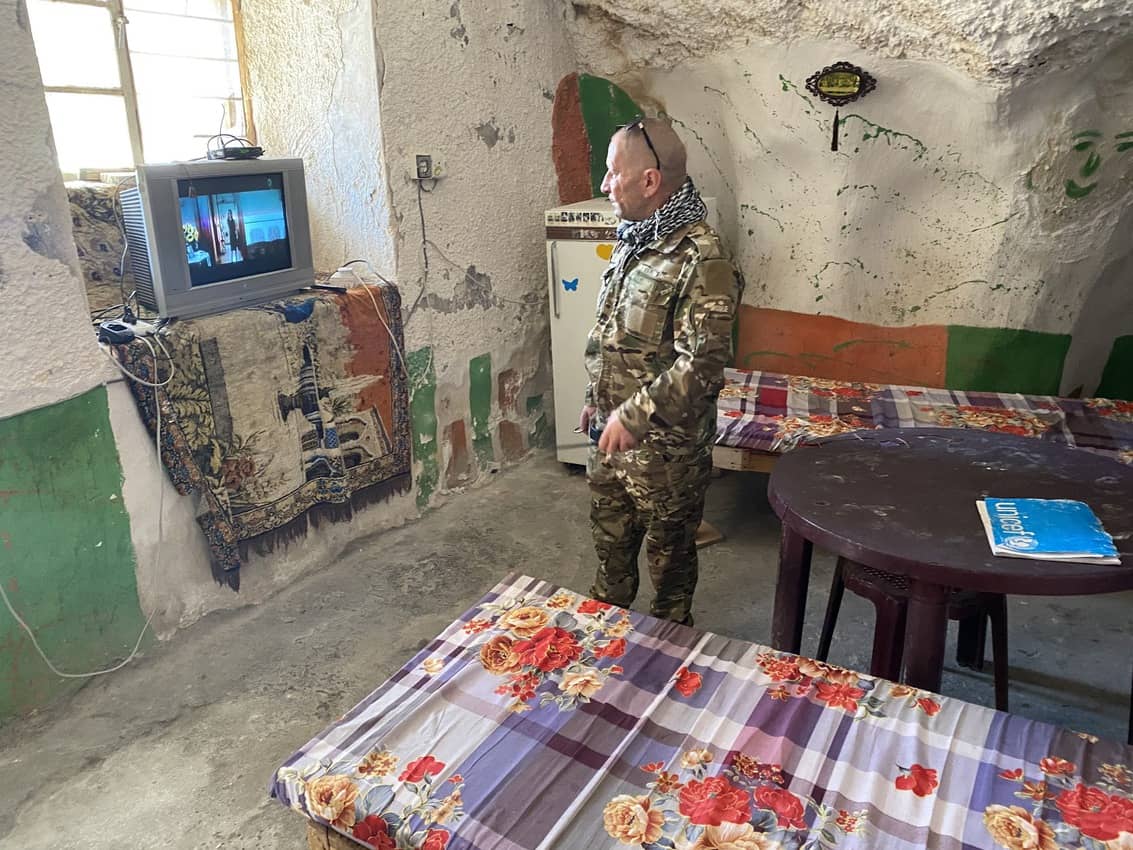
A “restaurant” chamber is similarly carved into a larger room, and it’s deep, visible indentations still remain where former electricity units were embedded before to run a fully functional kitchen.
Stray electrical wiring loosely connects skinny light fixtures on the ceiling of the sleeping quarters to the kitchen, serving as the only modern remnants of the former inhabitants.

From the main entrance of the plaza entering the primary chapel, a high ceiling and a large, metal cross greet visitors. Wooden pews face the chapel, and Aramaic writing is inscribed in the rectangular entrance framing the candle-laden table.
Through the back, a smaller room is dedicated solely to black panels of inscribed Aramaic writing that records the history of the church and its former monks and priests.

Continuing further on deeper inside the structure, a labyrinth of cut-out chambers grows increasingly complex.
Inside one room is a water well running 21 meters deep, complete with a wooden pulley that still functions.
The guide encouraged us to test drop some pebbles, and sure enough, we could clearly hear – after shushing the group a few times – the distinct plink of a stone breaking the surface of the water down below.
As we progressed, the chambers grew colder and colder.
Deeper still, a medium sized room turned out to be where St. Hermus slept, as the head of the monk order, he received his own sleeping quarters.
Two loops on the ceiling were formerly connected to chains that he would cuff to his wrists, keeping him in an upright position and preventing him from falling asleep. The purpose of this, our guide solemnly explained, was to keep up with his disciplined, continuous prayers.
We had to crouch and bend to squeeze through a tunnel opening about two feet high to reach another chamber, which led to stairs going down under the main chapel.
This passageway was used to conceal the monks during times of danger, as a stone could easily be placed in front of the narrow tunnel and they would wait down below. A small square window
Allowed them to see a lookout monk, who would watch from a tree outside the window, and when danger had passed, he’d light up a signal for them to emerge from the safe room.
Good Luck
The monastery has several different points for hopeful visitors to follow some simple steps to make their wishes come true.
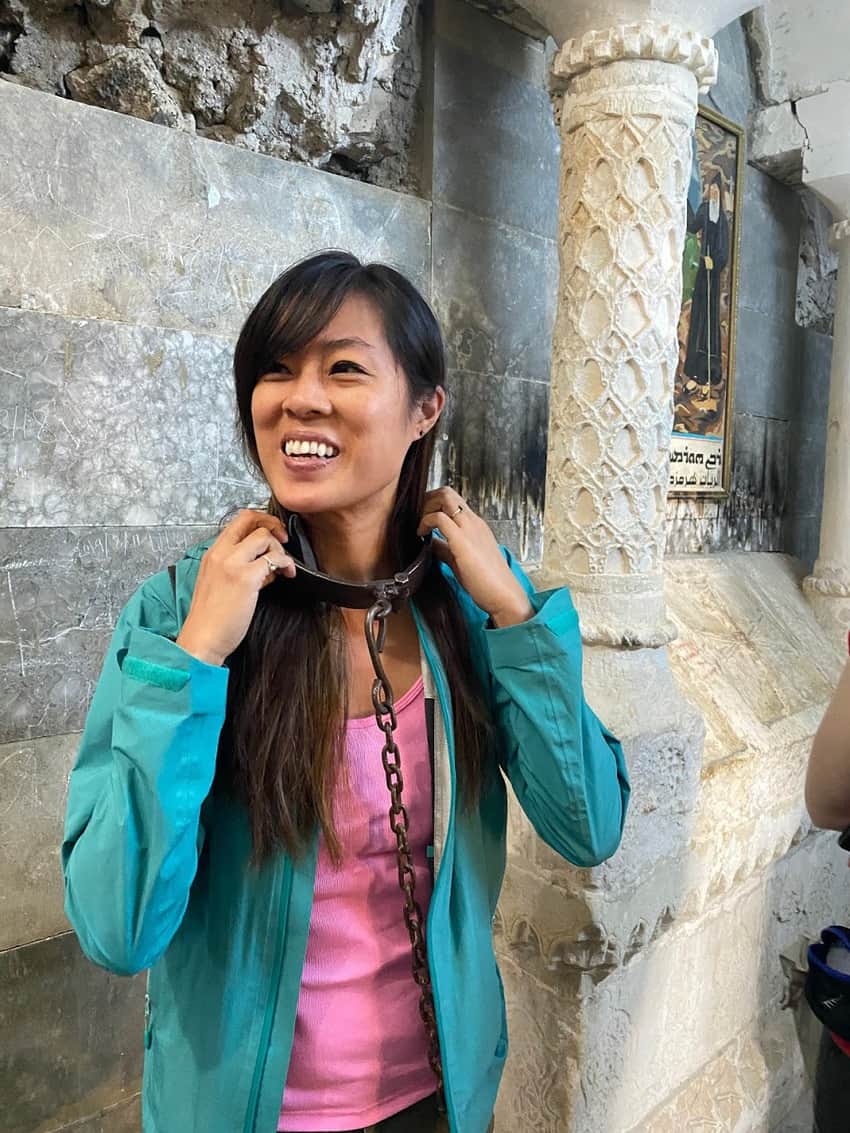
At the main chapel, a metal collar hangs from the wall for anyone to loosely clip around their neck, as former slaves would have had to, and mentally send their deepest desires out into the universe.
In the sleeping chambers of St. Hermus, a small square with crosses is etched into one wall.
Visitors can stand opposite the square, and with their eyes shut and right hand out in front of them, take a few strides towards the cross to touch it, and make their wish.
Outside by the bell tower, a wish tree grows, covered with white tissue and strands of cloth tied to the branches.
If someone unties a tissue or strand of cloth, it would fulfill that wish, and they, in turn, would have to tie a new one to keep the cycle alive, and they’d wait for someone else to untie it.
The process has led to a pile of discarded- and hopefully, fulfilled- wishes at the base of the tree.
Hiking

A beautiful hike loops all the way around the back of the monastery, although travelers should be warned that there are no points for shade, particularly during peak daylight hours – my sunburned face can attest to that.
Like many walking paths in the Kurdistan region, the trail isn’t particularly well-marked after the initial 100 meters.
From the far right side of the monastery, facing the structure, the grassy mountainside seems innocent enough but beware the large rocks and smaller stones crumble occasionally.
The weeds and grass also make it easier to gain a stronger foothold, so we avoided the dry dirt and pebbles. Once in a while, a more commonly trodden path is visible in the flattened grass, although it trails off eventually.

Up at the top of the initial ascent, a narrow ledge is a refreshing area to rest with a view on both sides of semi-steep drops.
Pushing forwards and upwards from the narrow ledge, we finally reached a large flat plateau essentially directly behind the monastery.
It’s possible to look down – for those not afraid of heights- and see the roof of the monastery, the curved dome tops and crosses decorating the edges.
Luckily, others in our group had the foresight to bring snacks, and a Kurdish colleague even had a teapot and tea leaves ready to brew.
Without hesitation, he grabbed some dried shrubs nearby, throwing their branches together and lighting a fire with some matches.
In a matter of minutes, we had a delicious picnic ready with homemade dolma and steaming cups of black tea to accompany the beautiful landscape.
The second half of the walk to complete the loop was steeper and more challenging, primarily because it was more difficult to see the paths below us.
Luckily, some locals spotted us slipping and sliding down rocks, in an attempt to make a shortcut, and shouted the proper directions at us.
With the help of a translator, we managed to meet up with the locals and they walked us out a shorter, more direct route to the bottom of the parking lot.

- The Interesting Bamileke Region of Cameroon - September 11, 2023
- Mombasa, Kenya: Crocs, Snakes and Empowered Artists - April 9, 2023
- Cameroon’s Douala-Edéa National Park - February 11, 2023


April 19, 2026 @ 5:07 am
Dear Annie,
Thank you for your article and for highlighting the historical and cultural significance of the region. I would respectfully suggest a few important clarifications to ensure the historical record is presented with greater accuracy and balance.
First, regarding Rabban Hormizd Monastery, it is important to recognize that the monastery was not originally “Chaldean” in the modern denominational sense. Founded in the 7th century, it functioned for centuries as a central monastic and patriarchal seat of the Assyrian Church of the East, specifically associated with the Eliya patriarchal line. Only after the ecclesiastical divisions that began in the mid-16th century did parts of this tradition enter communion with Rome, eventually forming what is now known as the Chaldean Catholic Church. Referring to Rabban Hormizd as “Chaldean” from its origins unintentionally obscures its foundational role within the Assyrian Church of the East and the broader continuity of East Syriac Christianity.
Second, the historical development of the term “Chaldean” itself deserves careful framing. Following the 1552 schism associated with Yohannan Sulaqa, segments of the Church of the East entered communion with Rome. Over time, the term “Chaldean” came to be applied to these Catholic communities. Many Assyrians therefore understand “Chaldean” primarily as an ecclesiastical designation rather than a distinct ethnic origin, reflecting continuity within a broader Assyrian heritage, even as identity terminology remains a subject of discussion today.
Finally, any historical account of northern Mesopotamia should acknowledge the profound impact of the Seyfo. During World War I, Assyrian Christians were subjected to mass killings, displacement, and destruction under Ottoman rule nearly wiping out 75% of all Assyrians. These atrocities were carried out by Ottoman authorities and, in many regions, with the participation of local tribal forces, including many Kurdish groups and leadership. The consequences of Seyfo were devastating, contributing to the depopulation and long-term marginalization of Assyrian Christian communities in their ancestral homeland. Imagine the Nazi’s committing a holocaust and no one would have came to save the day. Unfortunately, what you saw is the aftermath of nearly wiping out the world’s oldest Christian’s.
Assyrians are widely recognized as an indigenous people of Mesopotamia, with a continuous cultural and historical presence spanning millennia. Any portrayal of the region benefits from acknowledging both this deep-rooted heritage and the historical traumas that have shaped its present reality. This year was the Assyrian 6,776 new year on April 1st.
My intention in sharing these points is not to detract from your work, but to help ensure that the history of this region—particularly the legacy of the Church of the East and the experiences of Assyrian Christians—is represented as fully and accurately as possible.
Thank you again for your thoughtful coverage, and I appreciate your consideration of these perspectives.